Theyyam ritual performance (seasonal)
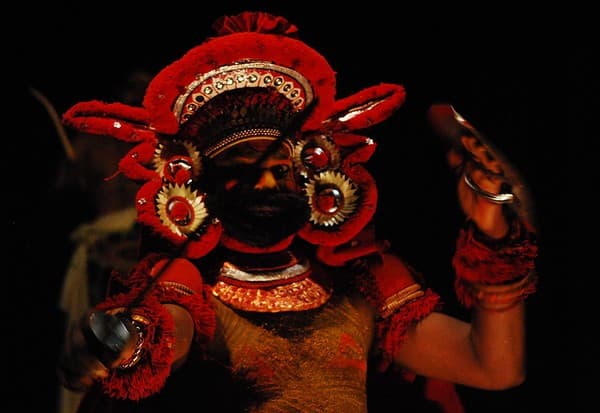
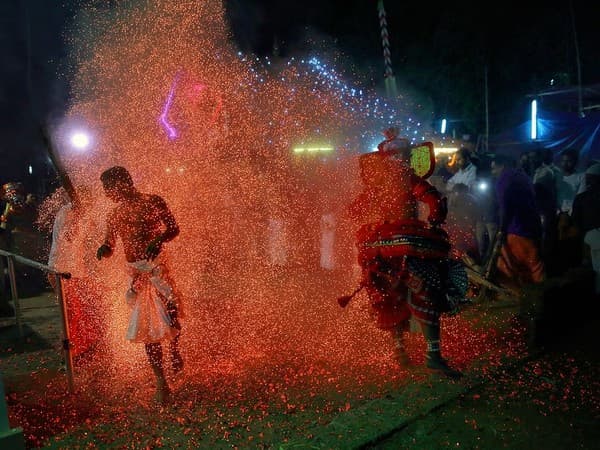
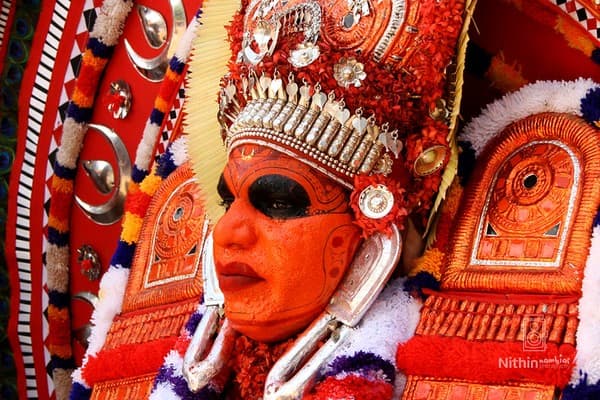
Theyyam (also spelled Theyyattam) is a living ritual performance native to North Kerala that blends folk theatre, ancient temple ritual, dance, music and possession. Performed mainly in temple courtyards and sacred groves (kavu), Theyyam transforms performers into personified deities through elaborate face-painting, towering headgear, colourful costumes, ritual dances and percussion ensembles (thottam, chenda, maddalam). The experience is intensely sensory — fire-walking, anointing, oracle-like pronouncements and offerings to devotees are common. Theyyam is seasonal and community-centered: many performances are tied to family shrines and local festivals, where the performer is treated as a living embodiment of the deity for the duration of the ritual.
Location
Temple courtyards and sacred groves (kavu) across Kannur & Kasaragod districts, Kannur / Kasaragod (district-level activity), India
Duration
Single performance: 30 minutes to 2 hours on average.
Full-day festival programmes: several performances across a day (morning to late evening).
Seasonal run: several weeks/months during the Theyyam season (see bestTimeToVisit).
Best Time to Visit
October to May is the main Theyyam season in northern Kerala. Peak months: November to February when many family shrines and major temple festivals stage elaborate Theyyam performances.
Pricing
- Temple performances: usually free or donation-based (symbolic offerings).
- Guided visitor packages: ₹500–₹2,000 per person (group tours, local guide, & explanation).
- Private or VIP experiences: ₹3,000–₹10,000+ (arranged visits, photography permissions, transport).
- Note: prices vary by season, demand and whether the shrine is private/community-run.
Activity Type
Coordinates
Highlights
Elaborate face-painting (cheek and forehead designs) and towering headgear (mudi).
Ritual possession — the performer is treated as a living deity who interacts with devotees.
Powerful percussion ensemble (chenda, maddalam) and devotional songs (thottam).
Fire-walking, body piercing and other dramatic ritual acts at some shrines.
Intimate community setting — performances often happen in small village shrines (kavu) with direct access to devotees.
Diverse cast of deities and mythic characters unique to each locality — no two Theyyams are exactly the same.
Itinerary
Reach the temple/kavu; register if required; meet your guide or local contact.
Many shrines have informal start times — arrive early to secure a good viewpoint. Respect shrine timings and announcements.
Preparations include drummer ensembles warming up, priestly invocations, and the performer in costume receiving final rites.
This is a good time to observe costume details and face-painting, but ask permission before taking close photographs.
Dramatic entrance of the deity, ritual dances, interactions with devotees, possible fire-walking or oracle proclamations.
Expect intense drumming and close proximity to performers; follow instructions from temple authorities and your guide.
Devotees may receive blessings, sacred ash, or personal messages from the performer who acts as an oracle.
If you wish to participate, follow the local sequence: queue respectfully, offer any customary gifts, and accept blessings with both hands.
Informal interactions, photographing (if permitted), and departures.
Some shrines allow brief conversations with the performer once they step down from the deity role—be mindful and avoid intrusive questions.
Safety Requirements
Respect the ritual space — follow instructions from priests, temple authorities and guides.
Do not touch the performer or ritual objects unless explicitly invited; the performer is considered a living deity during the ritual.
Avoid flash photography close to performers and fire—ask permission first.
Maintain a safe distance from fire-walking or piercing acts; physical barriers or handlers will be present.
If you have medical conditions (cardiac issues, epilepsy, mobility limitations) consider watching from a calmer spot—the sound and crowds can be intense.
Dress modestly: shoulders and knees covered are appreciated at temple sites.
Carry minimal bags; pockets/loose items can get in the way in crowded small shrines.
Tips
Plan visits between October and May; check local festival calendars (village kalendars, temple notices).
Hire a local guide or join a small group to access private shrines and get contextual explanations in English/Malayalam.
Carry cash — many small shrines do not accept cards; keep small denominations for offerings or donations.
Wear comfortable footwear (you may walk on uneven paths), but remove shoes at temple courtyards as required.
Ask permission before photographing performers; many welcome respectful photos after the ritual if you approach politely.
Combine a Theyyam visit with nearby attractions in North Kerala: Bekal Fort (Kasaragod), Muzhappilangad Drive-in Beach (Kannur), Aralam Wildlife Sanctuary, and local coir/handloom villages.
Be culturally sensitive: Theyyam has deep religious and social significance — avoid reducing it to a mere spectacle.