Nawalgarh Havelis (e.g., Poddar Haveli), Rajasthan
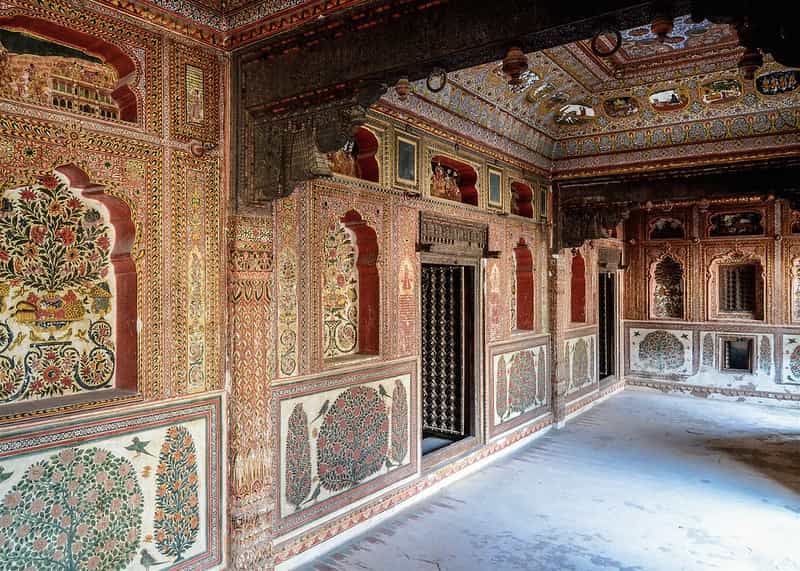
Nawalgarh Havelis (Shekhawati region, Rajasthan) are a remarkable example of merchant-era architecture and mural art from the 18th–20th centuries. Built by wealthy Marwari trading families, these havelis served as both residences and status symbols. Their richly painted facades and interiors document a unique blend of Rajasthani, Mughal and colonial influences, and preserve local craftsmanship in fresco painting, stone carving and woodwork.
Last updated: 23 Oct 2025
Historic Anecdotes
Local stories tell of prosperous merchant clans who financed temples, wells and community projects; many frescoes record the ambitions and worldviews of these traders — from epic Ramayana scenes to unusual colonial motifs (steam engines, British officers, automobiles). There are also oral tales about secret passages, family rivalries, and patronage of itinerant artist families whose skills were passed down generations.
Places to visit
- Poddar Haveli — one of the finest-preserved decorated havelis in Nawalgarh, famous for its vivid frescoes and ornate balconies.
- Morarka Haveli — converted partly into a heritage guesthouse and cultural space, showcasing restored murals and crafts.
- Other notable havelis — Kothari Haveli, Jhunjhunwala Haveli, and several richly painted merchant houses clustered around the old town.
- Street of Havelis — the concentration of painted facades along narrow lanes offering continuous mural galleries.
Unique Aspects
- Extensive frescoes depicting mythological, historical and contemporary scenes (including colonial-era motifs).
- Intricately carved wooden jharokhas (overhanging balconies), courtyards and painted ceilings.
- Traditional lime-plaster mural technique using natural pigments — vibrant colors that survive due to dry climate.
- Some havelis adapted as heritage hotels, museums or craft centers, allowing immersive stays.
Things to do
- Guided or self-guided walking tours through the old town to study frescoes and architecture.
- Photography of exteriors and permitted interiors (ask for permission inside private havelis).
- Staying in a converted heritage hotel (selected havelis) for an authentic experience.
- Visiting local workshops to see restoration work and traditional crafts (painting, lac, textiles).
- Shopping for local handicrafts, textiles, miniature paintings and footwear (mojari).
Festivals & Events
- Shekhawati cultural events and heritage walks (regional festivals celebrating arts and restoration).
- Local Rajasthani festivals such as Teej and Gangaur when traditions and processions can be observed.
- Occasional heritage fairs, art exhibitions and restoration-awareness programs organized by local trusts.
Best Time to Visit
October to March — pleasant daytime temperatures, clear skies and comfortable conditions for walking and photography.
Weather Conditions
Hot summers (April–June) with temperatures often very high; monsoon brings some humidity but limited rainfall; winters (December–February) are cool, chilly nights and crisp days.
Entry Fees & Permits
Many havelis are privately owned: exterior viewing is free; some havelis charge a small entry fee or accept donations for interior visits or museum access. Typical visiting hours for public viewing are roughly 9:00–17:00; heritage hotels may permit guest access at other times. Always check locally for specific timings and fees.
Accessibility
Nawalgarh is in Jhunjhunu district (Shekhawati). Nearest major airport: Jaipur (road transfer required, roughly 2.5–4 hours depending on route). Nawalgarh has a railway station with regional connections; road access is good from Jaipur, Jhunjhunu and other towns. Local transport includes taxis, hired cars, cycle-rickshaws and occasional auto-rickshaws. Some lanes are narrow and uneven — not ideal for large coaches into the old core.
Recommended Duration
A day trip covers the main façades; 1–2 days recommended to visit interiors, stay in a heritage hotel and explore nearby Shekhawati towns (Mandawa, Fatehpur).
Clothing & Gear Tips
Comfortable walking shoes, sunhat and sunscreen for daytime; warm layers for winter mornings/evenings. Modest clothing is recommended when entering private homes or religious sites.
Local Food & Souvenirs
Try Rajasthani specialties locally: dal-baati-churma, gatte ki sabzi, kachori and sweets. Souvenirs: miniature paintings, lacquerware boxes, embroidered textiles, block-printed fabrics, leather mojari shoes and postcards/posters of fresco art.