Ancient City of Polonnaruwa, Sri Lanka
Polonnaruwa was the second capital of Sri Lanka after the destruction of Anuradhapura in the 10th century. At its height (11th–13th centuries) under King Parakramabahu I and others, it became a major political, religious and commercial centre. The city is a UNESCO World Heritage Site noted for its well-preserved archaeological remains—royal palaces, stupas, shrines and an advanced medieval irrigation system. Its ruins represent a high point of ancient Sinhalese engineering, urban planning and Buddhist architecture.
Last updated: 23 Oct 2025
Historic Anecdotes
Local legends credit King Parakramabahu I with the saying, 'Let not even a drop of water go to the ocean without use,' referring to the massive irrigation works and reservoirs (tank systems) he constructed. Stories also surround the Gal Vihara rock image — tales of miraculous events and the spiritual power of the carved Buddhas. Folklore links many of the ruins to past kings and monks, and oral traditions preserve rituals performed at shrines that continue on Poya (full-moon) days.
Places to visit
- Gal Vihara (rock-cut Buddha statues: reclining, seated and standing images)
- Royal Palace and audience hall
- Parakrama Samudra (large reservoir) and ancient irrigation works
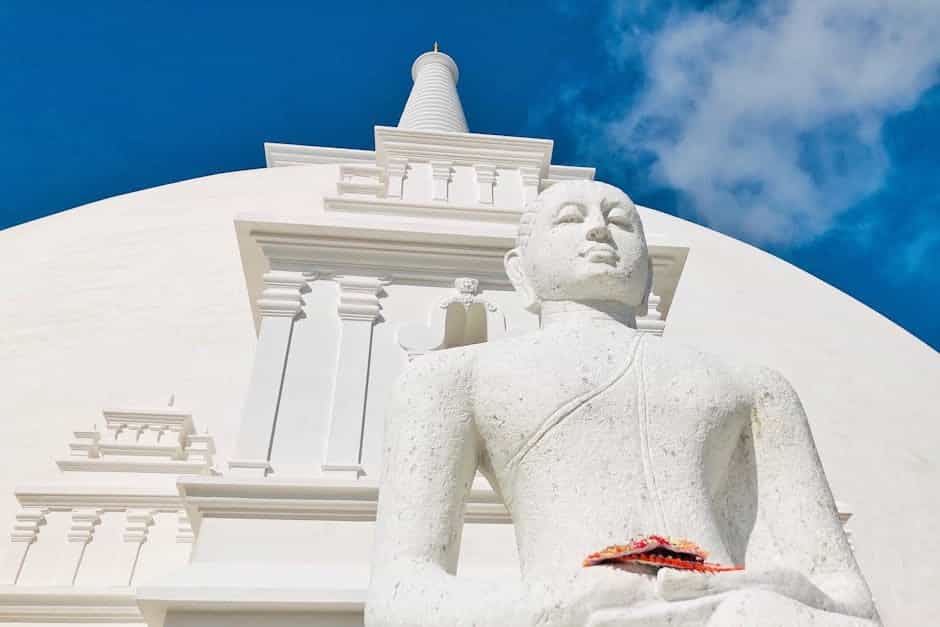
- The Quadrangle — Vatadage, Thuparama, and other temple ruins
- Rankoth Vehera (large stupa)
- Lankatilaka and Pabalu Vehera temples
- Hatadage (relic house) and stone moonstone carvings
- Polonnaruwa Archaeological Museum
Unique Aspects
- Exceptionally well-preserved stone Buddha sculptures at Gal Vihara
- Sophisticated medieval irrigation and reservoir (tank) engineering
- Intricate stone carvings, moonstones and guardstone (muragala) motifs
- A compact archaeological zone suitable for cycling and pedestrian exploration
- Wildlife and birdlife around the reservoirs and wetlands
Things to do
- Guided historical and archaeological tours (official guides available)
- Cycling around the archaeological park (bike rental available near the entrance)
- Photography of monuments, stone carvings and sunset over Parakrama Samudra
- Birdwatching along the reservoirs and adjacent wetlands
- Visit to the Polonnaruwa Archaeological Museum for context and artifacts
- Short boat trips or relaxing views around Parakrama Samudra (local operators)
Festivals & Events
- Religious observances and special pujas on Poya (full moon) days
- Local cultural events and temple ceremonies in and around Polonnaruwa town (dates vary)
- Occasional archaeological exhibitions and guided lecture events by the Department of Archaeology
Best Time to Visit
Dry season, November to April, when roads and trails are easiest and wildlife viewing is good. Early morning and late afternoon are best to avoid midday heat.
Weather Conditions
Tropical climate: hot and humid. Daytime temperatures commonly range from about 26°C to 34°C (79°F–93°F). Expect higher humidity and occasional showers in the southwest monsoon and inter-monsoon periods.
Entry Fees & Permits
The archaeological site charges an entry fee for foreign visitors and a lower fee for locals — fees and concession categories change periodically, so check the Department of Archaeology or site signage for current rates. Typical opening hours are early morning until late afternoon (for example roughly 7:30–17:30), but confirm locally before visiting.
Accessibility
Nearest major airport is Bandaranaike International Airport (Colombo) ~200 km west; domestic flights land nearby at Sigiriya (small airstrip). Polonnaruwa is well connected by road and rail: regular trains and buses serve Polonnaruwa town. The archaeological park is a short drive or cycle from the town center. Some uneven ground and steps at monuments; not all areas are wheelchair accessible.
Recommended Duration
Half a day to a full day to see the main monuments; stay 1–2 days to explore the surrounding region (Sigiriya, Minneriya) and enjoy birding or a relaxed pace.
Clothing & Gear Tips
Light, breathable clothing; a hat, sunglasses and strong sunscreen; comfortable walking shoes; modest dress (shoulders and knees covered) when visiting religious sites. Bring water, insect repellent, and a small first-aid kit.
Local Food & Souvenirs
Try local Sri Lankan rice-and-curry dishes, freshwater fish specialties and snacks from town eateries. Popular souvenirs include handloom textiles, wooden masks, batik, spices and small Buddhist-themed carvings or replicas of moonstones and guardstones.