Temple of the Sacred Tooth Relic (Sri Dalada Maligawa), Sri Lanka
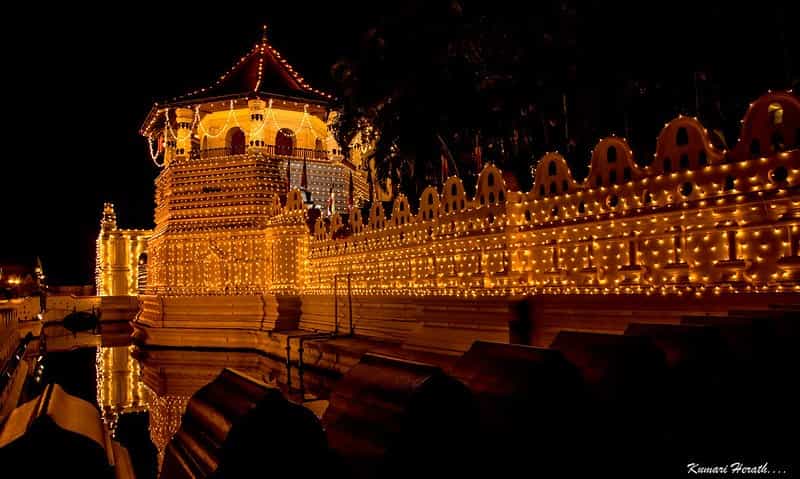
The Temple of the Sacred Tooth Relic (Sri Dalada Maligawa) in Kandy is one of Sri Lanka's most venerated Buddhist sites. It houses the relic of the tooth of the Buddha, believed to have been brought to Sri Lanka in the 4th century CE. The relic has long been a symbol of sovereignty: possession of the tooth traditionally legitimized rule over the island, making the temple central to political as well as religious life, especially during the Kandyan Kingdom. The temple complex is part of the Old Royal Palace complex and is inscribed as a UNESCO World Heritage Site (Kandy). It represents an outstanding example of Kandyan-era architecture and living religious tradition.
Last updated: 23 Oct 2025
Historic Anecdotes
According to tradition, the relic was smuggled into Sri Lanka hidden in the hair of Princess Hemamala and Prince Dantha to protect it from foreign invaders. Over centuries the tooth has been moved, hidden and safely guarded during wars and colonial upheavals. There is also a long-held belief that whoever possesses the relic holds the right to rule the country, and many kings used the relic in coronation rites. Local legends also speak of miracles associated with the relic and the protective role of elephants and custodial families.
Places to visit
- Inner shrine housing the Sacred Tooth Relic (viewing from a protected chamber)
- The Temple complex and its cloistered courtyards
- Kandy Royal Palace ruins (part of the temple precinct)
- The Temple Museum (historical regalia, caskets and ceremonial items)
- Magul Maduwa (Coronation Hall) and nearby devales
- Daily puja rituals and the ceremonial drumming/dancing
- Esala Perahera (Kandy Perahera) — annual procession featuring elephants and dancers
- Traditional Kandyan art, carvings and moonstone/guardstone features
Unique Aspects
- Kandyan-era architecture and ornamental woodwork
- Gold and gem-studded caskets and reliquaries
- Intricate moonstone (sandakada pahana) and guardstones
- Sacred inner chamber with restricted access and ceremonial viewing windows
- Historic paintings, regalia and royal artifacts in the museum
- Large temple complex adjoining the royal palace grounds
- Use of traditional drumming, dancers and ritual offerings in daily ceremonies
Things to do
- Observe the morning, midday and evening puja (ritual worship) ceremonies
- Explore the Temple Museum to see historical caskets, regalia and artifacts
- Attend or observe parts of the Esala Perahera during July/August (seasonal)
- Join a guided tour of the temple precinct and royal palace ruins
- Photograph the exterior architecture, courtyards and ceremonial elephants (where permitted)
- Shop for religious souvenirs and traditional crafts in nearby market areas
- Watch traditional Kandyan dance and drumming performances linked to rituals
Festivals & Events
- Esala Perahera (Kandy Perahera) — the temple’s most famous annual festival (usually July/August)
- Daily puja ceremonies (morning, midday and evening) with special observances on Poya (full-moon) days
- Vesak and Poson Poya special rituals and illuminations
- Full-moon day (Poya) celebrations drawing large numbers of devotees
Best Time to Visit
December to April are typically drier and more comfortable for sightseeing in Kandy. If you wish to witness the Esala Perahera festival, plan for July/August (dates vary each year). Poya (full-moon) days are also especially significant but busier.
Weather Conditions
Kandy has a tropical highland climate: mild to warm days and cooler evenings with frequent afternoon showers in the monsoon seasons. Typical temperatures range roughly from 19°C to 28°C depending on season and altitude.
Entry Fees & Permits
The temple complex is open to visitors daily; specific viewing hours coincide with the puja times (early morning, around mid-morning and evening). There is an entrance ticket for visitors (rates and concessions differ for locals and foreigners and may be updated periodically). Some areas (inner sanctum) have restricted access during rituals. Check the temple’s official information or local tourist offices for current fees and exact opening times before visiting.
Accessibility
Kandy is accessible by road (A1 from Colombo), by rail (Kandy Railway Station in the city centre) and by air via Bandaranaike International Airport (Colombo) with onward road or rail travel (approx 3–4 hours by road). Local buses, taxis and tuk-tuks serve the city. The temple complex has steps and traditional architecture that limit full wheelchair access in some areas; however, grounds and museum may offer more accessible routes—check locally for assistance.
Recommended Duration
Allow 1–2 hours to visit the temple and museum; plan 1–3 days in Kandy to experience the temple, nearby attractions (Peradeniya Botanical Gardens, nearby devales) and local culture.
Clothing & Gear Tips
Dress respectfully: cover shoulders and knees; remove shoes and socks before entering temple buildings; bring a shawl or sarong if needed. Carry a hat and sunscreen for outdoor areas, comfortable shoes for walking, and a light raincoat or umbrella during wet months.
Local Food & Souvenirs
Try local Kandyan/Sri Lankan dishes such as rice and curry, hoppers (appa), string hoppers and kottu in nearby eateries. Popular souvenirs include batik fabrics, wood carvings, traditional masks, Buddhist statuettes and replicas of the tooth casket, as well as Ceylon tea and local handicrafts from Kandy markets.