Thailand Cultural Etiquette: 15 Essential Tips Every Traveler Must Know

Introduction: Why Cultural Etiquette Matters in Thailand
Thailand isn't called the "Land of Smiles" for nothing. The warmth and hospitality of Thai people are legendary, making it one of the most welcoming destinations in Southeast Asia. But here's the thing—behind those genuine smiles lies a rich tapestry of cultural traditions, religious beliefs, and social customs that have been woven together over centuries.
As a traveler, understanding Thai cultural etiquette isn't just about avoiding awkward moments (though it certainly helps with that). It's about showing genuine respect for your hosts and opening doors to more meaningful connections. I've seen travelers accidentally offend locals simply because they didn't know any better, and I've also witnessed the beautiful moments that unfold when visitors take the time to learn and honor Thai customs.
Whether you're planning your first trip to Bangkok, heading to the islands, or exploring the northern highlands, this comprehensive guide will help you navigate Thai culture with confidence and grace.
The Wai: Thailand's Traditional Greeting
Understanding the Sacred Gesture
The wai (pronounced "why") is Thailand's traditional greeting—a graceful gesture where you press your palms together in a prayer-like position and bow your head slightly. But don't be fooled by its simplicity; the wai carries deep cultural significance and follows specific rules.
How to Perform the Wai Correctly
- Hand position: Press your palms together with fingers pointing upward
- Height matters: The higher your hands, the more respect you're showing
- For equals: Hands at chest level with a slight head bow
- For elders or monks: Hands raised higher, with thumbs touching your nose or forehead
- For royalty or Buddha images: Hands at forehead level with a deeper bow
When (and When Not) to Wai
Here's some insider knowledge: you don't need to wai everyone. Children, service staff, and people younger than you typically don't expect a wai from you. If someone wais you first, it's polite to return the gesture. When in doubt, a friendly smile and slight nod work perfectly fine.
Pro tip: Never wai while holding objects in your hands—it's considered disrespectful.
Respecting the Thai Monarchy
A Non-Negotiable Rule
This cannot be stressed enough: respect for the Thai Royal Family is paramount and legally enforced. Thailand's lèse-majesté laws are among the strictest in the world, and violations can result in serious legal consequences.
Practical Guidelines
- Never make negative comments about the King, Queen, or any royal family member
- Stand respectfully when the royal anthem plays before movies in theaters
- Don't step on Thai currency—it bears the King's image
- Avoid pointing your feet toward images of the royal family
- Show reverence when passing royal portraits or monuments
This isn't just about following rules—it's about understanding that the monarchy holds a deeply sacred place in Thai hearts and culture.
The Significance of the Head and Feet
The Head: Sacred and Untouchable
In Thai culture, the head is considered the most sacred part of the body—it's where the spirit resides. This belief influences daily interactions in important ways:
- Never touch anyone's head, including children (no matter how cute they are)
- Avoid passing objects over someone's head
- If you accidentally touch someone's head, apologize sincerely
- Keep your head lower than monks and elders when possible
The Feet: The Lowest and Most Offensive
Conversely, feet are considered the lowest and dirtiest part of the body. Breaking foot-related taboos is one of the quickest ways to offend Thai people:
- Never point your feet at people, Buddha images, or temples
- Don't use your feet to point at anything or move objects
- Remove shoes before entering homes, temples, and some shops
- Tuck your feet beneath you or to the side when sitting on the floor
- Never step over someone who is sitting or lying down
Temple Etiquette: Visiting Thailand's Sacred Spaces
Dress Code Requirements
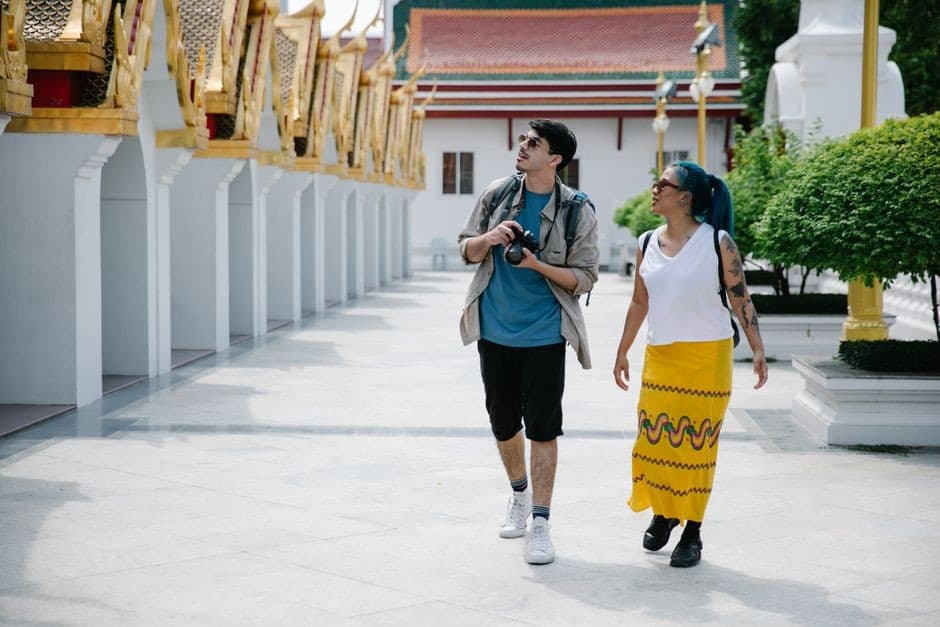
Thailand's temples (wats) are active places of worship, not just tourist attractions. Dressing appropriately shows respect:
- Cover your shoulders and knees—no tank tops, shorts, or miniskirts
- Wear clothing that isn't too tight or revealing
- Some temples provide cover-ups for rent or loan
- Remove sunglasses and hats when inside temple buildings
Behavior Inside Temples
- Always remove your shoes before entering temple buildings
- Walk around Buddha images clockwise
- Never turn your back to Buddha statues when taking photos
- Sit with your feet pointed away from Buddha images
- Speak softly and turn off phone ringers
- Women must never touch monks or hand them anything directly
Interacting with Monks
Monks hold a revered position in Thai society. If you encounter monks:
- Give way to monks on sidewalks and public transport
- Women should maintain physical distance and never sit next to monks
- If offering something to a monk, place it on a cloth or have a man hand it over
- Don't take photos without permission
Social Etiquette and Daily Interactions
Keeping Your Cool
Thais value "jai yen" (cool heart) above almost everything in social interactions. Losing your temper, raising your voice, or showing frustration publicly causes everyone to lose face—including you.
- Stay calm even when things go wrong
- Smile through difficulties (the famous Thai smile often masks discomfort)
- Address problems quietly and privately
- Never publicly criticize or embarrass someone
The Concept of "Face"
Saving face (raksa na) is crucial in Thai culture. This means:
- Avoid direct confrontation or criticism
- Don't point out mistakes publicly
- Accept that "yes" sometimes means "I hear you" rather than agreement
- Allow people graceful ways out of awkward situations
Physical Contact and Personal Space
- Public displays of affection are frowned upon
- Same-sex friends often hold hands (it's platonic)
- Avoid pointing with your finger—use your whole hand or chin instead
- Don't touch people you don't know well
Dining Etiquette in Thailand
Table Manners Thai-Style
Thai dining customs might surprise you:
- Spoon and fork: The spoon (right hand) is the main utensil; the fork pushes food onto the spoon
- Chopsticks are typically only for noodle soups
- Wait for the eldest person to begin eating
- Share dishes family-style—taking food directly to your mouth from shared plates is impolite
Paying the Bill
- The person who invites usually pays
- Splitting bills isn't common among Thais
- Offering to pay is polite, but don't fight over it
- Tipping isn't mandatory but appreciated (round up or leave 10%)
Business and Formal Etiquette
If you're visiting Thailand for business:
- Exchange business cards with both hands and a slight bow
- Study received cards respectfully—never write on them or stuff them in your pocket
- Dress conservatively and professionally
- Punctuality is appreciated, though meetings may not start on time
- Build relationships before diving into business matters
Common Mistakes to Avoid
Let's recap the biggest faux pas to steer clear of:
- Touching someone's head (even children)
- Pointing feet at people or sacred objects
- Disrespecting the monarchy in any way
- Losing your temper publicly
- Inappropriate temple attire
- Women touching monks
- Stepping on the door threshold of temples (believed to house spirits)
- Pointing with your finger
Actionable Takeaways for Your Thailand Trip
As you prepare for your Thai adventure, keep these key points in mind:
- Learn the wai and use it appropriately—it opens hearts
- Pack modest clothing for temple visits
- Practice patience and keep your cool in all situations
- Be mindful of your feet and where they're pointing
- Show reverence for the monarchy, monks, and Buddha images
- Smile genuinely—it's the universal language in Thailand
Remember, Thai people are incredibly forgiving of honest cultural mistakes, especially when they see you're making an effort. Your willingness to learn and respect their customs will be noticed and deeply appreciated.
By following these cultural etiquette guidelines, you won't just avoid awkward situations—you'll unlock a deeper, more authentic Thai experience. The Land of Smiles has so much to offer, and approaching it with cultural awareness and respect will make your journey infinitely more rewarding.
Sawadee krap/ka (Hello and goodbye)—and safe travels!
Leave a Comment
Explore Thailand
Ready to plan your trip? Check out our complete travel guide and packages.