White Water Rafting in Rishikesh: A Complete Beginner's Guide (2026)
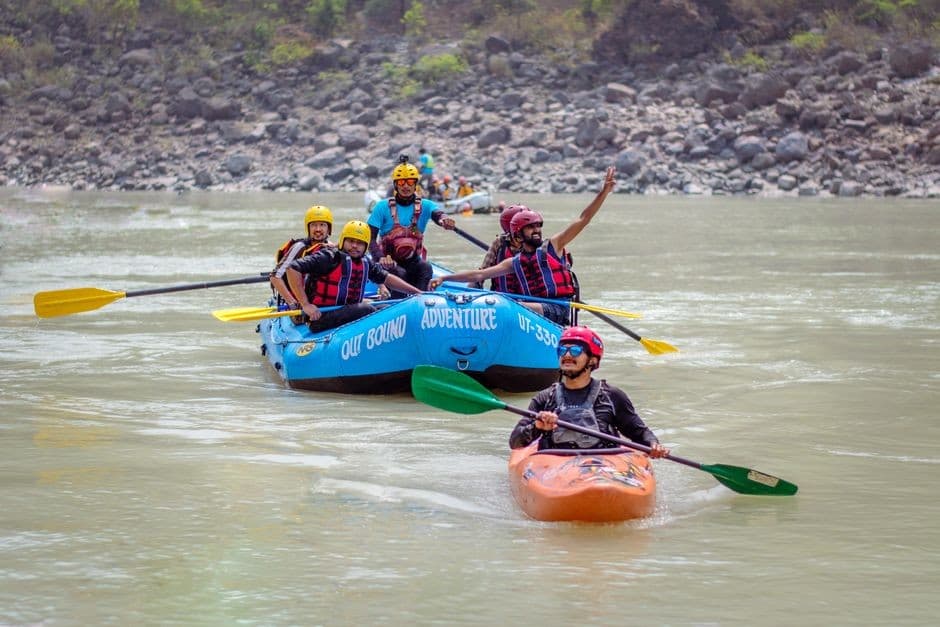
There's a moment — right before the raft tips over the first standing wave — when the sacred Ganga stops being a postcard and becomes a roaring, ice-cold wall of Himalayan snowmelt hurtling straight at your face. Welcome to white water rafting in Rishikesh, India's undisputed adventure capital.
Whether you've never set foot in a raft or you're a seasoned traveller looking for your next adrenaline fix, Rishikesh delivers. Nestled in the foothills of the Himalayas in Uttarakhand, this town blends ancient spirituality with world-class rapids — and it's far more accessible (and affordable) than you might think. Here's everything you need to plan your first trip.
Why Rishikesh for Rafting?
Rishikesh sits at the exact point where the Ganga exits the Himalayan gorge and meets the plains. The river is still cold, still fast, and still cutting through a canyon of Siwalik sandstone — creating the perfect conditions for commercial white water rafting. Upstream lies Devprayag, where the Bhagirathi and Alaknanda rivers merge to form the Ganga. Downstream lies Haridwar, where the river flattens into the wide, slow current you see further south.
This unique geography gives Rishikesh a roughly 24-kilometre corridor with gradients steep enough for Grade III–IV rapids, yet volumes manageable enough for guided commercial trips. Add in over 267 registered rafting operators, government-certified guides, and the spiritual ambiance of yoga ashrams and ancient temples lining the riverbanks, and you have an experience that's as soulful as it is thrilling.
When to Go: The Rafting Season
The rafting season in Rishikesh typically runs from mid-September through 30 June, with the river closed during the monsoon months (July–August) due to dangerously high water levels and flooding risk. But not every month within that window is equal.
- October–November (Post-Monsoon): Crystal-clear skies, pleasant temperatures (10–25°C), and strong post-monsoon currents make this arguably the best overall window. The river is powerful but predictable.
- March–April (Spring): Warm but not scorching weather, comfortable water temperatures (14–18°C), and stable river flow create ideal conditions for first-timers and families.
- May–June (Pre-Monsoon): Peak Himalayan snowmelt amps up the rapids significantly. Early June delivers some of the most thrilling white water of the entire season — but it's better suited for those who want maximum adrenaline.
- December–February (Winter): The river is calm and clear, but the Ganga is extremely cold. Operators provide wetsuits, though shorter trips are recommended to manage exposure.
Pro tip: For beginners, March–April or October–November offer the sweet spot of pleasant weather, manageable rapids, and fewer crowds on weekdays.
Rafting Routes: Which Stretch Should You Choose?
All routes end at the same point — NIM Beach near Rishikesh. The difference is where you start, and how much adventure you want.
1. Brahmpuri to Rishikesh — 9 km (Grade I–II)
- Duration: ~1–1.5 hours
- Price: Starting around ₹600 per person
- Best for: Families with kids (12+), senior citizens, nervous first-timers
- The vibe: More of a scenic float than a white-knuckle ride. You'll encounter gentle rapids like Initiation, Double Trouble, and Hilton — enough to get your heart rate up without overwhelming you.
2. Shivpuri to Rishikesh — 16 km (Grade II–III+)
- Duration: ~2.5 hours
- Price: Around ₹1,000–₹1,200 per person
- Best for: First-timers, college groups, corporate outings
- The vibe: This is the most popular stretch in Rishikesh — and for good reason. It's the perfect balance of thrill and accessibility. You'll tackle iconic rapids like Roller Coaster (a train of 4–6 foot standing waves), Golf Course (deceptively intense), and Return to Sender. Cliff jumping opportunities are included on most packages.
3. Marine Drive to Rishikesh — 24 km (Grade III–III+)
- Duration: ~3.5–4.5 hours
- Price: Around ₹1,500–₹1,700 per person
- Best for: Confident beginners and intermediate rafters
- The vibe: A longer, more immersive experience covering roughly 13 rapids including Cross Fire, Three Blind Mice, and Black Money. The calm stretches between rapids give you time to soak in the stunning valley scenery.
4. Kaudiyala to Rishikesh — 35 km (Grade III–IV+)
- Duration: ~5–6 hours
- Price: Around ₹2,500+ per person
- Best for: Experienced rafters and serious thrill-seekers
- The vibe: This is the big one. You'll face The Wall — widely considered one of the toughest rapids in all of India — along with Daniel's Dip and multiple Grade IV sequences. Good fitness is a must.
Beginner's pick: The 16 km Shivpuri stretch hits the sweet spot — enough rapids to feel like a real adventure, short enough that you won't be exhausted, and priced affordably.
What's Included (and What's Not)
Most standard rafting packages include:
- Included: Raft, paddle, life jacket, helmet, dry bag, certified guide, cliff jumping, body surfing, and transport from the operator's Tapovan office to the starting point
- Not included: Return transport from NIM Beach to your hotel (auto-rickshaw
₹100–200), personal expenses, GoPro video footage (₹2,000–2,500 per raft, split among the group), and a mandatory ₹20 government rafting slip (cash only)
Safety: What Beginners Need to Know
Rishikesh is one of the safest commercial rafting destinations in the world for beginners, provided you book with a government-registered operator. Here are the key safety points:
- Age limits: Minimum 12–14 years for day trips (varies by stretch); maximum around 50–60 years
- Weight limits: Generally 40–100 kg
- Health restrictions: People with heart conditions, recent surgeries, severe asthma, epilepsy, or pregnancy are not permitted
- No swimming required: The 9 km and 16 km stretches are safe for non-swimmers — your high-buoyancy life jacket keeps you afloat
- If you fall out: Don't panic. Float on your back with feet pointing downstream to protect yourself from rocks. Keep your head above water and arms spread for balance. Your guide will pull you back in
- Alcohol and smoking are strictly prohibited during rafting
All expeditions are led by professional, government-certified guides trained in water safety, rescue operations, CPR, and first aid. Look for operators with IRF (International Rafting Federation) certifications and strong online reviews.
What to Wear and Pack
- Footwear: Sports sandals with heel straps, water shoes, or old sneakers — never flip-flops
- Clothing: Quick-dry synthetics or activewear; avoid cotton (it gets heavy and cold when wet)
- Sun protection: Waterproof sunscreen, sunglasses with a strap (polarised and UV-protected)
- Secure storage: Leave valuables at your hotel; operators provide dry bags for phones and wallets
- Winter months (Nov–Feb): Operators provide wetsuits and splash jackets at no extra charge
Beyond the Raft: Combine Your Trip
Rishikesh is far more than rapids. While you're in town, consider pairing your rafting day with:
- Riverside camping at Shivpuri — overnight packages with bonfires, meals, and starlit skies start around ₹1,550 per person
- Bungee jump and giant swing at Mohan Chatti — India's highest commercial bungee (83 m)
- Attending the Evening Ganga Aarti at Triveni Ghat — a luminous, soul-stirring evening ceremony
- Yoga and meditation retreat — Rishikesh is the yoga capital of the world, and sunrise sessions by the river are transformative
- Local food: Don't miss a vegetarian thali at the iconic Chotiwala restaurant, or healthy bowls at cafés like Bistro Nirvana
How to Reach Rishikesh
- By Air: Fly into Dehradun (Jolly Grant) Airport, about 22 km from Rishikesh, with regular flights from Delhi and other major cities
- By Rail: Rishikesh (Yog Nagri) and Haridwar Junction are the nearest railheads, well connected to Delhi, Lucknow, and beyond
- By Road: Delhi to Rishikesh is approximately 240 km — a scenic 4–5 hour drive via the Meerut–Haridwar corridor
Booking Tips for First-Timers
- Book in advance for weekends — slots sell out fast, especially during peak season (March–June and October–November). Weekdays are usually available with shorter notice.
- Choose certified operators — look for Uttarakhand Tourism Development Board registration and check recent reviews.
- Morning slots are best — the 8:00 AM departure is the most popular for good reason: cooler temperatures, calmer winds, and better light for photos.
- Budget ₹1,000–₹1,500 per person for the most popular 16 km Shivpuri stretch, all-inclusive of safety gear and guide.
- Keep cash handy — the ₹20 government slip and return auto-rickshaw are cash-only.
Final Thoughts
White water rafting in Rishikesh isn't just an adventure sport — it's a rite of passage. There's something almost spiritual about battling the rapids of one of the world's holiest rivers, surrounded by Himalayan foothills, ancient temples, and the echoes of evening aartis drifting across the water.
The Ganga doesn't care about your Instagram reel. But it will give you a story worth telling — and a reason to come back. The next rafting season opens in September 2026. Start planning now, and let the river do the rest.
For current season dates and safety advisories, check the Uttarakhand Tourism Development Board website before booking.
Leave a Comment
Explore Uttarakhand
Ready to plan your trip? Check out our complete travel guide and packages.