Languages Spoken in Thailand: Your Complete Communication Guide

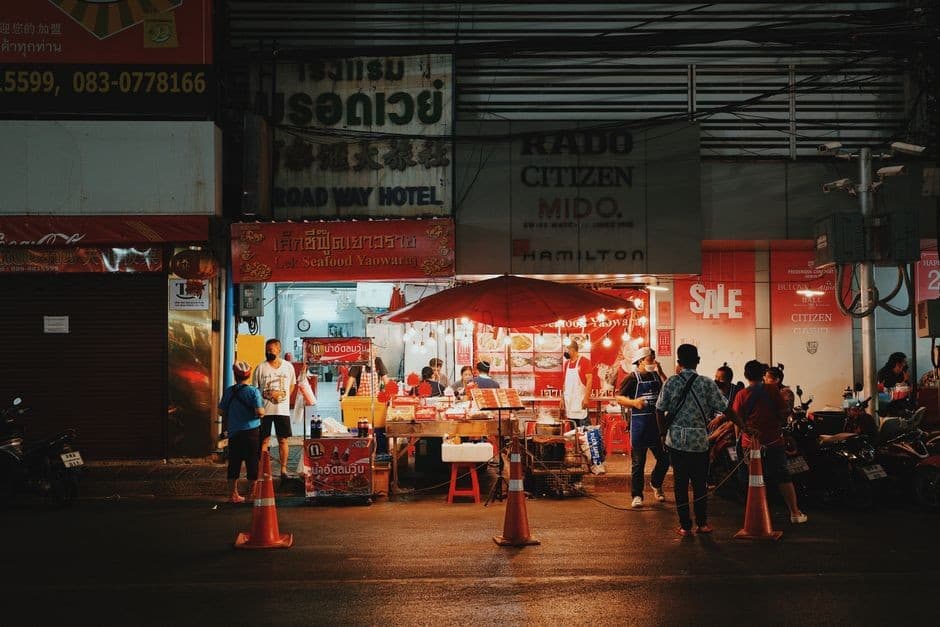
Picture this: you've just landed in Bangkok, the warm tropical air hits your face, and a smiling airport staffer greets you with a graceful bow and a melodic "Sawasdee kha." You want to respond — but how? Thailand, famously known as the Land of Smiles, is a destination where a little linguistic effort goes an incredibly long way. Whether you're haggling at a night market in Chiang Mai, ordering pad thai from a street vendor, or navigating the islands of the south, understanding Thailand's language landscape will transform your trip from good to unforgettable.
Let's dive into everything you need to know about what languages are spoken in Thailand and how you can communicate effectively during your visit.
Thai: The Official Language
The official language of Thailand is Thai (also called Siamese or Central Thai), a tonal language spoken by around 60–70 million people across the country. It belongs to the Tai-Kadai language family and is closely related to Lao, with more distant connections to languages spoken in southwest China and northern Vietnam.
What makes Thai fascinating — and a bit tricky for visitors — is that it's a tonal language with five distinct tones: mid, low, falling, high, and rising. The same syllable pronounced with a different tone can mean something completely different. For example, the syllable "mai" can mean "new," "burn," "wood," "not," or serve as a question particle, depending on the tone you use.
But here's the good news: you don't need perfect tones to be understood. Native Thai speakers parse meaning from context, and most short tourist phrases will be understood even with imperfect pronunciation. Thais are incredibly forgiving and genuinely appreciate any effort foreigners make to speak their language.
The Thai Script
Thai uses its own unique writing system consisting of 44 consonants and 32 vowel forms, derived from ancient Khmer and ultimately Indian Brahmi script. There are no spaces between words, and vowels can appear before, after, above, or below consonants. While learning to read Thai is a serious undertaking, most tourist areas feature romanized Thai (RTGS) on signs and menus alongside the Thai script, so you can navigate comfortably without reading Thai characters.
Regional Dialects and Minority Languages
Thailand's linguistic landscape extends far beyond Standard Thai. The country is home to dozens of living languages, including regional dialects, indigenous tongues, and immigrant languages that reflect its rich cultural diversity.
Major Regional Dialects
- Isaan (Northeastern Thai): Spoken in Thailand's large northeastern region, Isaan is closely related to Lao and is used by roughly 27% of the population. If you travel to cities like Udon Thani or Khon Kaen, you'll hear this dialect widely.
- Northern Thai (Lanna/Kham Muang): Spoken in and around Chiang Mai and Chiang Rai, this dialect carries the cultural heritage of the ancient Lanna Kingdom.
- Southern Thai: Spoken in the southern provinces, this dialect has its own distinct rhythm and vocabulary.
Other Languages You'll Encounter
- Chinese languages: Chinese is spoken by about 12% of the population. Mandarin is the most common dialect, followed by Cantonese and Hokkien, reflecting the country's significant ethnic Chinese community (roughly 14% of the population).
- Malay: Spoken primarily by Muslim communities in Thailand's southern provinces near the Malaysian border.
- Burmese: Heard in border areas near Myanmar, such as Mae Sot in Tak province. The number of Burmese speakers has grown in recent years due to migrant workers and refugees.
- Mon-Khmer languages: Some of the oldest languages in Southeast Asia, spoken by ethnic minorities in the north and west near the Myanmar border.
English in Thailand: What to Realistically Expect
Here's where travelers need honest expectations. According to the 2025 EF English Proficiency Index, Thailand ranked 116th out of 123 countries, placing it in the "very low proficiency" category. The country scored 402 overall, a 13-point drop from the previous year.
But don't let that statistic alarm you. English proficiency varies enormously depending on where you are:
- Bangkok and major tourist hubs (Phuket, Pattaya, Chiang Mai): You'll find enough English speakers in hotels, restaurants, and tourist attractions to get by comfortably. Pattaya actually recorded the highest English proficiency score among Thai cities at 474, followed by Bangkok at 467.
- Off the beaten path: Venture into smaller towns, local markets, or rural areas, and English becomes much less common. This is where basic Thai phrases and translation apps become essential.
- Tourism professionals: Tour guides and travel agents tend to have higher speaking and listening skills due to frequent customer interaction, making guided experiences a smooth option.
Essential Thai Phrases Every Traveler Should Know
Learning even a handful of Thai phrases will dramatically improve your experience. One crucial cultural note: Thai differentiates between male and female speech through polite particles added to the end of sentences. Men say "khrap" (ครับ) and women say "kha" (ค่ะ). Always use them — without these polite endings, your requests might sound like demands!
Greetings and Basics
- Hello / Goodbye: Sawasdee khrap/kha (สวัสดีครับ/ค่ะ) — Pair with a slight bow (wai) for extra respect
- Thank you: Khop khun khrap/kha (ขอบคุณครับ/ค่ะ)
- Yes / No: Chai / Mai chai (ใช่ / ไม่ใช่)
- Never mind / It's okay: Mai pen rai (ไม่เป็นไร) — Thailand's unofficial motto!
Getting Around
- How much?: Raka thao rai? (ราคาเท่าไหร่)
- Where is...?: ...yoo tee nai? (อยู่ที่ไหน)
- I'm lost: Chan long tahng (ฉันหลงทาง)
- Bathroom: Hong nam (ห้องน้ำ)
Dining
- Not spicy: Mai phet (ไม่เผ็ด) — A lifesaver for sensitive palates!
- Delicious: Aroi (อร่อย) — Guaranteed to make any cook smile
- Check, please: Check bin (เช็คบิล)
Pro Tip: The Power of Politeness
Research from Mahidol University found that travelers who use polite particles (khrap/kha) receive noticeably more positive responses from locals, even when their pronunciation isn't perfect. Studies also show that tourists who try basic Thai words often receive better service, better recommendations, and sometimes even better prices at markets.
Technology Tools for Bridging the Language Gap
In 2026, technology has made communicating in Thailand easier than ever. Here are the must-have tools:
Google Translate
Still the go-to for most travelers. It supports Thai with text, voice, and — most importantly — camera translation that lets you point your phone at Thai signs, menus, and labels for instant translations. Download the Thai language pack before your trip for offline use.
LINE App
LINE is Thailand's most widely used communication app — think of it as Thailand's WhatsApp. Many hotels, restaurants, tour operators, and even delivery drivers prefer LINE over traditional phone calls. Download it before you arrive; you'll use it more than you expect.
Language Learning Apps
Apps like Ling, Drops, and Pimsleur offer quick Thai lessons focused on travel basics. Even spending a few hours before your trip can give you 20–30 useful phrases that make a real difference.
Smart Tip
Be cautious with translation apps for anything beyond basic vocabulary. They can produce technically correct Thai that sounds overly formal or contextually odd in casual conversation. For simple needs — ordering food, asking directions, reading signs — they're excellent. For nuanced conversations, a friendly smile and gestures work wonders alongside the technology.
Cultural Communication Tips Beyond Words
Communication in Thailand goes well beyond spoken language. Understanding these cultural cues will help you connect more authentically:
- The Wai: The traditional prayer-like greeting gesture. Return it when offered by adults of similar or higher status, but a smile and nod is sufficient when offered by service staff or children.
- Smile: Thailand earned its "Land of Smiles" nickname for a reason. A genuine smile is the most universal communication tool you have.
- Volume and tone: Thais value calm, soft-spoken interactions. Raising your voice — even out of frustration — is considered extremely rude.
- The Royal Family: Avoid any negative comments about the monarchy. This is not just a cultural taboo — it's a legal matter in Thailand.
- Remove shoes: When entering homes or temples, always remove your shoes. Watch what locals do and follow their lead.
Actionable Takeaways for Your Thailand Trip
- Learn 10–15 basic Thai phrases before you go — greetings, thank you, numbers, and food vocabulary will cover most situations.
- Always use polite particles (khrap for men, kha for women) at the end of your sentences.
- Download Google Translate with the Thai offline pack, and install LINE for local communication.
- Don't shout English louder when someone doesn't understand — switch to a Thai phrase with a gesture instead.
- Smile generously — it's the most powerful communication tool in Thailand.
- Embrace imperfection — Thais are among the most forgiving people when it comes to pronunciation mistakes from foreigners. The effort matters far more than precision.
Thailand rewards the traveler who tries. You don't need to be fluent — you just need to be willing. A stumbling "Khop khun kha" at a street food stall will earn you a beaming smile, an extra generous portion, and maybe even a new friend. And honestly, isn't that what travel is all about?
Leave a Comment
Explore Thailand
Ready to plan your trip? Check out our complete travel guide and packages.