Places to visit in Singapore
Planning a trip to Singapore? Here is a complete guide to the best places to visit—from popular tourist attractions to offbeat spots you would not find in every guidebook. Get ready to explore, experience, and fall in love with Singapore!
Top 77 curated places to visit in Singapore
Little India
Little India is one of Singapore's oldest ethnic districts and a focal point for the city-state's Indian community. It grew around Serangoon Road and nearby streets during the 19th and early 20th centuries as traders, laborers and artisans from South India settled here. The area preserves cultural practices, religious life, and traditional trades, offering a living window into Singapore's multicultural history and urban heritage.
Tekka Centre
Tekka Centre is a long-standing cultural and community hub in Singapore's Little India district. It functions as a wet market, hawker centre and small retail complex that reflects Singapore's multicultural makeup—especially the island's Indian, Chinese and Malay communities. The complex has served generations of residents and traders, preserving traditional foodways (fresh produce, spices, Indian sweets, flower garlands) and crafts (textiles, bangles, religious items).
Kampong Glam & Arab Street
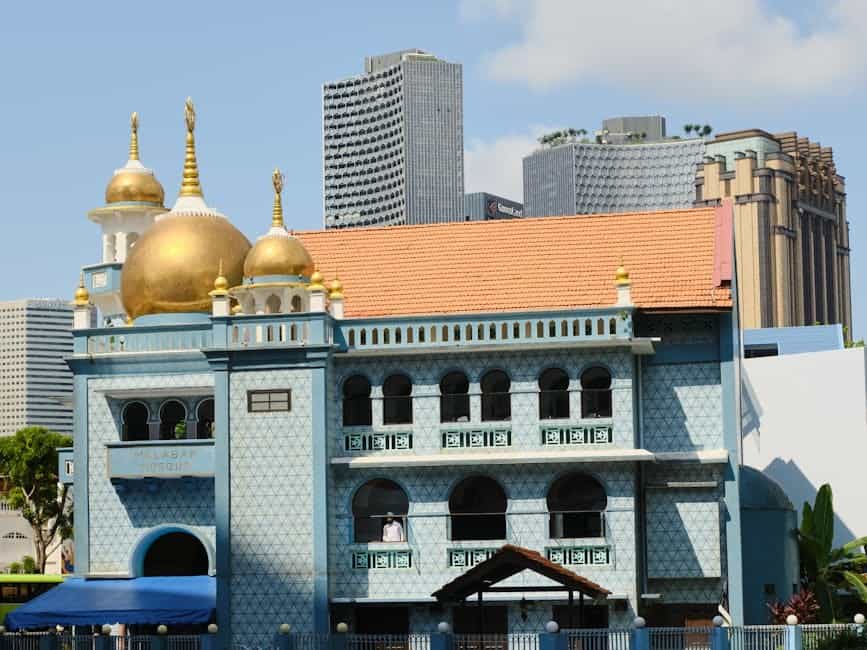
Kampong Glam is one of Singapore’s oldest Malay-Muslim quarters, historically designated in the 19th century for the Malay and Arab communities. It preserves rich cultural heritage through architecture, religious sites, and long-standing family businesses. The area embodies Singapore’s multicultural history and is important for understanding the island’s Arab, Malay, and broader Islamic influences.
Sultan Mosque (Masjid Sultan)
Sultan Mosque (Masjid Sultan) is one of Singapore’s most important religious landmarks and a focal point of the Kampong Glam Malay-Muslim community. Originally founded in 1824 under the patronage of Sultan Hussein Shah, the mosque was rebuilt in the early 1930s into the present structure. It has strong historical and cultural significance as a centre for worship, community gatherings, and Malay-Muslim heritage in Singapore and was gazetted as a national monument.
Haji Lane
Haji Lane sits in the heart of Kampong Glam, Singapore's historic Malay–Muslim quarter. The lane and surrounding streets grew from a trading and residential area for Arab merchants and Malay communities; it now blends that cultural heritage with a contemporary indie creative scene. Architecturally notable for its colorful 2–3 storey shophouses, the lane is an urban example of adaptive reuse where traditional buildings house modern boutiques, cafés and bars.
Tiong Bahru
Tiong Bahru is one of Singapore’s oldest public housing estates and a key heritage neighbourhood. Developed from the 1930s by the Singapore Improvement Trust (SIT), it showcases rare pre-war and Art Deco architecture in conserved residential blocks and shophouses. The area blends historical significance with a vibrant contemporary culture—independent bookstores, artisanal bakeries, design shops and a long-established hawker market—making it an important site for both urban history and contemporary lifestyle scenes.
Tiong Bahru Market
Tiong Bahru Market is a landmark hawker centre and wet market at the heart of the Tiong Bahru estate — one of Singapore's earliest public housing developments. The market has long served as a social and culinary hub for residents, preserving Singapore's hawker-food culture and everyday community life. Architecturally, the surrounding estate is noted for its pre-war Art Deco and Streamline Moderne blocks, giving the area a distinct historical character.
Raffles Hotel Singapore
Raffles Hotel Singapore is a colonial-era luxury hotel and one of Singapore's most iconic heritage landmarks. Established in the late 19th century by the Sarkies family, the hotel embodies Singapore's transformation from a trading port to a modern city-state and is a showcase of colonial architecture, hospitality traditions, and social life during the British colonial period. It is also internationally renowned as a symbol of Singaporean history and hospitality, hosting dignitaries, royalty, writers, and celebrities over many decades.
National Gallery Singapore
National Gallery Singapore houses the world's largest public collection of modern Singaporean and Southeast Asian art and is a leading cultural institution in the region. The Gallery is housed within two national monuments—the former City Hall and the former Supreme Court—built in neoclassical style and sensitively restored and linked to form a contemporary art museum. The institution plays a major role in preserving and presenting national identity, documenting regional modern art histories, and supporting contemporary artistic practice.
Asian Civilisations Museum
Asian Civilisations Museum (ACM) is Singapore's premier museum dedicated to exploring the artistic heritage of Asia, with particular strength in Chinese, Southeast Asian, South Asian and Islamic civilizations. Housed in the colonial-era Empress Place Building, ACM highlights Singapore's historical role as a trading entrepôt and showcases how cross-cultural exchange shaped art, religion and daily life across Asia.
National Museum of Singapore
Oldest museum in Singapore (origins 1849) housed in a restored colonial-era building; serves as the national museum documenting Singapore's social, political and cultural history through artefacts, multimedia and immersive displays. It plays a central role in preserving national memory, curating major travelling exhibitions, and interpreting Singapore's multicultural heritage for locals and visitors.
Peranakan Museum
Peranakan Museum celebrates the unique culture of the Peranakan (Straits Chinese) communities of Southeast Asia — a hybrid culture blending Chinese, Malay/Indonesian and colonial European influences. The museum preserves and showcases material culture (costumes, beadwork, porcelain, furniture, ritual objects) that documents domestic life, social customs and ceremonial practices, making it an important centre for understanding multicultural heritage in Singapore and the region.
Haw Par Villa
Haw Par Villa (originally Tiger Balm Garden, opened 1937) is a singular cultural theme park in Singapore created by the Aw brothers. It preserves a large collection of concrete dioramas and statues illustrating Chinese myths, folklore and moral values—making it important for cultural history, folk-religious narratives and popular education. The site is notable as an example of early 20th-century private philanthropic heritage turned public attraction.
Southern Ridges
Southern Ridges is a 10 km chain of green open spaces that links several parks and nature areas in southern Singapore (Mount Faber Park, Telok Blangah Hill Park, HortPark, Kent Ridge Park and Labrador Nature Reserve). It serves as an urban ecological corridor, providing habitat for native flora and fauna and offering panoramic views of the city, port and southern islands. The route also connects sites of historical and cultural interest — Mount Faber's colonial-era significance, Kent Ridge's World War II battle sites and Labrador's coastal fortifications — making the Ridges important for both nature conservation and heritage interpretation.
Henderson Waves
Henderson Waves is an iconic pedestrian bridge in Singapore and a standout piece of contemporary park infrastructure. Opened in 2008, it forms a key link in the Southern Ridges—connecting Mount Faber Park to Telok Blangah Hill Park—and showcases innovative urban park design that blends architecture with the tropical landscape. The bridge is celebrated for its sculptural, undulating form and use of timber and steel, offering elevated views over the city, harbor and surrounding green canopy.
Mount Faber Park
Mount Faber Park is one of Singapore's oldest and most accessible green hilltops, offering panoramic views of the city, harbour and southern islands. Named after Captain Charles Edward Faber, the park forms a key part of the Southern Ridges network of green spaces and serves both recreational and ecological roles—preserving native flora and providing an urban green corridor for wildlife and birdlife.
Fort Canning Park
Fort Canning Park is a historic hilltop park in the civic district of Singapore. It has layers of significance: a pre‑colonial ceremonial and political centre (linked to the 14th‑century settlement of Singapura), the site of Sir Stamford Raffles’ original residence in the 19th century, colonial military fortifications from the 1850s, and important World War II command facilities. Today it is a cultural green lung and heritage precinct that combines archaeology, colonial architecture and mature tropical trees.
Fort Siloso
Fort Siloso is the best-preserved coastal artillery fort in Singapore and an important reminder of the island's colonial and wartime past. Built by the British as part of Singapore's coastal defences, Fort Siloso played a role in the events surrounding the fall of Singapore in 1942 and later served various military uses. Today it is conserved as a heritage site and open-air museum that interprets military, social and maritime history while sitting within a coastal environment that supports shore vegetation and birdlife.
Sentosa Island
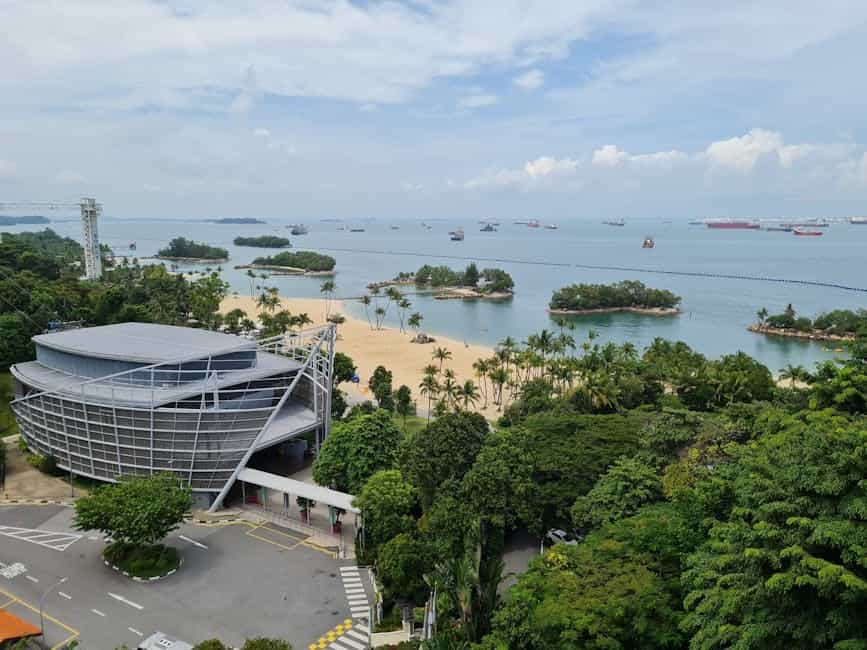
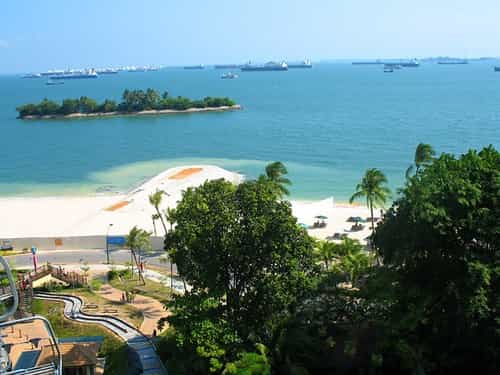
Sentosa Island is Singapore’s premier leisure island, transformed from a British military fortress and quarry into a major resort destination. It plays a key role in Singapore’s tourism strategy by combining historical sites, entertainment, nature conservation, and integrated resorts, highlighting the city-state’s shift from colonial past to a vibrant, family-friendly tourism hub.
Universal Studios Singapore
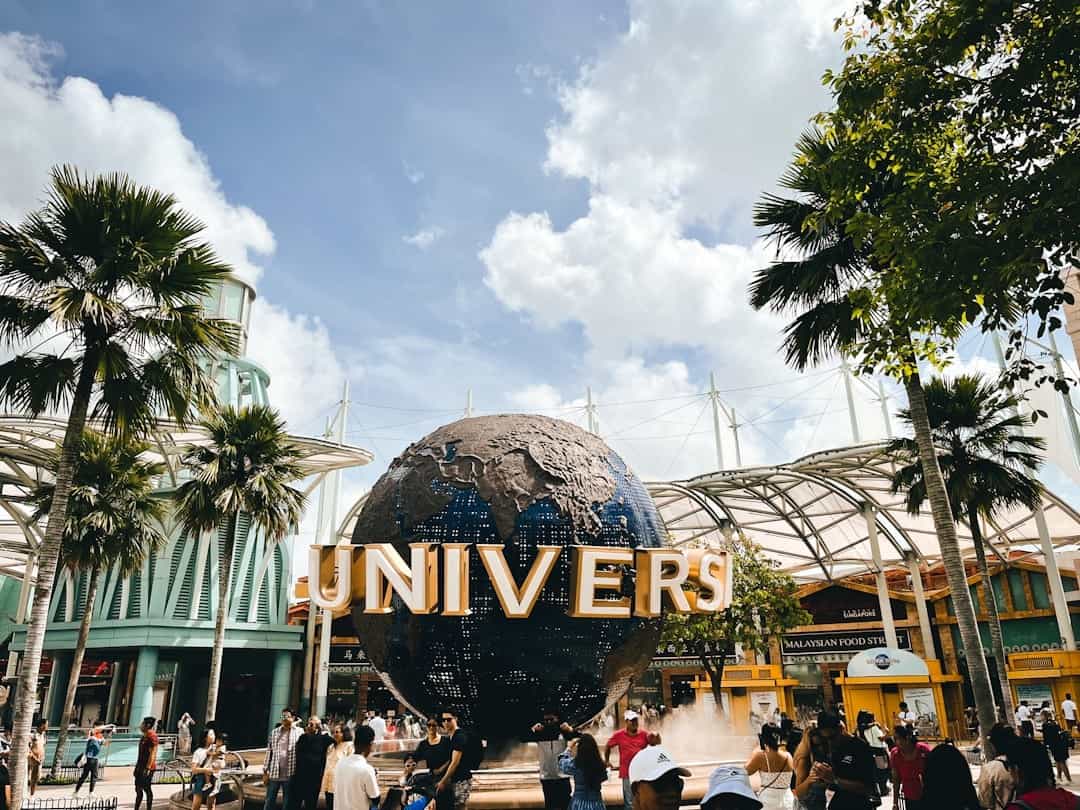
Universal Studios Singapore (USS) is a major theme park in Southeast Asia located on Sentosa Island as part of Resorts World Sentosa. Opened in June 2010, it helped position Singapore as a family and entertainment tourism hub in the region. USS blends international movie IPs with local tourism development, contributing significantly to Singapore's leisure economy and offering a cross-cultural attraction that appeals to both international visitors and local families.