Fansipan, Vietnam
Fansipan (3,143 m) is the highest peak in Vietnam and the entire Indochina Peninsula, often called the "Roof of Indochina." It is a major natural landmark in the Hoang Lien Son range and a biodiversity hotspot with montane forests, rare flora (including rhododendrons and orchids) and diverse fauna. The area is also culturally significant as home to several ethnic minority groups (Hmong, Dao, Tay, Giay) whose traditional lifestyles and festivals enrich the region's cultural landscape.
Last updated: 23 Oct 2025
Places to visit
- Fansipan Summit (the peak and its panoramic viewpoints)
- Sun World Fansipan Legend cable car and tourist complex
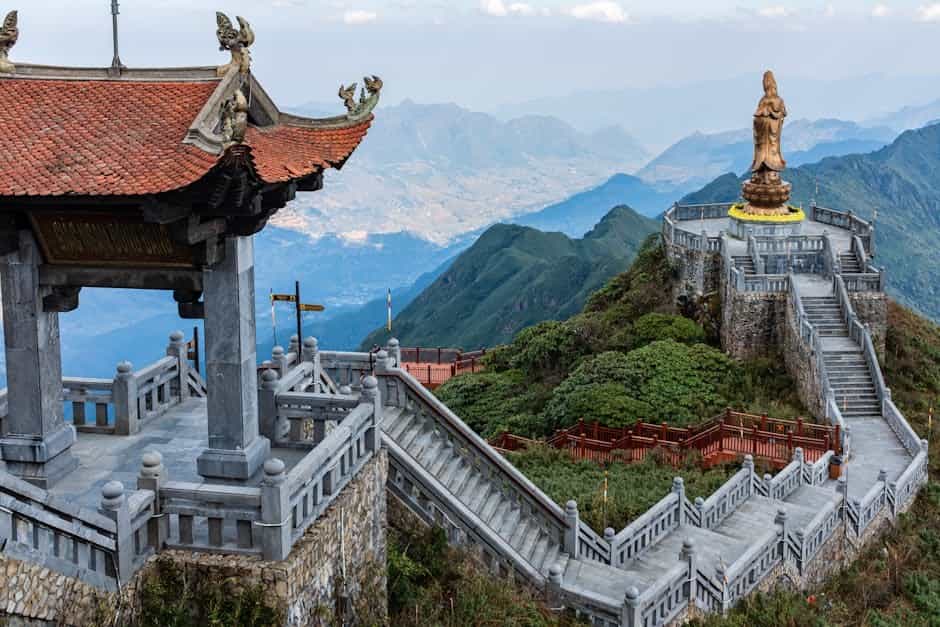
- Fansipan Summit Pagoda & statues (spiritual monuments at/near the top)
- Muong Hoa Valley and its terraced rice fields
- Tram Ton Pass (Heaven's Gate) — scenic high mountain pass
- Sapa Town (base for services, markets, villages and homestays)
- Ethnic minority villages (Cat Cat, Ta Phin, Lao Chai, Ta Van)
Unique Aspects
- Alpine and cloud-forest landscapes with seasonal 'sea of clouds' views
- Large rhododendron forests that bloom in spring
- High biodiversity including endemic plants and mountain bird species
- Modern cable car that reaches near the summit (dramatically reduces physical ascent)
- Cultural scenery: terraced rice paddies and traditional hill-tribe architecture
Things to do
- Trekking/climbing: multi-day routes (common 2–3 day treks) and shorter day hikes
- Cable car ride: quick ascent with panoramic views and short stair climb to the summit
- Photography: sunrise, sunset, cloud-sea and terraced landscapes
- Cultural homestays and village walks with ethnic-minority guides
- Market visits: Sapa town markets and local weekly markets (buy textiles and handicrafts)
- Birdwatching and nature walks in Hoang Lien National Park
Best Time to Visit
March–May and September–November for clearer skies, moderate temperatures and best views. Spring (Mar–Apr) for rhododendron blooms. Avoid the heart of the rainy season (June–August) if you want stable mountain weather.
Weather Conditions
Mountain climate: cool to cold at the summit. Daytime in Sapa town ranges from ~10–20°C (50–68°F) in many months; summit temps can drop near or below 0°C (32°F) in winter nights. Frequent fog and rapidly changing conditions are common.
Accessibility
Nearest hub: Sapa (Lao Cai province). Typical approach from Hanoi: 5–6 hours by road (car/coach) or train overnight to Lao Cai + ~1 hour transfer to Sapa. The Sun World Fansipan Legend cable car departs from near Sapa town (Cable Car Station/Complex). Roads to Sapa are well-traveled but can be winding and slow; weather may affect accessibility in winter or heavy rains. Nearest major airport: Noi Bai International Airport (Hanoi), ~320 km by road.
Recommended Duration
1 day if using the cable car (half-day to full-day visit). 2–4 days recommended for hiking/trekking, village visits and acclimatization.
Clothing & Gear Tips
Layered clothing; warm insulating layers for summit (fleece/jacket), waterproof outer shell, sturdy hiking boots, hat and gloves, sunscreen and sunglasses for sun at altitude. Trekking poles helpful for steep/rocky sections.
Local Food & Souvenirs
Local dishes to try: thắng cố (traditional Hmong stew), grilled mountain meats, local trout, sticky rice and corn-based specialties. Souvenirs: handcrafted textiles, woven scarves, silver jewelry, hemp and indigo fabrics, local honey.