Mount Kanchenjunga – Everything You Need to Know About Sikkim's Sacred Peak
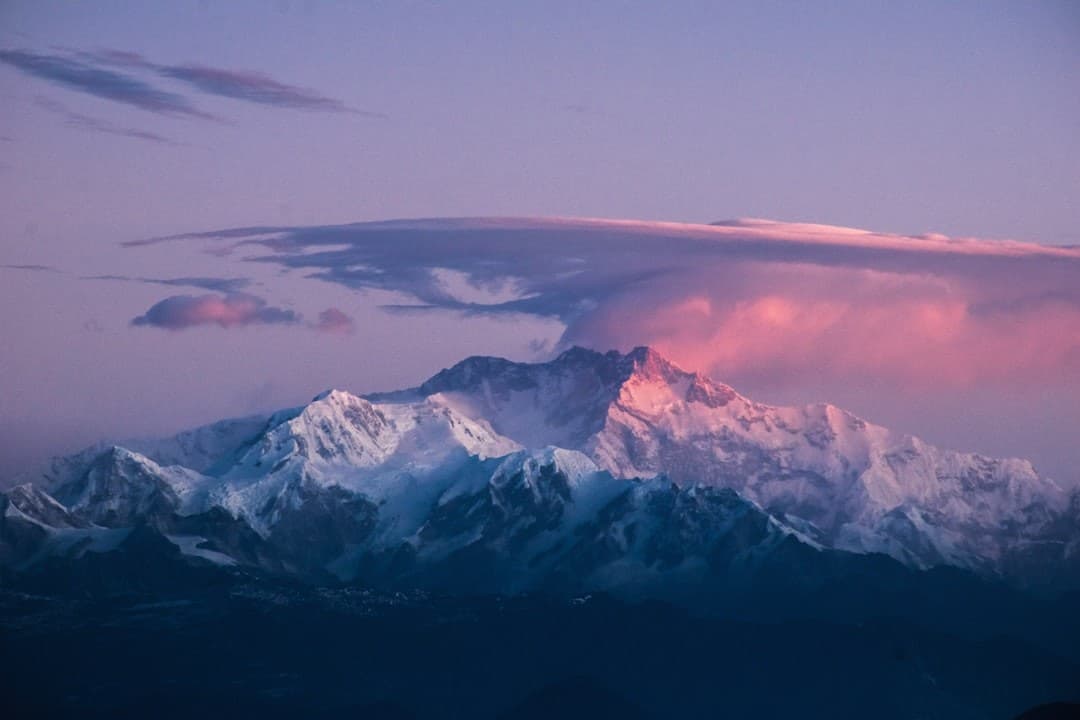
Few mountains on Earth command the reverence that Mount Kanchenjunga does. Rising to 8,586 metres (28,169 feet) on the border between Sikkim and Nepal, the world's third-highest peak isn't just a geographical marvel—it is a living deity for the people who dwell in its shadow. On clear mornings, when the first light gilds its five snow-draped summits in copper and gold, you begin to understand why the Sikkimese have worshipped this mountain for centuries and why they fiercely protect its sanctity to this day.
Whether you're planning a trek through Khangchendzonga National Park, hoping to catch sunrise from Goecha La, or simply want to understand the spiritual heartbeat of Sikkim, this guide covers everything you need to know about the great mountain the locals call Khangchendzonga.
The Five Treasures of the Great Snow
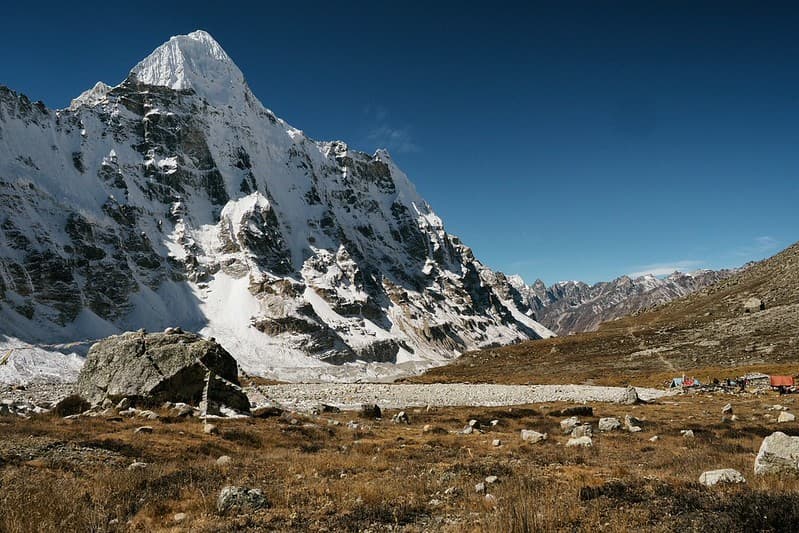
The name "Kanchenjunga" (also spelled Kangchenjunga or Khangchendzonga) derives from the Tibetan Kangchenzönga, meaning "Five Treasures of the Great Snow." The five summits are believed to be divine repositories of gold, silver, gems, grain, and sacred texts. The main peak stands at 8,586 m, followed by Kanchenjunga West (Yalung Kang) at 8,505 m, Kanchenjunga South at 8,494 m, Kanchenjunga Central at 8,482 m, and Kangbachen at 7,903 m. Three of these peaks sit on the border between North Sikkim and Nepal, while two lie entirely in Nepal's Taplejung district.
The massif forms a gigantic cross-shaped ridge system, with arms extending in all four cardinal directions. It is the highest peak in India and the easternmost eight-thousander in the Himalayas.
Why Kanchenjunga Is Sacred to Sikkim
Kanchenjunga's significance goes far deeper than altitude. The mountain is regarded as the home of Dzoe-Nga (also called Fo Lha), the principal guardian deity and protector spirit of Sikkim. For the Lepcha people—the indigenous inhabitants of the region—the mountain is the very cradle of humanity. They trace the name to their term Kingtsoom Zaongboo Choo, symbolising the peak that catches the day's first and last light, and believe their ancestors emerged from its pure snows.
In Tibetan Buddhism, Kanchenjunga is associated with powerful protector deities, and many Buddhists undertake pilgrimages to its base to seek blessings. The spiritual weight of the mountain is so immense that the Sikkim government has imposed a complete ban on climbing Kanchenjunga from the Indian side—a policy in place since 2001 and fiercely defended by indigenous communities and political leaders alike.
Even climbers approaching from the Nepal side traditionally halt a few metres short of the true summit as a mark of respect. When Joe Brown and George Band made the first successful ascent in 1955, they honoured this custom and stopped just below the top—a tradition most subsequent expeditions have followed.
Pang Lhabsol – The Festival That Honours the Mountain
No discussion of Kanchenjunga is complete without Pang Lhabsol, a festival unique to Sikkim that consecrates the mountain as the state's guardian deity. Celebrated on the 15th day of the 7th month of the Tibetan calendar—typically falling in late August or early September—the festival is a vibrant fusion of spirituality, history, and communal harmony.
The word Pang means "to witness," and during the festival the mountain god is invoked through elaborate rituals and sacred masked dances called chaams. The spectacular Pang-Toed warrior dance, choreographed by the third Chogyal (Dharma King) Chakdor Namgyal, features monks in fiery red-faced masks and five-skull crowns riding symbolic snow lions. The festival also commemorates the 13th-century Blood Brotherhood oath between the Lepcha and Bhutia communities at Kabi Lungchok, with Kanchenjunga as the sacred witness.
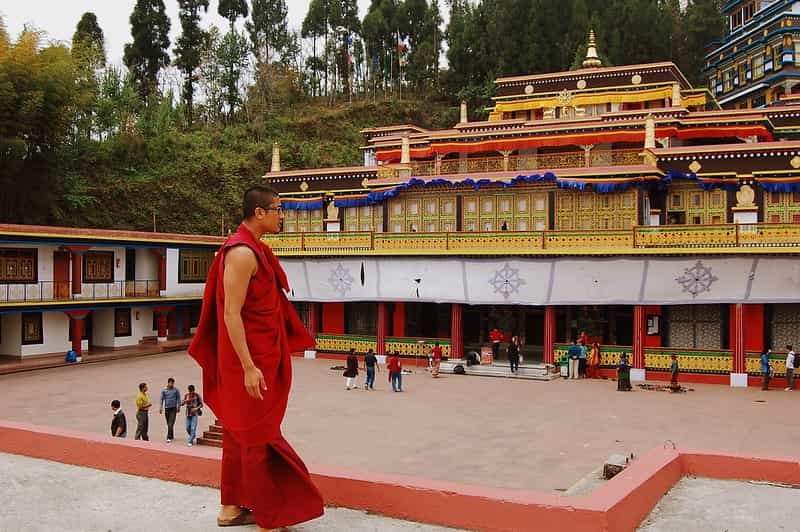
The grand celebrations take place at Tsuklakhang Monastery in Gangtok and draw devotees and visitors from across the world. If you're visiting Sikkim in late August or September, timing your trip around Pang Lhabsol is an unforgettable cultural experience.
Khangchendzonga National Park – A UNESCO Treasure
Kanchenjunga anchors one of the planet's most extraordinary protected areas. Khangchendzonga National Park covers roughly 1,784 square kilometres—about 25% of Sikkim—and became India's first Mixed UNESCO World Heritage Site in 2016, recognised for both its natural and cultural significance.
The park's altitudinal range is staggering: over 7 vertical kilometres from subtropical forests at around 1,220 m to the icy summit at 8,586 m. This gradient supports an astonishing concentration of biodiversity—nearly half of India's bird diversity, wild trees, orchids, and rhododendrons, and one-third of the country's flowering plants call this park home. Wildlife includes the elusive snow leopard, red panda, Himalayan black bear, musk deer, blue sheep, and the blood pheasant (Sikkim's state bird). The park also shelters 18 glaciers, including the famous Zemu Glacier, and over 20 peaks above 6,000 metres.
In a recent IUCN global review, Khangchendzonga was rated "Good"—the only Indian natural World Heritage site to receive a positive conservation status.
Best Viewpoints to See Kanchenjunga
You don't need to be a mountaineer to be moved by Kanchenjunga. Sikkim offers several spectacular vantage points:
- Goecha La Viewpoint (4,719 m): The crown jewel. The Goecha La trek brings you face-to-face with Kanchenjunga's massive southeast face at sunrise—an image that stays with you forever. The trek starts from the historic town of Yuksom and covers roughly 90 km over 8–11 days through rhododendron forests, alpine meadows, and moraine ridges inside Khangchendzonga National Park.
- Dzongri Top (4,020 m): A midpoint on the Goecha La trail offering a sweeping panorama of the entire Kanchenjunga massif, plus Kabru, Pandim, Rathong, and Siniolchu.
- Pelling: The most accessible viewpoint for non-trekkers. Pair your sunrise vigil with a visit to the Chenrezig Skywalk and Pemayangtse Monastery.
- Tashi View Point, Gangtok: A quick drive from the capital for early-morning views when skies are clear.
- Ravangla and Barsey Rhododendron Sanctuary: Off-the-beaten-path ridges with Kanchenjunga framed by blooming rhododendrons in spring.
Best Time for Clear Views
The best time to visit Sikkim for mountain views is October–November (crisp post-monsoon skies) and March–May (rhododendron bloom with warming days). Monsoon months (June–September) bring cloud cover that often obscures the peaks.
The Goecha La Trek – Walking Toward the Giant
The Goecha La trek is Sikkim's signature high-altitude adventure and the most popular way to get close to Kanchenjunga without climbing it. Here's what you need to know:
- Duration: 8–11 days
- Distance: ~90 km round trip
- Highest point: Goecha La Pass Viewpoint 1 at 4,719 m
- Difficulty: Strenuous; requires good fitness and prior trekking experience
- Start point: Yuksom, West Sikkim
- Best months: April–May and October–November
- Permits: Required; arranged through registered trekking operators
The trail passes through dense forests, crosses suspension bridges over the Prek Chu river, climbs through the stunning meadows of Dzongri and Thansing, and skirts the turquoise Samiti Lake before reaching the final viewpoint. The variety of landscapes—subtropical woods, rhododendron tunnels, alpine grasslands, glacial moraines—makes every day visually distinct.
Insider tip: Start the Dzongri Top and Goecha La summit-day hikes well before dawn. The peaks are often cloud-free only in the first hours of morning light.
Practical Tips for Travellers
- Permits are essential. Indian nationals need permits for North Sikkim circuits and treks inside the national park; arrange through registered operators 24–48 hours in advance. Foreigners require a Protected/Restricted Area Permit and face additional area restrictions—check current rules before booking.
- Acclimatise properly. Whether you're trekking to Goecha La or driving to high-altitude lakes like Gurudongmar, altitude sickness is a real risk above 3,500 m. Go slow, hydrate, and heed your body.
- Respect the mountain. Kanchenjunga is not a backdrop for selfies—it is a deity. Be mindful at viewpoints and monasteries, keep noise down, and carry all waste out.
- Pack layers. Temperatures at altitude can plunge below 0°C even in spring. Bring thermals, a quality down jacket, and a wind-proof shell.
- Hire local. Sikkimese guides and porters know the terrain, the weather patterns, and the stories. Hiring locally supports the mountain communities that steward this landscape.
Final Thoughts
Mount Kanchenjunga is more than a statistic on a list of the world's tallest peaks. It is the spiritual anchor of an entire state—a mountain whose five summits hold treasures not of gold and silver alone, but of identity, faith, and belonging. Whether you see it from a misty Gangtok balcony, a windswept ridge at Dzongri, or the sacred precincts of Tsuklakhang during Pang Lhabsol, the mountain has a way of stopping you mid-breath and rearranging your sense of scale.
Plan your Sikkim journey with the mountain at its centre, and you won't just visit a destination—you'll encounter a living, worshipped presence that has shaped a culture for centuries.
Leave a Comment
Explore Sikkim
Ready to plan your trip? Check out our complete travel guide and packages.