Traditional Kerala Beverages: Toddy, Kanjivellam and More
Kerala is a destination that seduces every sense — the emerald shimmer of backwaters, the percussion of temple drums, the fragrance of cardamom in hill-station air. But to truly taste this lush corner of India, you need to look beyond the banana-leaf sadya and explore what's in the glass. From the milky-white palm wine served in rustic toddy shops to the rosy-pink herbal water placed on every restaurant table, Kerala's traditional beverages are a living archive of the state's climate, agriculture, Ayurvedic wisdom, and communal warmth.
Here's your guide to the drinks that define Kerala — and where to find them on your next trip.
Toddy (Kallu) — Kerala's Iconic Palm Wine
No conversation about Kerala beverages begins without toddy, locally called kallu. At its core, toddy is a fermented beverage derived from the sap of palm trees — typically the coconut palm or the palmyra palm — tapped and collected daily. The fermentation process produces a drink that ranges in flavour from sweet and citrusy to mildly sour, with a gentle carbonation.
How It's Made
The craft behind toddy is as dramatic as the drink itself. Toddy tappers climb towering palm trees — sometimes over 70 feet tall — with nothing more than a coir rope and a determined spirit, making precise incisions in the unopened flower buds. Clay pots are then attached to collect the sap, which drips down steadily over a few hours. The liquid begins fermenting the moment it leaves the palm, which is why for centuries it has remained a fiercely local drink, consumed within hours, sometimes minutes, of being tapped.
When the sap is extracted from a palm tree, the yeast in the air immediately ferments the white liquid — within two hours, you'll have a palm wine that is sweet in taste and has a 4–6% alcohol content.
The Toddy Shop Experience
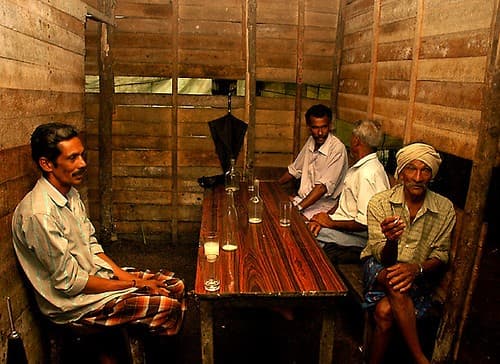
Don't visit Kerala without stepping inside a kallu shaap. Toddy shops, locally known as kallu shaap, are a quintessential part of Kerala's cultural and culinary heritage. These rustic establishments are famed for their unpretentious charm, vibrant atmosphere, and hearty dishes that celebrate the bold, spicy, and diverse flavors of Kerala's traditional cuisine.
Although toddy is in the name, the most popular shaaps are famous for their food. Think fiery fish curries with tapioca (kappa), duck roast simmered in coconut milk, beef ularthiyathu fried with pepper and curry leaves, and prawn roasts that make your eyes water — in the best possible way. The menu includes local specialties like kappa with meen curry, tharav (duck) roast, and chemmeen (prawns). The food — generously rolled in all kinds of spices — is freshly prepared in limited quantities; most toddy shops don't use refrigerators to preserve food.
Toddy is sold under a license issued by the excise department and is an industry having more than 50,000 employees with a welfare board under the labor department. Toddy is exempted even on dry days, so it is available year-round.
Insider tip: Head to the backwaters around Alappuzha (Alleppey) or the villages near Kochi for the most atmospheric toddy shop cuisine experience — some are accessible only by boat.
Neera — The Non-Alcoholic Sibling
If toddy is the rebellious sibling, neera is the well-behaved one. Neera, also called palm nectar, is a sap extracted from the inflorescence of various species of toddy palms. Neera extraction is generally performed before sunrise. It is sweet and translucent in colour. Neera is the non-alcoholic, fresh sap collected from the unopened palm inflorescence — while toddy is fermented sap, containing alcohol.
Tapped from the bunches on coconut trees, neera is sweet and a proven health drink, while toddy, also from the same source, has an alcohol content of five to eight percent. It is marketed as an energy drink, rich in sugars, minerals and vitamins, with a low glycemic index of 35.
Neera is perfect for travellers who want the palm-tree experience without the buzz. Look for packaged versions at local shops, or ask your houseboat crew if fresh neera is available during your backwater houseboat cruise on Vembanad Lake.
Kanjivellam — The Humble Rice Water
Before energy drinks and electrolyte sachets, Kerala had kanjivellam — literally, the starchy water left over from cooking rice. Kanjivellam (rice water strained after cooking from par-boiled or boiled rice) is very nutritious. Kanji vellam is boiled rice water and a rich source of starch.
In traditional Kerala households, kanjivellam is sipped warm with a pinch of salt, sometimes enriched with a splash of pulissery (yogurt curry) or rasam. Up until the 19th century, most households in Southern India would consume what they called neeragaram — fermented rice water. It is also said that because farming was the major occupation, this drink was predominantly consumed to energise oneself before the work day began.
While you won't find kanjivellam on restaurant menus, you might encounter it at a Kerala cooking class or village homestay — ask your host, and you'll likely be rewarded with a warm glass and a story from their childhood.
Pathimugam Vellam — Kerala's Famous Pink Water
If you've ever sat down at a Kerala restaurant and been served a glass of striking pink water, you've already met pathimugam. Walk into any traditional Kerala home and you are likely to find a clay pot of reddish water sitting on the kitchen counter. That is pathimugam water — a beloved household herbal drink tradition made from pathimugam (Caesalpinia sappan / sappanwood). Its distinctive deep red colour and earthy aroma have made it a staple of Kerala wellness culture for generations.
Pathimugam is traditionally believed to help cool the body and support digestion. In a hot, humid climate, that made it a sensible choice. This drink has been common in Kerala homes for decades, especially during summer. Before packaged drinking water became widespread, boiling water with pathimugam was a practical way to make it safer and more refreshing.
You'll encounter pathimugam water at traditional Ayurveda massage and wellness retreat centres, houseboats in Alleppey, and sadya feasts during Onam — it's as much a part of the Kerala dining table as the banana leaf itself.
Sambharam — Spiced Buttermilk
Kerala's answer to the scorching summer sun is sambharam, a spiced buttermilk that doubles as a digestive and a thirst-quencher. Sambharam is a refreshing drink made by blending curd (yogurt) with water, chili, ginger and salt. Unlike North India's sweet variety, sambharam is a spicy variant of buttermilk. It is an excellent cooler and the go-to drink for Keralites during the summer, made by adding crushed bird's eye chillies, shallots, curry leaves, ginger and salt to diluted buttermilk.
Sambharam is usually served as the last course in the Kerala sadhya and is often served in the cup of your palm to drink first before pouring a bit into the rice and having it as the last part of the meal.
Order it at any meals restaurant, or look for roadside petti shops selling chilled packets — it's one of the cheapest and most satisfying drinks in all of India.
Other Herbal Infusions Worth Trying
Kerala's beverage culture extends well beyond the drinks above. In the hot summer months, if you visit any Kerala house or restaurant you will be served warm pinkish to red coloured water — karingali vellam — water infused with herbs, roots, bark and seeds. If this is not the choice, then there will be jeerakavellam, a faint infusion of cumin in water. When you have had a full sumptuous banana leaf meal, you need a cup of chukku vellam, warm water infused with dry ginger to aid digestion.
- Jeerakavellam — cumin-infused warm water, a gentle digestive
- Chukku vellam — dry-ginger water, ideal after a heavy sadya
- Karingali vellam — a reddish herbal infusion similar to pathimugam
- Avil milk — made of banana, milk and roasted rice flakes, this is a comparatively modern drink that first appeared in Malappuram
Practical Tips for Beverage Lovers in Kerala
- Best time to visit a toddy shop: Arrive by noon for the freshest toddy and the full food menu; most shops cook in limited batches and run out by mid-afternoon.
- Toddy etiquette: Toddy is served in steel tumblers or clay pots. Sip slowly — it's mild but can sneak up on you. Pair it with the spiciest dish on the menu for the authentic local experience.
- Neera availability: Fresh neera is seasonal and perishable; packaged versions are easier to find at supermarkets and railway stations.
- Pathimugam at home: Pick up dried sappanwood chips from any spice market in Kozhikode — they're lightweight, inexpensive, and make a wonderful souvenir.
- Stay hydrated: Kerala's humidity is intense. Sambharam, tender coconut water, and pathimugam vellam are your best friends between meals.
- Respect local norms: Kerala's excise rules can be conservative. Check for dry-day advisories, and note that toddy shops typically close by evening.
Raise a Glass to Kerala
Kerala's beverages are far more than refreshments — they are stories in liquid form. Toddy speaks of daring tappers and centuries-old village ritual. Kanjivellam recalls a grandmother's kitchen and the simple wisdom of waste-nothing cooking. Pathimugam connects you to Ayurveda's ancient cooling science, and sambharam anchors every festive sadya with a probiotic flourish.
So on your next trip to God's Own Country, go ahead — cruise the backwaters, watch the Kathakali classical dance performance, trek the tea-draped hills. But between adventures, make time to sit at a weathered toddy shop bench, order a tumbler of fresh kallu alongside a plate of fiery fish curry, and drink in a tradition that has been flowing through Kerala for centuries.
Cheers — or as they say in Malayalam, "Adipoli!"
Leave a Comment
Explore Kerala
Ready to plan your trip? Check out our complete travel guide and packages.