Bhutan's Gross National Happiness: What Travelers Need to Know
Imagine landing in a country where the government doesn't ask "How much money did we make this year?" but instead asks "Are our people happy?" Welcome to Bhutan—a tiny Himalayan kingdom roughly the size of Switzerland, where national success isn't measured by GDP, but by something far more profound: Gross National Happiness (GNH).
If you're planning a trip to Bhutan in 2026, understanding GNH isn't just an intellectual exercise. It's the key to unlocking why this country feels so remarkably different the moment you step off the plane. From the daily fee you pay as a tourist to the pristine forests blanketing the mountains, every detail of your Bhutanese experience is shaped by this one extraordinary philosophy.
Let's dive in.
What Exactly Is Gross National Happiness?
The term Gross National Happiness was coined in the 1970s by Bhutan's fourth king, Jigme Singye Wangchuck, who famously declared that "Gross National Happiness is more important than Gross Domestic Product." It wasn't a throwaway line—it became the foundation for an entirely new way of running a country.
Unlike GDP, which only tracks economic output, GNH takes a holistic approach to measuring progress. It integrates nine core domains that together paint a full picture of how well a society is actually doing:
- Psychological well-being
- Health
- Education
- Time use and balance
- Cultural diversity and resilience
- Good governance
- Community vitality
- Ecological diversity and resilience
- Living standards
Within these nine domains, 33 specific indicators assess whether citizens have achieved sufficiency in critical aspects of life. A person is classified as "happy" if they meet at least two-thirds of these indicators, while the rest are considered "not-yet-happy"—a term that itself reveals Bhutan's optimistic worldview, signaling opportunities for improvement rather than failure.
This framework isn't merely symbolic. Every government policy in Bhutan is screened through a GNH Screening Tool to ensure it aligns with the country's happiness goals. It's policy-making with a conscience.
The Four Pillars That Hold It All Together
Beneath the nine domains, GNH rests on four foundational pillars that guide Bhutan's national direction:
1. Good Governance
Bhutan's government is structured to serve the well-being of its people first. Policies are evaluated not just for economic efficiency but for their impact on citizens' quality of life.
2. Sustainable Socioeconomic Development
Economic growth matters in Bhutan, but never at the expense of long-term well-being. Development is pursued in balance with social and environmental needs.
3. Preservation and Promotion of Culture
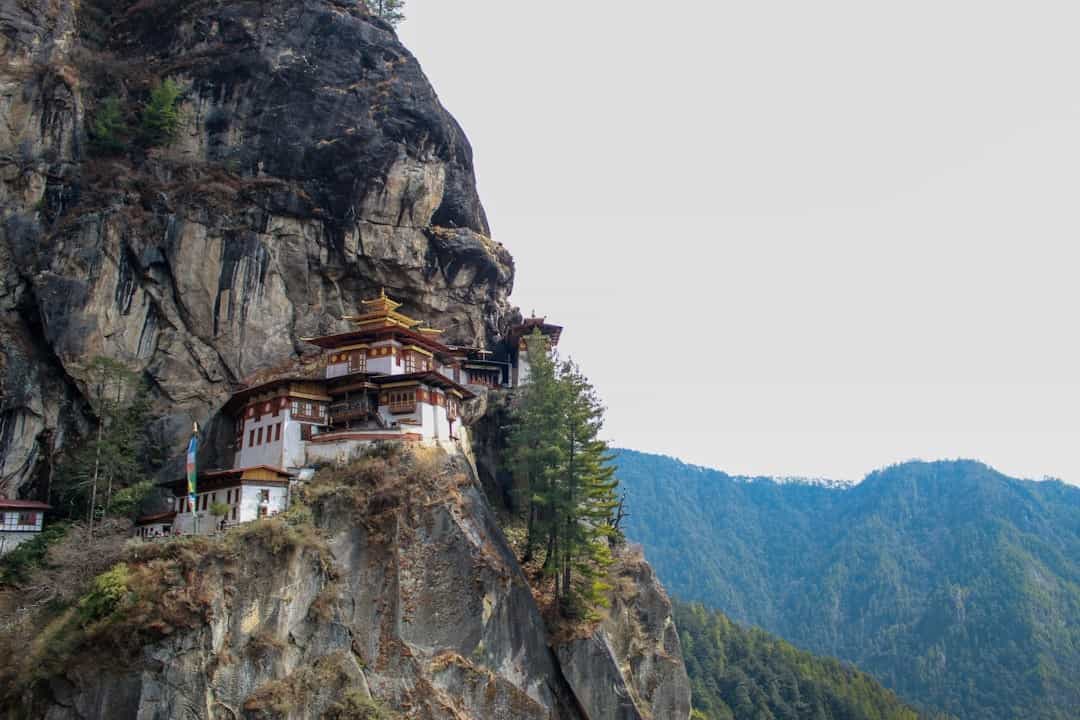
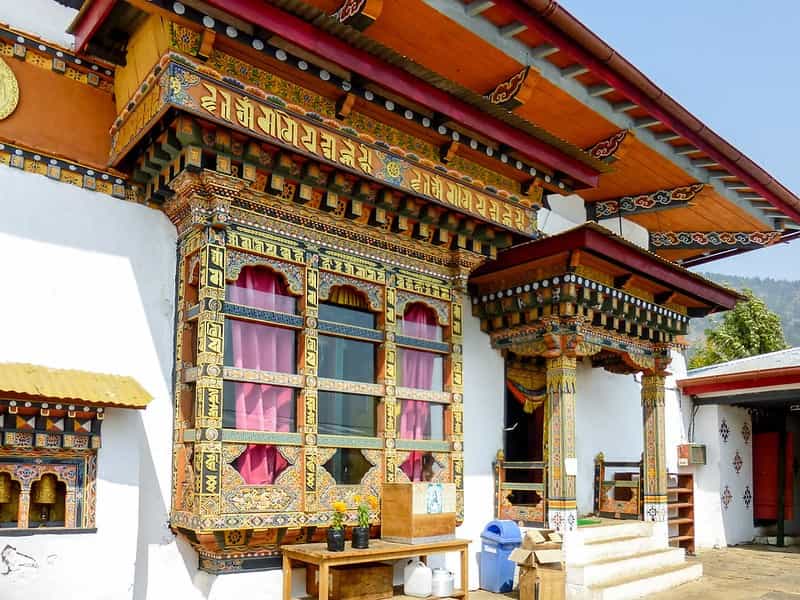
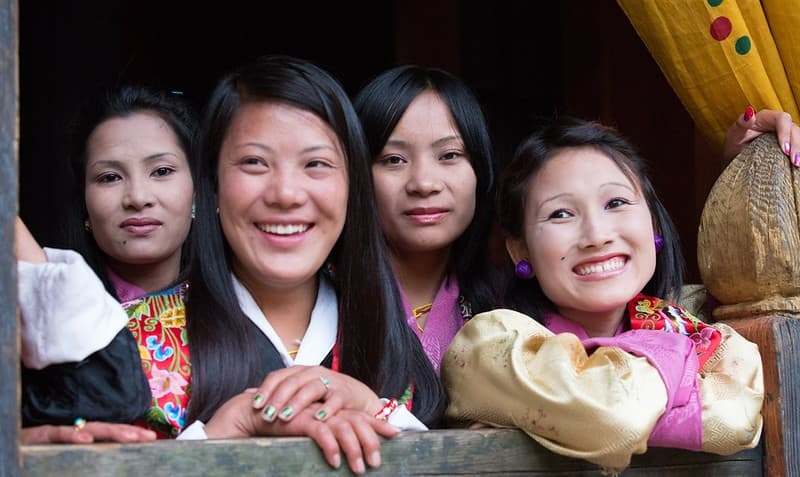
Bhutanese culture isn't confined to museums—it's alive in daily life. People wear traditional attire like the Gho and Kira not as performance for tourists, but as a genuine part of everyday identity. Monasteries remain active centers of spirituality and learning.
4. Environmental Conservation
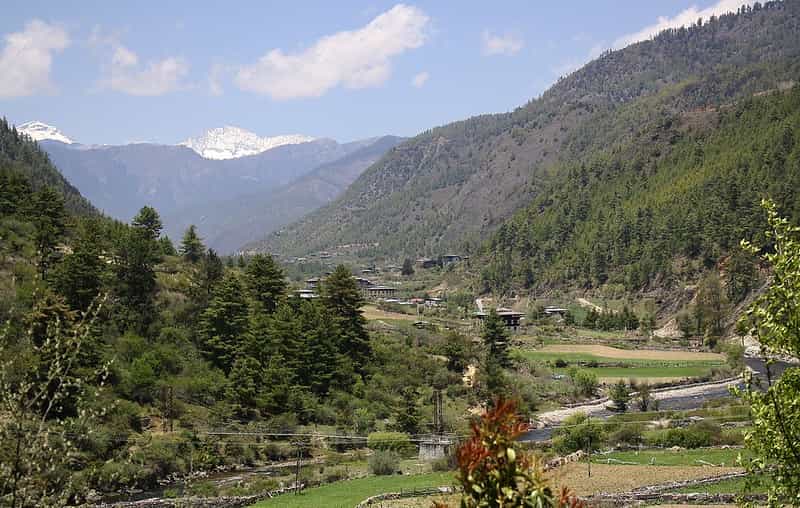
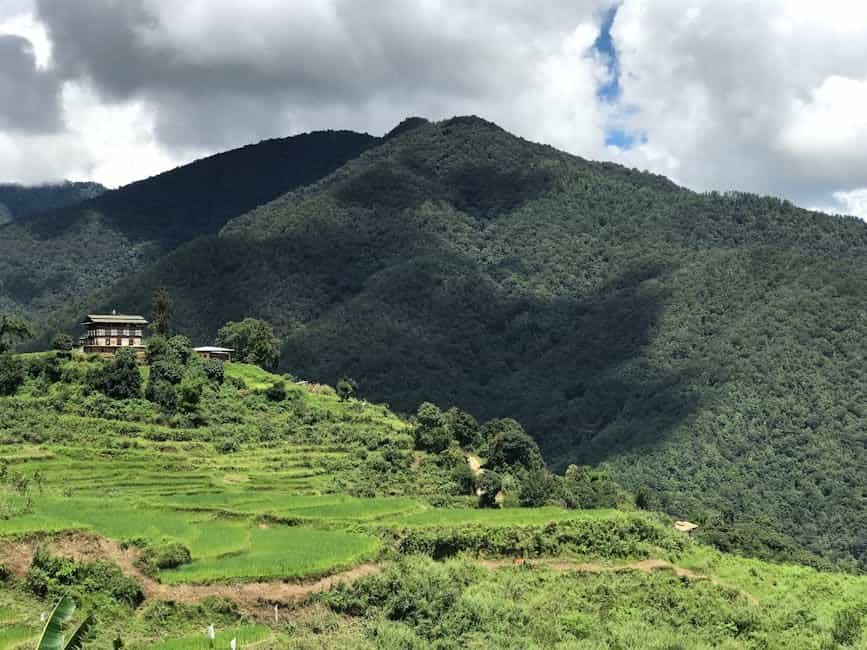
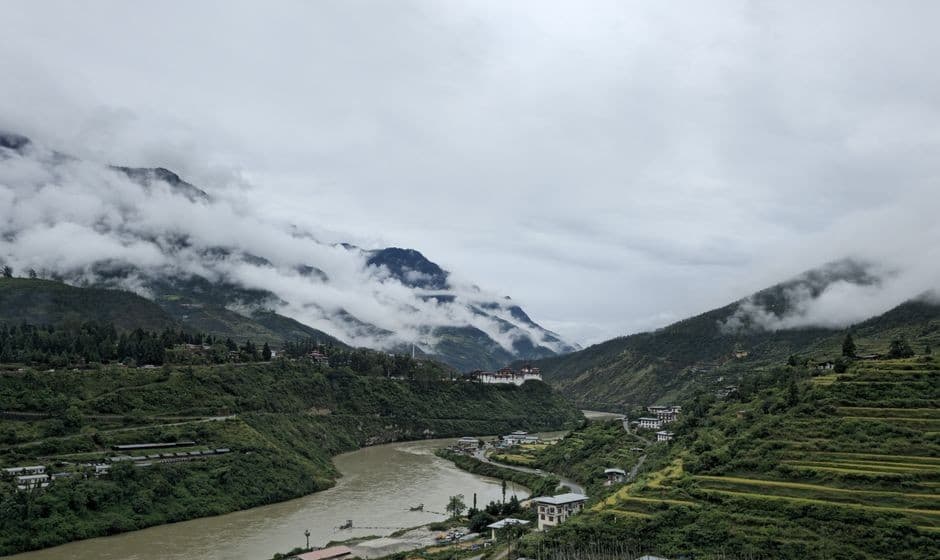
This is where GNH gets truly radical. Bhutan's constitution mandates that at least 60% of the country must remain forested for all time. Currently, over 72% of the country is covered in forest, making Bhutan the world's only carbon-negative country—its forests absorb significantly more carbon dioxide than the nation emits.
How GNH Shapes Your Travel Experience
As a visitor, you won't just read about GNH—you'll live it. Here's how the philosophy directly impacts your trip:
The Sustainable Development Fee (SDF)
Bhutan's famous "High Value, Low Impact" tourism policy is GNH in action. As of 2026, international visitors pay a Sustainable Development Fee of US$100 per person, per night (reduced from $200, with this discounted rate valid until August 31, 2027). There's also a separate $40 visa fee and a new 5% GST on tourism services introduced in January 2026.
This isn't just a tax—it's an investment. The SDF directly funds free healthcare, free education, cultural preservation, and environmental conservation for all Bhutanese citizens. When your guide thanks you for paying the fee, they genuinely mean it.
Guided Travel Only
All international travelers must book through a licensed Bhutanese tour operator or their authorized partner. Independent backpacking isn't permitted. While this might sound restrictive, it ensures that tourism remains sustainable and that visitors receive deep, authentic cultural experiences rather than superficial ones.
A Carbon-Negative Destination
Bhutan produces roughly 1.5 million tonnes of carbon annually, but its vast forests absorb over 6 million tonnes. The country also generates massive amounts of clean hydroelectric energy, exporting surplus electricity to neighboring India. When you travel to Bhutan, you're visiting one of the most environmentally responsible destinations on Earth.
What GNH Feels Like on the Ground
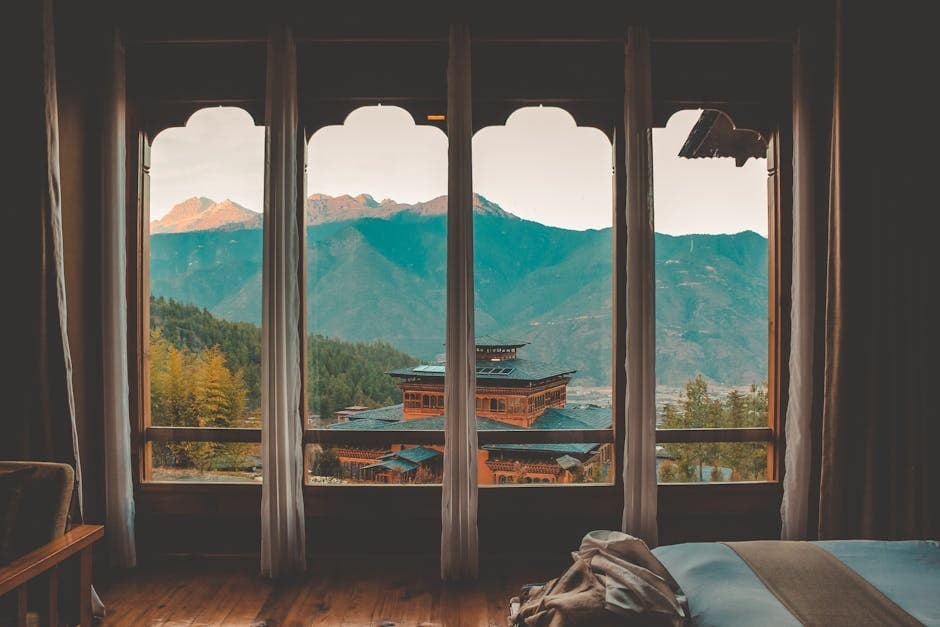
The philosophy of GNH draws deeply on Buddhism, which is central to Bhutanese life. Spirituality isn't separate from governance or daily routine—it permeates everything.
You'll notice it in the tranquility of the valleys, in the genuine warmth of the people, and in the palpable sense of peace that pervades even Bhutan's capital, Thimphu—notably, one of the only capital cities in the world without a single traffic light.
You'll see it in the vibrant Tshechu festivals, multi-day celebrations of sacred dance and music held in monasteries and dzongs (fortress-monasteries) across the country. These aren't tourist shows—they're profound religious and social gatherings that have been held for centuries.
And you'll feel it in the simplicity. Life in Bhutan isn't driven by excess. Homes are built with traditional materials. Meals are basic but nourishing. There's a rhythm to daily life that feels grounded and intentional.
The Gelephu Mindfulness City: GNH's Bold Future
Bhutan isn't resting on its laurels. The kingdom is currently developing the Gelephu Mindfulness City (GMC), a visionary new urban hub in southern Bhutan designed by the renowned Bjarke Ingels Group (BIG). Established by Royal Charter in December 2024 as a Special Administrative Region, this transformative project features eleven mandala-inspired neighborhoods connected by green corridors.
The GMC embodies Bhutan's commitment to GNH principles—prioritizing personal well-being, spiritual growth, and ecological harmony alongside economic progress. It aims to attract travelers seeking spiritual and mental rejuvenation while serving as a global model for sustainable urban development. It's proof that GNH isn't a static philosophy—it's evolving.
Practical Tips for Experiencing GNH as a Traveler
Want to truly engage with Bhutan's happiness philosophy during your visit? Here's how:
- Dress modestly, especially at temples and monasteries. Bhutanese people deeply value cultural respect.
- Ask before photographing locals or religious sites. Consent matters.
- Minimize your environmental footprint. Avoid single-use plastics, carry a reusable water bottle, and choose eco-friendly accommodations.
- Buy local. Purchase handmade textiles, crafts, and products directly from artisans. Community-based tourism initiatives let you contribute directly to Bhutan's sustainable economy.
- Slow down. Bhutan rewards patience. Don't rush between attractions—sit in a monastery courtyard, share tea with your guide, watch the prayer flags flutter. The happiness philosophy is best absorbed at a gentle pace.
- Attend a Tshechu if your timing allows. These festivals offer the most immersive window into Bhutanese culture and spirituality.
Is Bhutan Really the "Happiest Country"?
It's worth noting that GNH doesn't mean Bhutan is a utopia. The country faces real challenges, including youth unemployment, emigration of educated citizens, and urban-rural disparities. GNH is an aspiration and a framework—not a claim that every citizen is perpetually blissful.
But what makes Bhutan remarkable is that it dares to measure what matters. By placing well-being, culture, community, and the environment alongside economics, Bhutan has influenced global thinking—from the UN World Happiness Report to New Zealand's pioneering "wellbeing budgets."
Final Takeaways
If you visit Bhutan in 2026, here's what to carry with you:
- GNH is real policy, not a slogan. Every law, every fee, every forest you see exists because of this philosophy.
- Your tourist fee makes a difference. The $100 daily SDF funds healthcare, education, and conservation.
- Respect the culture. You're not just visiting a destination—you're entering a living philosophy.
- Embrace the pace. Bhutan teaches that happiness doesn't come from more, but from enough.
- Leave inspired. Most travelers don't just enjoy Bhutan—they return home questioning their own definitions of success and happiness.
Bhutan won't change your Instagram feed. It might just change your perspective on life.
Planning a trip to Bhutan? Book through a licensed Bhutanese tour operator, budget for the $100/night SDF plus the $40 visa fee, and prepare for one of the most meaningful travel experiences on Earth.
Leave a Comment
Explore Bhutan
Ready to plan your trip? Check out our complete travel guide and packages.