Glaciers of Himachal Pradesh: A Guide to Frozen Himalayan Wonders
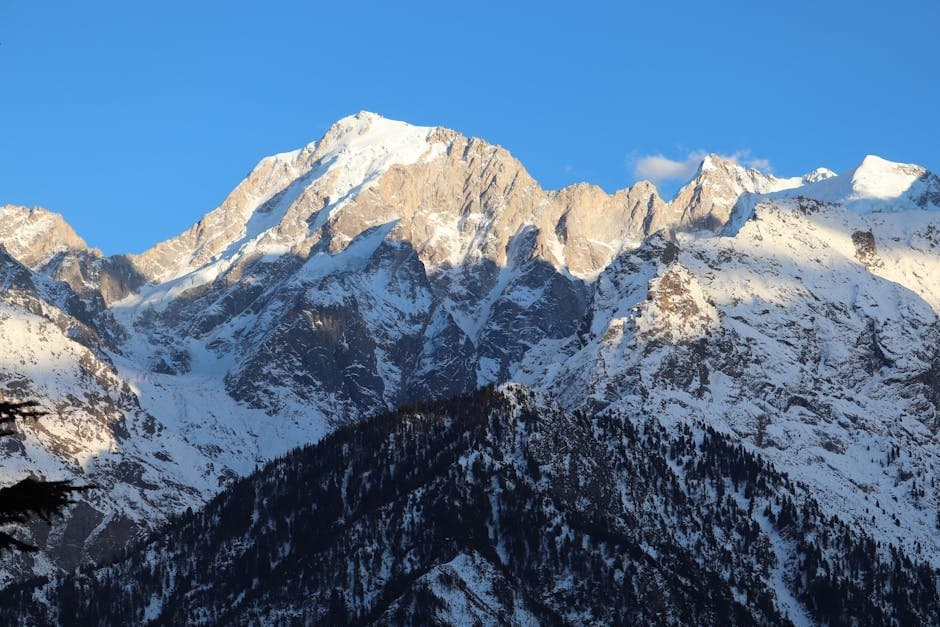
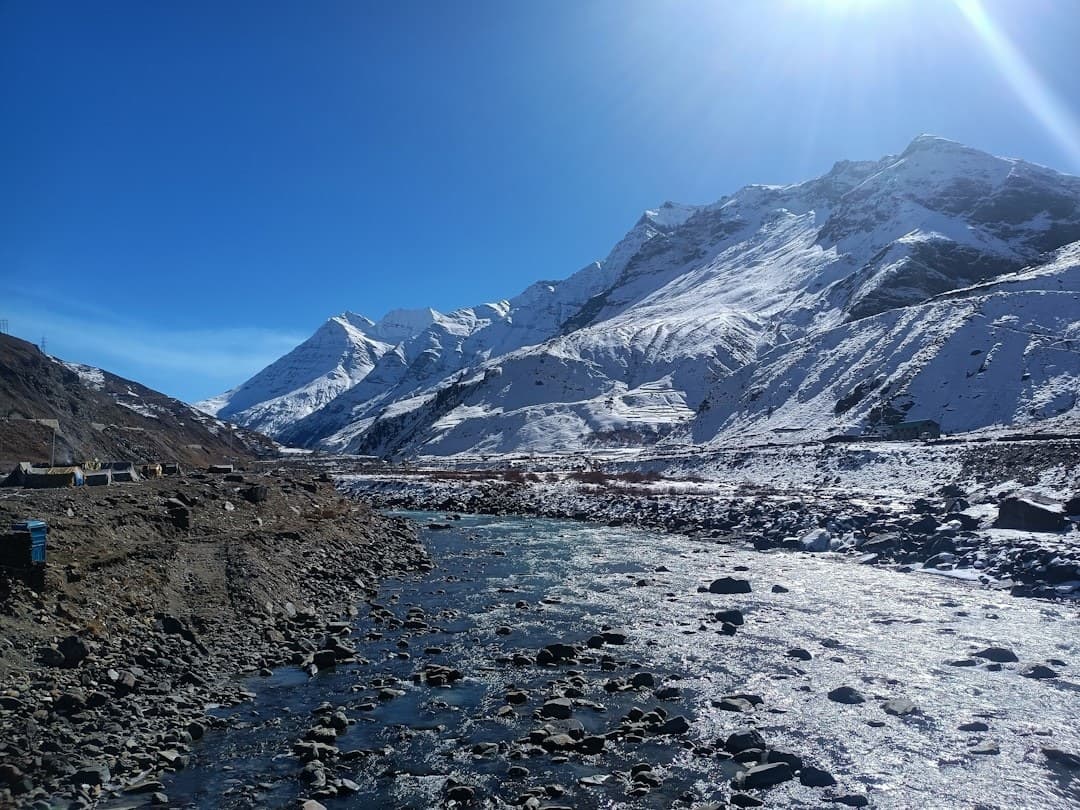
Few experiences match the primal thrill of standing at the foot of a Himalayan glacier — ice creaking in the silence, meltwater braiding through moraine, and summits rising like broken teeth against a cobalt sky. Himachal Pradesh, cradled between the Pir Panjal and the Great Himalayan Range, is home to some of India's most spectacular glaciers. Whether you're a seasoned mountaineer eyeing a multi-day expedition or a curious traveller hoping to glimpse an ice wall from a roadside viewpoint, this guide will help you explore the frozen wonders of Himachal.
Why Himachal Pradesh Is a Glacier Wonderland
Himachal Pradesh harbours an extraordinary concentration of glaciers. The state is home to roughly 2,554 documented glaciers, covering an area of about 4,160 square kilometres and holding ice reserves of some 387 cubic kilometres. The highest number of glaciers are found in the Sutlej basin (945), followed by the Chenab basin (681), though the Chenab basin boasts larger individual glaciers. Most of these icy giants sit within the Greater Himalayas, with significant clusters in the Chandra Valley of Lahaul, the Bara Banghal region straddling Kangra, Kullu, Chamba, and Lahaul, and the tri-junction of Kullu, Kinnaur, and Spiti Valley.
European traveller Andrew Wilson was so awestruck that he called Lahaul "The Valley of Glaciers" back in 1873 — and the name still fits.
The Must-Know Glaciers of Himachal Pradesh
1. Bara Shigri Glacier — The Great Glacier
The undisputed king of Himachal's glaciers, Bara Shigri (literally "Great Glacier" in the local Lahauli dialect) is the largest glacier in the state. Stretching approximately 27.7 kilometres and covering over 126 square kilometres, it dominates the Chandra Valley of Lahaul-Spiti. The glacier feeds the Chandra River, which later joins the Bhaga at Tandi Confluence (Bhaga–Chandra) to form the mighty Chenab.
Bara Shigri's glacierised area extends from about 3,984 metres at the snout to roughly 6,363 metres at the headwall, making it a dramatic spectacle of ice, moraine, and rock. The glacier was first surveyed in 1906 by H. Walker and E.H. Pascoe of the Geological Survey of India, and it made history when an all-women mountaineering team successfully conquered it in 1956.
Trek tip: The Bara Shigri trek starts from Batal, near Kunzum Pass, and typically takes 5–6 days. The route follows the Chandra River through rocky moraines and snowfields. The best months are May–June and October–mid-November. This is a challenging trek — prior high-altitude experience is essential.
2. Chhota Shigri Glacier — The Scientist's Favourite
Just across from its bigger sibling lies Chhota Shigri ("Small Glacier"), a 9-kilometre-long, 15.7 square-kilometre valley-type glacier that has become one of the most important glaciers in all of Asia for climate research. Designated a benchmark glacier, it has been continuously monitored since 2002 — the longest such record in the Himalaya — and is studied by Indian and French scientists tracking the impacts of climate change.
Chhota Shigri has minimal debris cover (only about 3.4%), making it unusually clean and photogenic compared to many Himalayan glaciers. Its melt feeds the Chandra River system, sustaining communities downstream.
3. Miyar Glacier — The Hidden Giant
Often called part of the "Yosemite of the Himalayas," the Miyar Glacier stretches roughly 24–36 kilometres through the remote Miyar Valley in Lahaul, making it the second-longest glacier in Himachal Pradesh. The trek to the glacier snout leads through expansive alpine meadows carpeted with wildflowers, past quaint villages, and to the sacred Kesar Yon Chhap — seven crystal-clear glacial pools revered in the Buddhist tradition.
The Miyar Valley trek starts from Khanjar or Shukto village (reached via Manali → Atal Tunnel, Rohtang → Udaipur) and is a 6–8 day moderate-to-challenging adventure. The best window is mid-June to early October. Note: since July 2024, children under 14 are not permitted, and a medical certificate plus trek insurance are mandatory for the forest permit.
4. Lady of Keylong Glacier — The Glacier with a Legend
Perched at an elevation of about 6,061 metres above Tinno village, the Lady of Keylong is one of Himachal's most visually distinctive glaciers. A dark patch in the centre of the ice eerily resembles a woman carrying a load on her back — a feature so striking it remains visible even under fresh snow. The glacier was named during the British era by Lady Elashainghday and is clearly visible from the town of Keylong, making it one of the few glaciers you can admire without a multi-day trek.
5. Other Notable Glaciers
- Chandra Glacier — Separated from Bara Shigri, it is the source of the ethereal Chandratal Lake ("Lake of the Moon"), one of Himachal's most iconic high-altitude lakes.
- Bhaga Glacier — Stretching about 25 km in Lahaul-Spiti, it gives birth to the Bhaga River and is accessed through Kokhsar and Tandi.
- Gangstang Glacier — Sits at the western border of Lahaul at roughly 5,480 metres; its old terminal moraine is visible from Rohtang Pass.
- Sonapani Glacier — Located near Kulti Nala, first surveyed in 1906, and relatively accessible from Khoksar.
- Chandra Nahan Glacier — Feeds the famous Chandra Nahan Lake northwest of Rohru; elevation exceeds 6,000 metres and is a challenging trek for experienced hikers.
Best Time to Visit Himachal's Glaciers
| Season | Months | What to Expect |
|---|---|---|
| Late Spring | May–June | Snow begins to recede; glacier snouts accessible; pleasant trekking weather |
| Summer/Monsoon | July–September | Wildflowers peak in Miyar and Lahaul; some trails slippery; stream crossings can be tricky |
| Autumn | October–mid-November | Crystal-clear skies; stable weather; glaciers at their most photogenic |
| Winter | December–March | Most glacier treks inaccessible; high passes closed; Lahaul roads may be blocked |
For most glacier treks, May–June and September–October offer the best balance of accessibility, weather, and visibility.
Practical Tips for Glacier Explorers
- Acclimatise properly. Most glacier camps sit above 4,000 metres. Spend at least one or two nights at intermediate altitudes (Manali at ~2,050 m, then Keylong or Batal) before pushing higher.
- Hire experienced guides. Glacier terrain involves hidden crevasses, loose moraine, and unpredictable weather. Never attempt a glacier trek without a qualified guide or organised expedition.
- Pack smart. Essentials include thermal layers, a quality down jacket, waterproof boots with good ankle support, trekking poles, sunscreen (UV is fierce at altitude), sunglasses, and a first-aid kit with altitude-sickness medication (Diamox, after consulting your doctor).
- Respect the environment. Carry out all waste. These glaciers feed rivers that millions depend on — leave nothing behind.
- Get permits. Treks in Lahaul-Spiti and the Great Himalayan National Park buffer zones may require forest permits. For Miyar Valley, a medical certificate and trek insurance are now mandatory.
How to Reach Himachal's Glacier Country
Most glacier treks begin from Manali, the adventure capital of Himachal. From there:
- By Air: Fly into Kullu–Manali/Bhuntar Airport (KUU) or Chandigarh (IXC), then drive.
- By Road: Overnight Volvo buses run from Delhi and Chandigarh to Manali. From Manali, the Atal Tunnel has dramatically cut travel time into Lahaul — you can now reach Keylong in about 3 hours.
- By Rail: Take the train to Chandigarh or Kalka, then road transport onward.
For Bara Shigri and Chhota Shigri, the base is Batal on the Manali–Kaza highway. For Miyar, the road branches off at Udaipur in Lahaul.
The Bigger Picture: Glaciers and Climate Change
Himachal's glaciers are not just adventure playgrounds — they are vital lifelines. They feed the Chenab, Beas, Sutlej, and Ravi river systems, sustaining agriculture, hydropower, and drinking water for millions. Yet studies confirm that glaciers like Bara Shigri have been retreating continuously, losing roughly 2 to 2.5 kilometres of ice over the past five decades. Scientists warn that if current trends persist, some glaciers could vanish within centuries.
Visiting these glaciers responsibly — supporting local guides, choosing eco-conscious operators, and minimising your footprint — is a small but meaningful way to honour these frozen cathedrals while they still stand.
Final Takeaways
- Himachal Pradesh hosts over 2,500 glaciers, with Bara Shigri being the largest and Miyar the second-longest.
- Lahaul-Spiti is the glacier heartland — most major glaciers are concentrated here.
- May–June and September–October are the prime months for glacier treks.
- Always trek with experienced guides, carry proper gear, and acclimatise carefully.
- Respect the fragility of these ecosystems — they're retreating, and every visit should leave them better, not worse.
Standing on the moraine of Bara Shigri or gazing at the seven sacred pools below Miyar Glacier, you'll understand why Andrew Wilson called Lahaul the Valley of Glaciers. These frozen rivers of ice are Himachal at its most raw, most ancient, and most humbling. Go see them — thoughtfully, gratefully — while they're still here.
Leave a Comment
Explore Himachal
Ready to plan your trip? Check out our complete travel guide and packages.