Kedartal Trek: A High-Altitude Adventure to Shiva's Glacial Lake
There are places in the Himalayas that feel like they belong to another world — ancient, untouched, and profoundly humbling. Kedartal is one of them. Tucked away in the Garhwal Himalayas of Uttarakhand, this emerald glacial lake sits at nearly 16,000 feet above sea level, cradled by some of the most dramatic peaks on the planet. If you've done a few Himalayan treks and are hungry for something rawer and more remote, the Kedartal trek deserves a place at the very top of your bucket list.
Why Kedartal Is Called "Shiva's Lake"
Kedartal — literally meaning Shiva's Lake (Kedar = Lord Shiva, Tal = Lake) — is steeped in mythology and spiritual significance. The lake is believed to be the spot where Lord Shiva once meditated, and it serves as the sacred source of the Kedar Ganga River, an important tributary of the Bhagirathi. The trek begins at Gangotri Temple, one of the four revered shrines of the Char Dham pilgrimage, where the Kedar Ganga merges with the Bhagirathi in a holy confluence known as Sangam. Starting your trek from such a spiritually charged place adds a dimension that few other Himalayan trails can match.
Trek at a Glance: Key Facts
- Location: Gangotri National Park, Uttarkashi district, Uttarakhand
- Highest Altitude: ~4,750–4,912 m (15,500–16,116 ft)
- Base Camp: Gangotri (~3,100 m / 10,200 ft)
- Total Distance: Approximately 30–38 km (round trip, depending on the route variant)
- Duration: 6–7 days (including travel from Dehradun)
- Difficulty: Moderate to Difficult (prior high-altitude trekking experience strongly recommended)
- Best Time: May–June (pre-monsoon) and mid-September–October (post-monsoon)
- Permits: Required — the trek falls within Gangotri National Park
The Trail: What to Expect Day by Day
The Kedartal trek is an out-and-back trail that begins and ends at Gangotri. Don't let the relatively short distance fool you — the terrain is relentlessly challenging, and the altitude gain is steep.
Day 1: Dehradun to Gangotri (Drive)
The journey begins with a long scenic drive of about 240–260 km from Dehradun through the winding roads of the Bhagirathi valley, passing through Uttarkashi, Harsil, and Dharali. Plan to leave early in the morning and arrive by evening. Once in Gangotri, visit the iconic white granite Gangotri Temple and soak in the spiritual atmosphere of this bustling pilgrim town.
Day 2: Acclimatisation Day at Gangotri
At 10,200 ft, Gangotri is already one of the highest starting points for any trek in the region. Spending a full day here for acclimatisation is non-negotiable. Take short walks to Surya Kund, Gauri Kund, and Bhagirath Shila — all sacred spots that also help your body adjust to the thinner air.
Day 3: Gangotri to Bhoj Kharak (~7–8 km, 5–6 hrs)
The real trek begins as you cross the Bhairav Ghati Bridge over the Bhagirathi River and enter the forest. The trail climbs steeply through deodar, pine, and the enchanting Bhojpatra (Himalayan birch) forests whose silvery bark glows in the sunlight. You'll follow the roaring Kedar Ganga on your left. The first campsite, Bhoj Kharak (~3,780–3,900 m), sits on a narrow ledge surrounded by birch trees — a magical spot to spend the night.
Day 4: Bhoj Kharak to Kedar Kharak (~4–5 km, 5+ hrs)
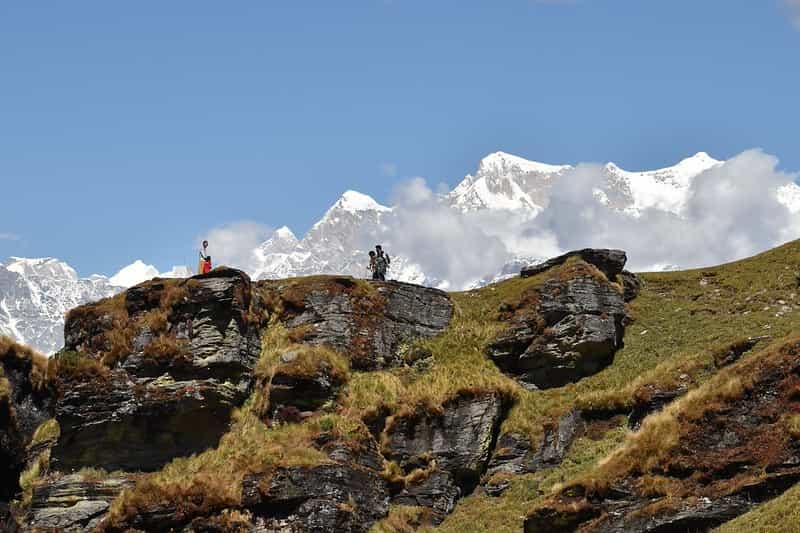
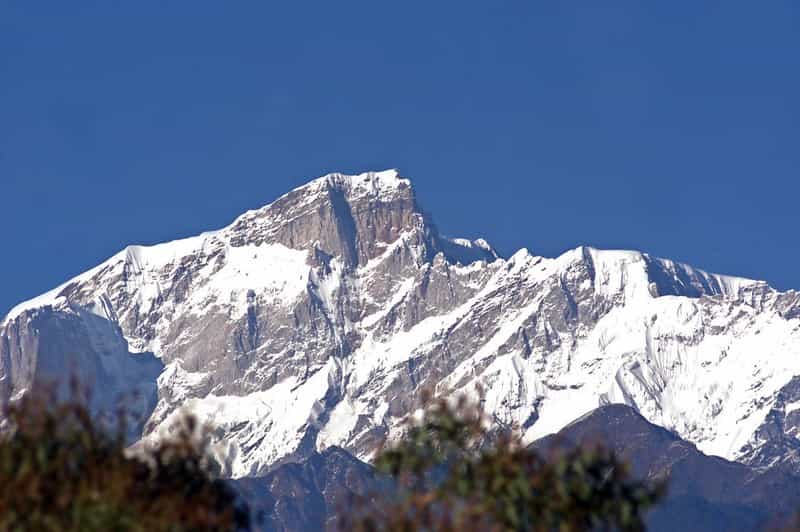
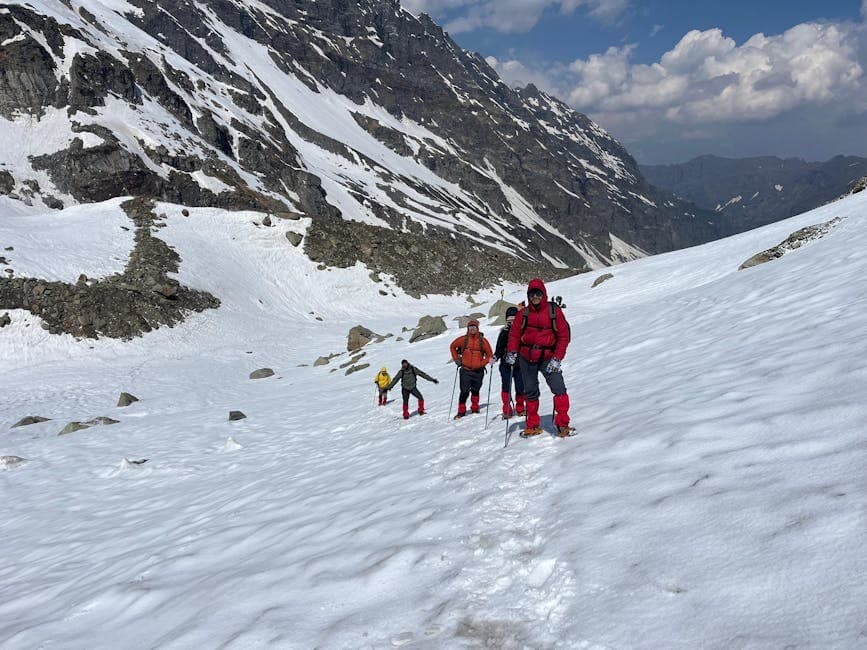
This is where things get serious. The trail narrows, becomes more exposed, and passes through lateral moraines of the Kedar Bamak Glacier. You'll encounter the infamous Spider Wall — a near-vertical rock section that requires you to use both hands and feet to traverse. The views, however, are spectacular. As you arrive at Kedar Kharak (~4,270–4,350 m), you're greeted by an amphitheatre of giants: Mt. Thalaysagar, Bhrigupanth, Manda Parvat, and the Jogin peaks towering all around you. Sunsets here paint the peaks in shades of gold and pink that are simply unforgettable.
Day 5: Kedar Kharak to Kedartal and Back (~7–8 km round trip, 6–7 hrs)
The most thrilling day of the trek. The final push to Kedar Tal crosses boulder fields, scree slopes, and glacial moraines. It demands patience and sure-footedness. But when you finally reach the lake, everything becomes worth it. The glacial lake shimmers in shades of emerald, turquoise, and deep blue, reflecting the pyramid-like summit of Mt. Thalaysagar (6,904 m) in its still waters. Standing at the edge of Kedartal, surrounded by peaks rising 6,000 to 7,000 metres, is one of the most profoundly moving experiences the Indian Himalayas can offer. After soaking in the silence, you return to Kedar Kharak for the night.
Day 6: Descent to Gangotri (~11–12 km, 5–6 hrs)
Retrace your steps back to Gangotri. The descent is easier on the lungs but tough on the knees, so take it slow on the loose sections. Arriving back in Gangotri, a hot meal and warm bed feel like pure luxury after days in the wild.
Day 7: Gangotri to Dehradun (Drive)
The long drive back to Dehradun gives you time to reflect on an extraordinary journey.
Best Time to Trek to Kedartal
May to June and mid-September to October are the ideal windows. During summer, you'll see the lake at its most vibrant emerald hue, and in autumn, the skies are crystal-clear, offering the sharpest views of Thalaysagar. Avoid the monsoon months (July–August) as heavy rains make the trail dangerously slippery and prone to landslides.
Who Should Attempt This Trek?
Let's be honest: the Kedartal trek is not for beginners. The rapid altitude gain, technical sections like the Spider Wall, unpredictable weather, and remote terrain demand a certain level of experience and fitness. Ideally, you should have completed at least one or two multi-day treks above 4,000 m before attempting Kedartal. As a fitness benchmark, being able to run 5 km in 30 minutes comfortably is a good indicator of readiness. Start training at least 8–12 weeks before your trek with a mix of cardio, hill walking, squats, and lunges.
Permits and Logistics
Since the trek lies within Gangotri National Park, an entry permit from the Forest Department is mandatory. These can be obtained at the forest office in Uttarkashi or Gangotri. Most organised trekking groups handle permits on your behalf. Carry original government photo ID plus two photocopies — foreign nationals will need their passport and valid Indian visa, and may pay a slightly higher permit fee.
Pro tip: Uttarkashi is the last town with ATMs, but cash runs out quickly there. Withdraw enough cash in Dehradun before you leave.
What to Pack: Essential Gear
Packing right can make or break this trek. Here's your essentials checklist:
- Footwear: Waterproof, high-ankle trekking boots (well broken-in) plus camp sandals
- Clothing: Layered system — moisture-wicking base layers, fleece mid-layer, heavy down jacket, waterproof shell, thermals (top and bottom)
- Accessories: Woollen cap, sun hat, UV-protection sunglasses, waterproof gloves, neck gaiter
- Gear: 50–60L rucksack with rain cover, trekking poles, headlamp with spare batteries
- Essentials: Sunscreen (SPF 50+), lip balm with SPF, personal first-aid kit, water bottles (carry at least 2–3 litres), high-energy snacks
- Documents: Government ID, permit copies, emergency contact details
Safety Tips and Insider Advice
- Hydrate aggressively — aim for at least 3–4 litres of water daily to combat altitude effects.
- Never skip acclimatisation at Gangotri. Rushing increases the risk of Acute Mountain Sickness (AMS).
- Trek with a reputable group or experienced guide. The trail is remote and unmarked in places, and mobile connectivity is virtually non-existent beyond Gangotri.
- Respect the environment. Carry all waste out. Gangotri National Park is home to Bharal (blue sheep), Himalayan black bears, musk deer, and rare birdlife — leave no trace.
- Keep Himalaya clean. This is a pristine, fragile ecosystem. Treat it with the reverence it deserves.
Beyond the Trek: Exploring Uttarakhand
The Kedartal trek pairs beautifully with a broader Uttarakhand adventure. After your trek, spend a few days unwinding in Rishikesh with a yoga and meditation retreat by the Ganga, or catch the soul-stirring Ganga Aarti at Har Ki Pauri in Haridwar. If you have more time, the charming hill station of Mussoorie is just a short drive from Dehradun, and the ski slopes of Auli or the alpine meadows of Dayara Bugyal offer further mountain magic.
Final Thoughts: Is Kedartal Worth the Challenge?
Absolutely — and then some. The Kedartal trek strips away the noise of daily life and replaces it with something rare: the sound of glacial streams, the silence of a turquoise lake at 16,000 feet, and the towering presence of peaks that have stood for millennia. It's a trek that tests your limits and rewards your spirit in equal measure.
If you're an experienced trekker looking for your next great Himalayan challenge, start training, book your spot for the May–June or September–October 2026 season, and prepare for a journey you'll carry in your heart forever.
Before heading out, always check current trail conditions and weather updates with the India Meteorological Department and local forest authorities. Safe trekking!
Leave a Comment
Explore Uttarakhand
Ready to plan your trip? Check out our complete travel guide and packages.