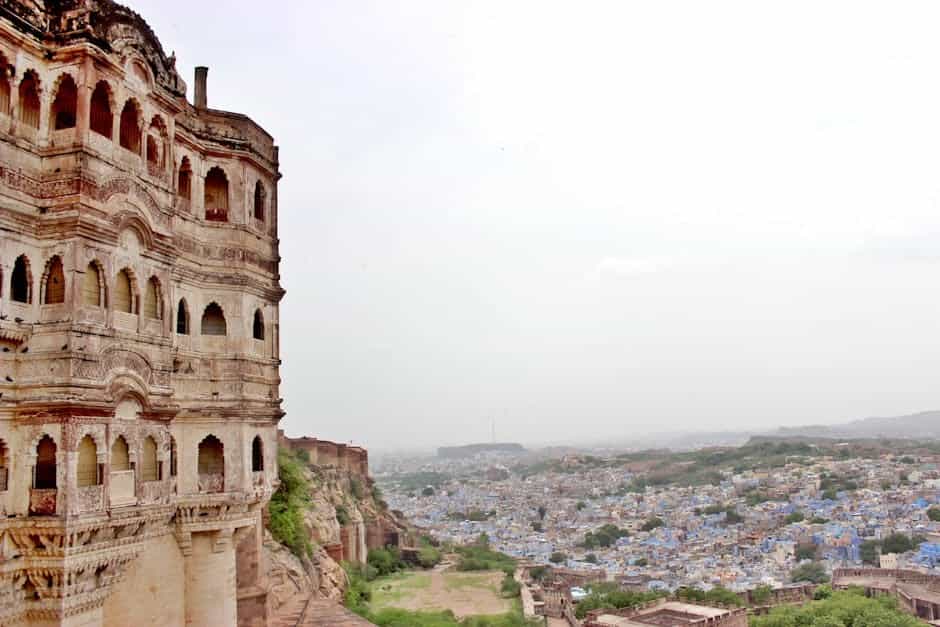
Chand Baori stepwell
Chand Baori is a monumental stepwell in the village of Abhaneri (near Dausa), Rajasthan. Built between the 8th and 9th centuries CE and attributed to rulers of the Nikumbh/Chanda dynasty, it is famous for its geometric precision: a 13-storey deep, symmetrical stairway of thousands of steps leading down to the water. The stepwell was both a community water-harvesting structure and a cool social space, and stands adjacent to the ruined but ornate Harshat Mata Temple complex.
Location
Chand Baori, Abhaneri, Abhaneri (near Dausa), India
Duration
1–2 hours (typical); 2–4 hours if combined with Harshat Mata Temple and local village walk
Best Time to Visit
October to March (cool, dry months). Early morning or late afternoon for softer light and lower temperatures. Avoid peak summer (April–June) during midday; monsoon (July–September) can make steps slippery and fill the well.
Pricing
Nominal entry fee (varies). Typical recent ranges: Indian citizens ~INR 40–100; foreign visitors ~INR 100–300. Camera fees may apply. Confirm current rates at the site or official tourism website.
Activity Type
Coordinates
Highlights
Striking geometric stepped architecture: 13 storeys and nearly 3,500 steps (approx.) arranged in perfect symmetry
Impressive depth and cooling microclimate — a functional water-harvesting system
Carved niches and remnants of sculptural work around the adjacent Harshat Mata Temple
Excellent site for architectural and perspective photography
Cultural context: an example of traditional Rajasthani water management and communal gathering spaces
Itinerary
Purchase tickets and enter the site. Walk the short path from the parking area to the stepwell.
Ticket counter and small stalls available; carry small change. Confirm camera or video charges if needed.
Walk around the upper edges to appreciate the grid-like stair patterns and take wide-angle photos.
Avoid leaning over edges; some areas have no protective railings.
If permitted and safe, descend partway into the steps to experience the scale and cooler temperature down below.
Steps are steep and uneven. Wear sturdy footwear. Avoid descending during monsoon or if the area is wet.
Walk to the adjacent Harshat Mata Temple complex to view the carved stonework and learn the historical context.
Respect the ruins; some sections may be fragile or cordoned off.
Use remaining time for photography, local village interactions, or return to parking.
Golden hour (late afternoon) provides dramatic shadows on the steps. Allow time for transport back to Dausa/Jaipur.
Safety Requirements
Wear sturdy, non-slip footwear; steps are steep and can be uneven or slippery.
Supervise children closely; there are deep drops and few railings.
Avoid descending alone or at night; lighting is limited after sunset.
Do not enter restricted or cordoned-off areas; follow site staff instructions.
Avoid visiting lower levels during or immediately after heavy rain (slippery and possible flooding).
Carry drinking water and sun protection (hat, sunscreen) — Rajasthan can be very hot.
Tips
Go early morning or late afternoon to avoid heat and capture better light for photography.
Combine the visit with Harshat Mata Temple and a short village walk around Abhaneri.
Hire a local guide for historical context and safer routes within the complex.
Carry water, snacks, and a small first-aid kit; limited facilities on-site.
Respect local customs and the monument — avoid littering or climbing fragile carvings.
Check opening hours in advance (typically daytime hours) and current entry fees.
Accessible facilities are limited — not recommended for visitors with mobility restrictions without assistance.