Top Religious Sites to Visit in Gujarat: A Spiritual Travel Guide
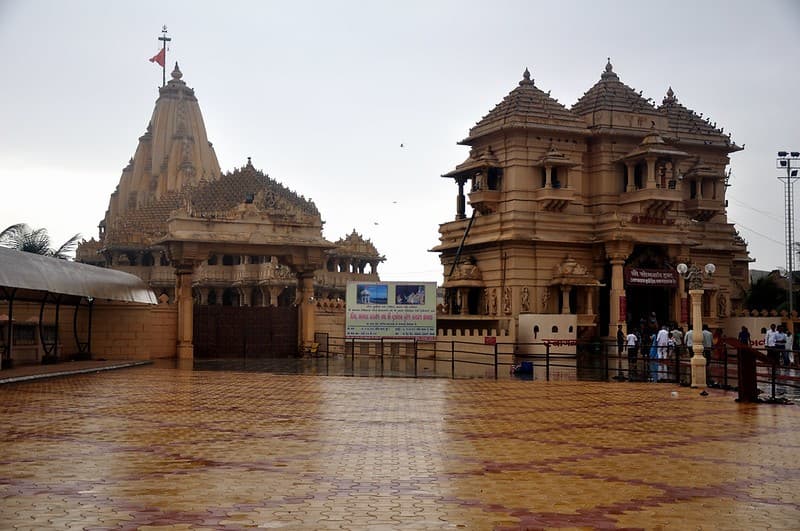
Gujarat isn't just India's western economic powerhouse — it's one of the most spiritually rich states on the subcontinent. Whether you're a devoted pilgrim seeking divine blessings or a curious traveler drawn to centuries-old architecture, Gujarat's religious sites will leave you breathless.
From the thundering waves of the Arabian Sea at Somnath to the marble-carved peaks of Palitana, this state weaves together Hindu, Jain, and Islamic heritage in a tapestry unlike anywhere else in the world. Let's explore the must-visit religious sites that make Gujarat a spiritual destination of the highest order.
1. Somnath Temple — The Eternal Shrine by the Sea
No spiritual journey through Gujarat begins anywhere but Somnath. The Somnath Temple (Shree Somnath Jyotirling), located in Prabhas Patan near Veraval in Saurashtra on the western coast of Gujarat, is believed to be the first among the twelve Jyotirlinga shrines of Shiva.
What makes Somnath extraordinary isn't just its religious significance — it's the story of resilience behind it. The temple's significance is not only spiritual but also historical, as it has been rebuilt multiple times throughout history after being destroyed by invaders. The present temple was reconstructed in Chaulukya style of Hindu temple architecture and completed in May 1951, with the reconstruction completed by Vallabhbhai Patel.
The temple lies at the meeting of Kapila, Hiran and Sarasvati rivers, and the waves of the Arabian Sea ebb and flow touching the shore on which it is constructed. This dramatic coastal setting makes the Somnath Temple darshan and evening aarti here absolutely unforgettable.
Practical Tips for Somnath:
- Timings: Darshan timings are from 6:00 a.m. to 10:00 p.m., with aarti at 7:00 a.m., 12:00 noon, and 7:00 p.m.
- Entry Fee: There is no entry fee to visit Somnath Temple.
- Don't miss: A one-hour sound-and-light show in Amitabh Bachchan's baritone highlights the temple nightly at 7:45 p.m.
- Best time to visit: The months of September to March are considered to be the best time to visit Gujarat since the winter months are comfortable and pleasantly cold.
- Getting there: Veraval Railway Station (7 km) is well-connected to Ahmedabad, Mumbai, and Rajkot. Auto-rickshaws to the temple cost ₹50–100.
Insider tip: Arrive 20–30 minutes early to secure a spot near the sanctum, especially for the evening aarti, which draws larger crowds.
2. Dwarkadhish Temple — The Kingdom of Lord Krishna
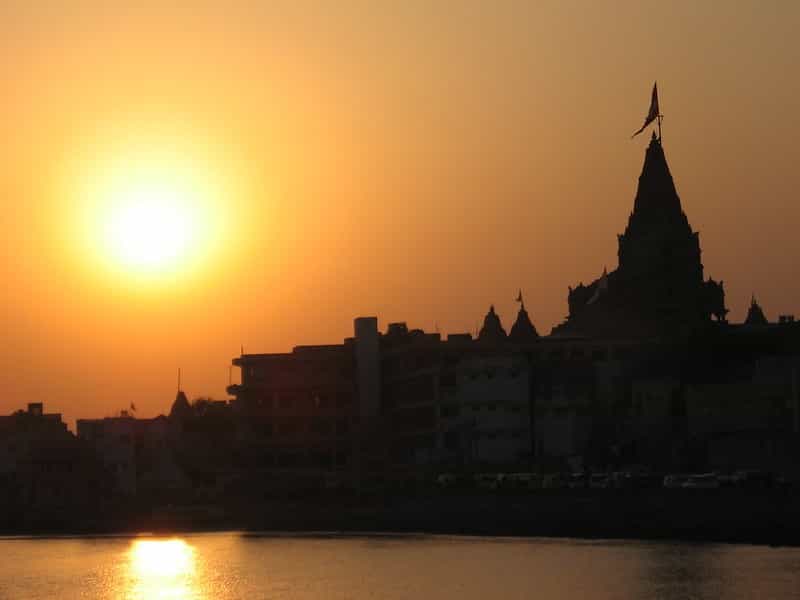
If Somnath belongs to Shiva, Dwarka belongs entirely to Krishna. Located on the western tip of the Saurashtra peninsula, Dwarka is popularly known as the 'home of Lord Krishna' and is one of the foremost Char Dhams for Hindus and among the seven most ancient religious cities (sapta puris) in India.
Built in Nagara style, the Dwarkadhish Temple features a five-story structure supported by 72 pillars. The main shrine has a gold-plated flag that is changed every day according to ritual. The main door is known as 'Moksha Dwara,' meaning Door to Salvation, at the North entrance, while the south door is known as 'Swarga Dwara,' meaning Gate to Heaven.
Practical Tips for Dwarka:
- Timings: 4:00 AM to 9:00 PM; best visited October to March
- Nearby attractions: Nageshwar Jyotirlinga Temple, Gomti Ghat, Rukmani Devi Temple, Bet Dwarka (Beyt Dwarka), and Gopi Talav are important tourist places in Dwarka.
- Dwarkadhish Temple is estimated to be more than 2,500 years old.
3. Palitana Temples — The Sacred Mountain of Jainism
Palitana is unlike any religious site you've ever visited. Nestled in the Bhavnagar district of Gujarat, Palitana is one of the holiest pilgrimage sites for followers of Jainism. Known as the City of Temples, Palitana is home to more than 900 Jain temples perched atop Shatrunjaya Hill, each showcasing incredible architecture, divine spirituality, and centuries of devotion. This sacred destination attracts thousands of pilgrims and travelers every year who climb the 3,800 steps.
As the temple-city was built to be an abode for the divine, no one is allowed to stay overnight, including the priests. This rule makes the daily pilgrimage feel even more sacred — you ascend with the dawn and descend before dusk.
In 2014, Palitana became the first city in the world to be officially declared vegetarian, prohibiting the sale of meat, fish, and eggs, in alignment with its strong Jain ethical values.
Practical Tips for Palitana:
- The climb: The walk up the stone stairway hewn into the mountain face takes about an hour and a half. For those unable or unaccustomed to the strain, sling-chairs are available.
- Food rules: Food must neither be eaten nor carried on the way. The descent must begin before it is evening, for no soul can remain atop the sacred mountain during the night.
- Best time: October to February is the best time — the dry season but not yet too hot.
- Getting there: The nearest airport at Bhavnagar lies at a distance of 51 kilometres from Palitana.
Insider tip: Start the Palitana Shatrunjaya Temples climb before sunrise. The views of the temples glowing in the early morning light are absolutely magical, and you'll beat the midday heat.
4. Akshardham Temple, Gandhinagar — A Modern Spiritual Marvel
While Gujarat's ancient temples tell stories of millennia past, Akshardham Temple in Gandhinagar proves that sacred architecture is alive and thriving. The Akshardham Temple in Gandhinagar was inaugurated on November 2, 1992. The temple was built under the guidance and inspiration of Pramukh Swami Maharaj, the fifth spiritual successor of Bhagwan Swaminarayan.
Rajasthani pink sandstone weighing 6,000 metric tons was used to carefully shape the Akshardham Temple. The temple's showpiece is a massive 1.2-ton statue of Swaminarayan, standing seven feet tall.
Practical Tips for Akshardham:
- Timings: The temple is open from 9:30 AM to 7:30 PM every day except Mondays. It remains closed on Mondays.
- Entry: Entry to the main temple is completely free. Tickets are needed only for exhibitions, the Abhishek ritual, and the Akshardham Temple and sound & light show.
- Important: Visitors cannot carry USB drives, music devices, electronic devices, weapons, cameras, luggage, mobile phones, food items, or alcoholic drinks.
- Dress code: Visitors are expected to wear proper attire covering shoulders, chest, navel, and upper arms. Dress should be at least knee length.
- Plan for time: Visiting the entire complex may take over four hours if you wish to explore everything thoroughly.
5. Modhera Sun Temple — Where Science Meets Spirituality
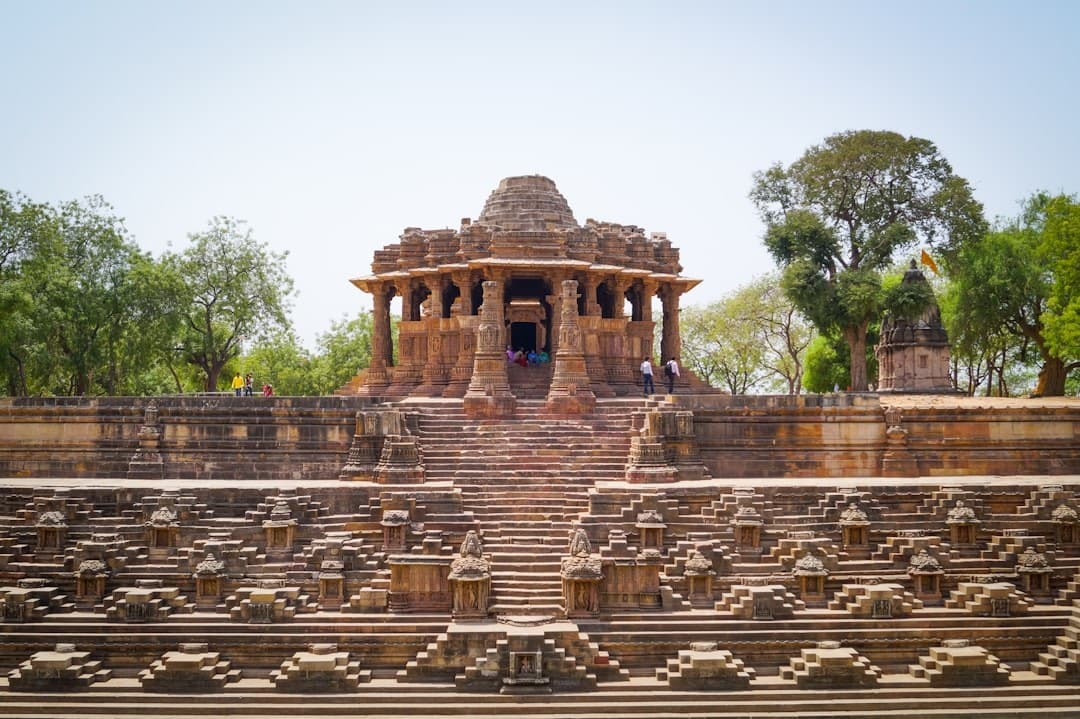
The Sun Temple, Modhera isn't an active place of worship anymore, but it remains one of Gujarat's most awe-inspiring religious and architectural sites. Dedicated to Surya, the Sun God, this 11th-century temple is one of the finest examples of Solanki architecture.
The temple was aligned so that the rising sun's rays fell directly on the sanctum during equinoxes. This remarkable feat of astronomical engineering still astonishes visitors nearly a thousand years later.
As you enter the historical complex, you first come across the magnificent kund known as the Suryakund, built in rectangular shape containing 108 shrines to various gods and demi-gods.
Practical Tips for Modhera:
- Timings: All days of the week from 6 a.m. to 6 p.m.
- Getting there: The Modhera Sun Temple is well connected with Mehsana (26 km), Gandhinagar (83 km), and Ahmedabad (99 km) through road network.
- Best time: October to March during the cooler months.
- Don't miss: In October 2022, a solar-powered 3-D Projection Mapping Show and Heritage Lighting was inaugurated at the temple, adding a stunning modern dimension to this ancient site.
6. Ambaji Temple — The Shakti Peetha in the Hills
Located in the stunning Aravalli hills close to the Gujarati border, the Ambaji Temple is a prestigious pilgrimage site devoted to the Goddess Amba, the powerful and compassionate incarnation of the divine feminine. The temple is the center of attraction for those who come to seek the blessings of Goddess Amba.
Like many traditional temples, Ambaji Temple stands out by its unique and distinct design where a statue of the goddess is missing. Instead, devotees worship a sacred yantra (mystical diagram). Devotees from all over India, especially during the festival of Navratri, come and visit the temple to join the rituals and religious activities.
Don't miss the Ambaji Temple and Gabbar Hill ropeway for sweeping views of the surrounding hills.
7. Girnar Hills — A Multi-Faith Mountain Pilgrimage
Datar Hill is a holy site in Junagadh city of Gujarat. Situated opposite to Girnar Hill & Ropeway, it is one of the popular places of pilgrimage in Gujarat. Situated at an altitude of 2,779 feet, Datar Hill is one of the five principal peaks of Mount Girnar. What makes Girnar truly special is its multi-faith character — at least 3 lakh devotees of both Muslim and Hindu faiths visit the Datar shrine during the five-day Urs festival.
Best Time to Visit Gujarat's Religious Sites
The ideal window for temple-hopping across Gujarat is October to March. Summers can be brutally hot (especially in Saurashtra), and the monsoon season brings heavy rains that can disrupt travel plans. Winter months offer pleasant temperatures, clear skies, and coincide with many major festivals.
Planning Your Gujarat Pilgrimage: Quick Tips
- Dress modestly at all religious sites — cover shoulders, knees, and remove footwear before entering temples
- Carry water — Gujarat can be dehydrating, especially during temple climbs like Palitana and Girnar
- Book accommodations early during festival seasons like Navratri, Maha Shivratri, and Kartik Purnima
- Respect photography rules — many temples prohibit cameras and mobile phones inside the sanctum
- Try the local food — Gujarat's vegetarian cuisine is legendary, from dhokla and thepla to elaborate Gujarati thalis. Explore more in our Gujarat Cuisine Guide: Authentic Flavors & Must-Try Dishes
- Combine destinations — A well-planned 7–10 day itinerary can cover Ahmedabad → Modhera → Ambaji → Dwarka → Somnath → Palitana
Final Thoughts
Gujarat is a popular religious destination among Hindus, Jains, and Muslims. Several sacred religious sites in the state are frequented by the faithful from all over the country. Whether you're drawn by faith, history, or sheer architectural wonder, Gujarat's religious sites deliver an experience that stays with you long after you've returned home.
The beauty of a Gujarat pilgrimage is that it's never just about one faith or one era. It's a journey through thousands of years of devotion, artistry, and resilience — all wrapped in the warm hospitality that Gujarat is famous for. For a broader look at the state's rich traditions, see our guide to the Culture and Heritage of Gujarat: A Complete Travel Guide (2026). So pack your bags, slip on comfortable walking shoes, and let Gujarat's sacred spaces transform your next trip into something truly extraordinary.
Leave a Comment
Explore Gujarat
Ready to plan your trip? Check out our complete travel guide and packages.