Attending a Kerala Temple Festival – A First-Timer's Guide
There's a moment at a Kerala temple festival when the ground seems to vibrate beneath your feet. Dozens of chenda drums are hammering in unison, a line of caparisoned elephants sways gently under golden ornaments, and a million spectators hold their breath as silk-fringed ceremonial umbrellas are exchanged at dizzying speed. If you've traveled the world chasing cultural experiences, nothing quite prepares you for the sensory overload of a Kerala temple festival.
Kerala's temple festivals — called poorams, utsavams, and theyyams depending on the region and tradition — are not staged tourist shows. They are living, breathing community celebrations that have unfolded in the same sacred spaces for centuries. This guide will walk you through everything a first-timer needs to know: what to expect, what to wear, when to go, and how to experience these extraordinary events respectfully.
What Makes Kerala Temple Festivals Special?
Kerala is home to over 3,000 temples, and many of them host annual festivals that range from intimate village gatherings to mega-spectacles drawing millions. What sets these festivals apart is their scale, artistry, and deep community roots.
The hallmarks of a Kerala temple festival typically include elaborately decorated elephants, traditional percussion orchestras called chenda melam, temple rituals, and dazzling fireworks. At major festivals like Thrissur Pooram temple festival, elephants stand in ceremonial rows carrying temple deities while musicians perform rhythmic drum ensembles that echo across the grounds.
Unlike many tourist-oriented events elsewhere, Kerala's festivals are first and foremost for local communities and spiritual traditions. Families prepare weeks in advance, temple committees coordinate intricate details, and entire neighborhoods participate actively rather than passively watching a show. That authenticity is exactly what makes attending one so powerful.
The Must-See Festivals: Where to Start
Thrissur Pooram — The Mother of All Poorams
If you attend only one temple festival in Kerala, make it Thrissur Pooram. Held annually at the historic Vadakkunnathan Temple in Thrissur, this roughly 36-hour spectacle is widely regarded as the most magnificent temple festival in India. The 2026 edition took place on April 26–27, and planning for 2027 dates (typically April or May) should begin early.
The festival is structured as a friendly rivalry between two temple groups — Paramekkavu Bhagavathi Temple and Thiruvambady Sri Krishna Temple — whose coordinated yet competitive displays fuel the creative energy of the event. Key highlights include the Kudamattam (a mesmerizing ceremonial exchange of colorful umbrellas atop elephants), the Ilanjithara Melam (a thunderous traditional percussion performance featuring hundreds of artists), and a spectacular pre-dawn fireworks display.
Insider tip: The best vantage points for first-timers include the southern entrance (thekke gopura nada) of Vadakkunnathan Temple for morning proceedings, and the Naduvilaal point at Swaraj Round for percussion performances. Afternoon to late night — roughly 2:00 PM onward — is when the major events unfold.
Theyyam — The Dance of the Gods (North Kerala)
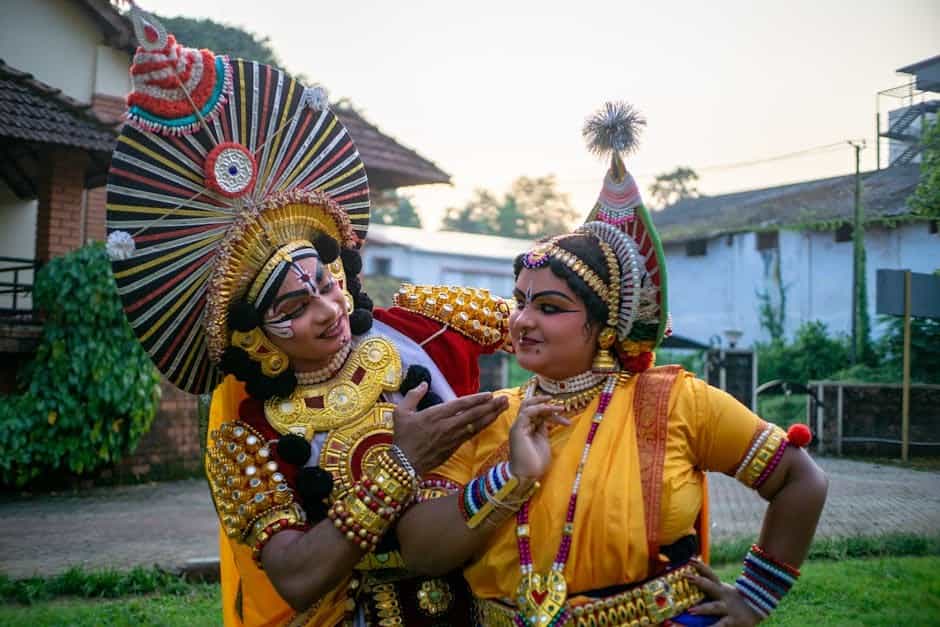
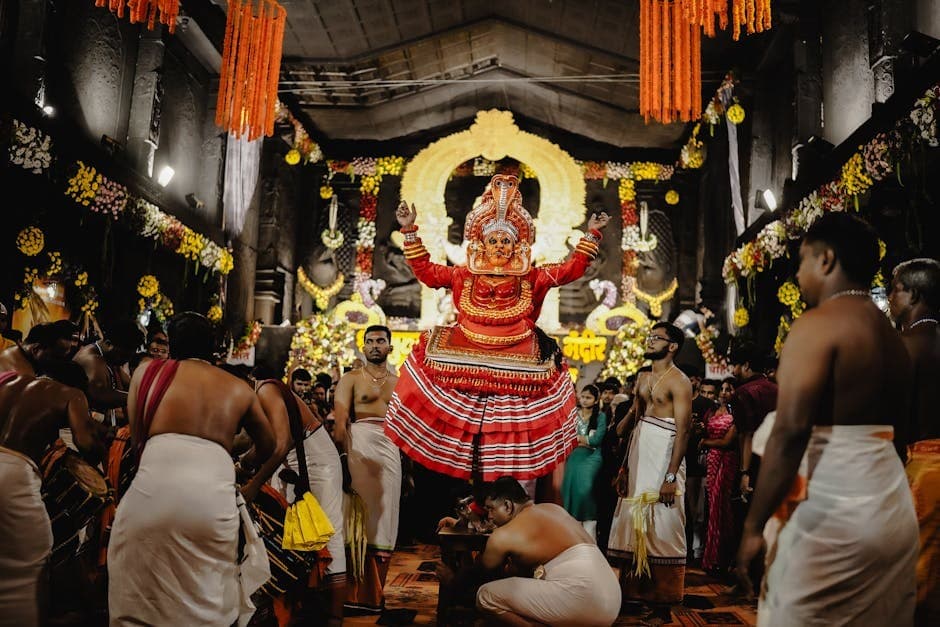
For something more intimate and mystical, head to Kannur or Kasaragod in North Kerala during the Theyyam ritual performance season (October to May, peaking November–March). Theyyam is a ritual art form where performers are believed to embody deities and ancestral spirits through elaborate costumes, face painting, and trance-like dance. There are over 400 different forms of Theyyam, each with its own story, costume, and ritual.
Most Theyyam rituals take place during late-night or early-morning hours — often around 4 AM to 8 AM — in village shrines called kavus (sacred groves). The Kerala Tourism website maintains a Theyyam calendar with approximate dates and locations, though it's always wise to confirm with locals or your accommodation host, as dates follow the Malayalam calendar and can shift.
Other Festivals Worth Planning Around
- Guruvayur Utsavam (February–March): A multi-day celebration at the revered Guruvayur Temple featuring elephant processions, devotional music, and classical performances
- Attukal Pongala (February–March, Thiruvananthapuram): One of the world's largest gatherings of women, centered on a communal offering ritual
- Arattupuzha Pooram: Considered the oldest pooram in Kerala, predating even Thrissur Pooram
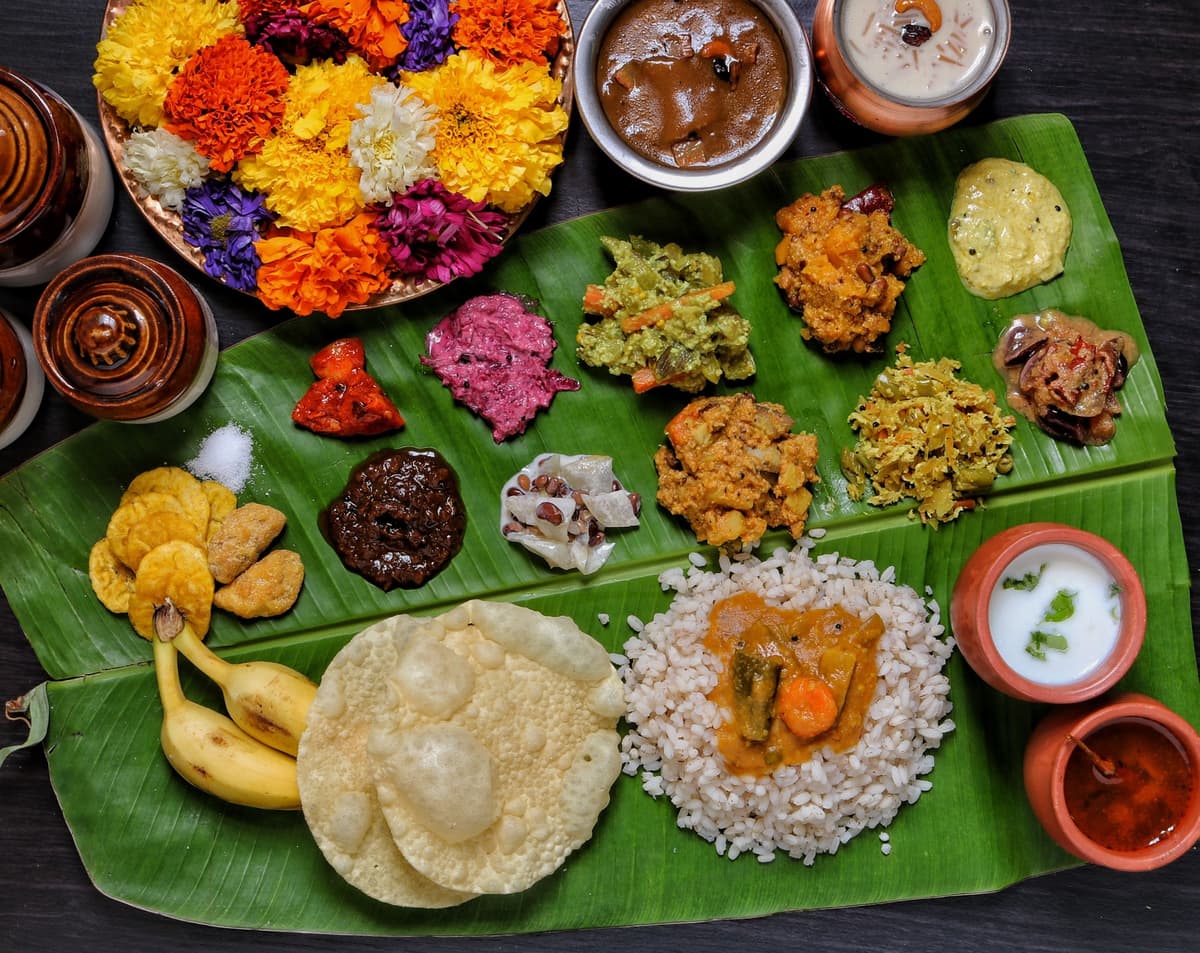
- Onam (August–September): While not a temple festival per se, Kerala's grand harvest celebration features floral pookalam, snake-boat races, and the legendary vegetarian sadya feast
What to Wear: Temple Dress Code Essentials
Dress code is one of the areas where first-timers most often stumble. Kerala temples follow customs rooted in Vedic traditions, and the rules are taken seriously — especially at major temples.
For women: Sarees, set-mundu (two-piece Kerala saree), salwar kameez, or long skirts with blouses are considered appropriate. Avoid jeans, leggings, shorts, sleeveless tops, or low necklines. Some stricter temples like Guruvayur and Sree Padmanabhaswamy may require a saree specifically.
For men: Most temples expect men to wear a mundu or dhoti and go bare-chested (or with a cloth draped over the shoulder). Shirts, trousers, and jeans are generally not permitted inside the sanctum. Don't worry — rental mundus are available outside most major temples for a small fee, and you can drape them over your regular clothes.
General rules: Always remove footwear before entering temple premises. Maintain silence and a respectful demeanor. Photography rules vary — always ask before shooting, especially during rituals.
Pro tip: During festival time, you'll be in massive crowds outdoors, often in Kerala's April–May heat (27–33°C on the coast). Wear light, breathable fabrics in white or muted tones. Carry a small towel, sunscreen, and plenty of water.
Practical Tips for First-Timers
Book Accommodation Early
Accommodation fills up fast during major festivals. For Thrissur Pooram, hotels in Thrissur and even nearby Kochi (about 80 km away) get booked months in advance. Aim to confirm your stay at least 3–4 months ahead. Many experienced travelers prefer staying slightly outside the city center to avoid congestion while still being within striking distance of the festivities.
Plan Your Transport
Traffic diversions are common on festival days, especially near the main venues. For Thrissur Pooram, Cochin International Airport (COK) is the nearest airport, approximately 50 km away. Thrissur Railway Station (TCR) is well-connected to major Indian cities. On festival day, expect to walk — vehicles are heavily restricted near the grounds. For Theyyam performances in North Kerala, Kannur International Airport (CNN) provides convenient access.
Navigate the Crowds
Major festivals like Thrissur Pooram attract hundreds of thousands of people. Arrive early to secure a good viewing spot. Travel light — carry only essentials in a small crossbody bag. Keep your phone charged (portable battery recommended) and establish a meeting point if you're in a group, as mobile networks can get congested.
Respect the Sacred Space
These are not performances staged for tourists. They are active religious ceremonies. Observe the following:
- Don't obstruct rituals or push to the front during sacred proceedings
- Ask before photographing performers, priests, or devotees up close
- Don't touch the elephants or their ornaments
- Follow local cues — if everyone is standing still and silent, do the same
- Some temples restrict entry to Hindus in the inner sanctum; always check in advance
Eat Like a Local
Festival time is feasting time. Street stalls and temporary food courts spring up around temple grounds. Try appam with stew, puttu with kadala curry, or a full Kerala sadya (banana-leaf vegetarian feast) if you can find one. In Thrissur, look for local eateries serving fresh Kerala meals. If you're in North Kerala for Theyyam, don't miss Malabar biryani and seafood food trail in Kannur or Kozhikode.
When to Time Your Visit
The temple festival season in Kerala broadly runs from late winter through early summer (February–May), which overlaps with the state's dry season. Here's a quick seasonal breakdown:
- February–May: Peak temple festival season — Thrissur Pooram, Arattupuzha Pooram, Guruvayur Utsavam, Attukal Pongala, and dozens of smaller poorams
- October–May: Theyyam season in North Kerala, peaking December–February
- August–September: Onam harvest celebrations statewide, plus the start of snake-boat race season
Keep in mind that festival dates follow the Malayalam calendar, so exact dates shift each year. Check the Kerala travel guide for updated schedules.
Combine Your Festival Trip with Kerala's Other Treasures
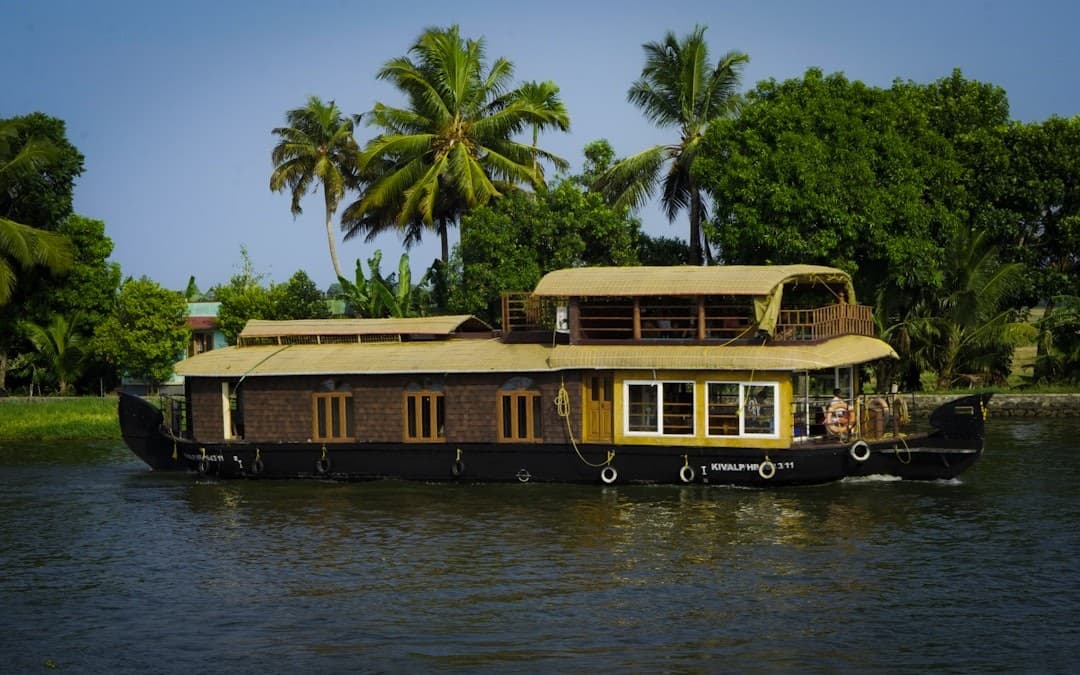
A temple festival makes a brilliant anchor for a broader Kerala itinerary. After the intensity of Thrissur Pooram, decompress with a backwater houseboat cruise on Vembanad Lake, a few days of traditional Ayurveda massage and wellness retreat (monsoon season is actually ideal for this), or a misty trek through Munnar's tea plantations. If you're in Kannur for Theyyam, the quiet beaches of Bekal and the historic Thalassery fort are just a short drive away.
Final Takeaways
- Start with Thrissur Pooram if you want the grandest spectacle, or Theyyam for an intimate, spiritual experience
- Book accommodation and transport months in advance for major festivals
- Dress modestly in traditional or conservative clothing; carry a rental mundu for temple entry
- Arrive early, travel light, and respect the sacred nature of the events
- Check the Malayalam calendar for exact dates — they shift annually
- Combine your festival visit with Kerala's backwaters, hill stations, and cuisine for the trip of a lifetime
A Kerala temple festival isn't something you simply watch. It's something that washes over you — the drumbeats, the incense, the collective energy of a community celebrating centuries of tradition. For the first-timer willing to plan ahead and show up with an open heart, it's one of the most unforgettable cultural experiences on Earth.
Leave a Comment
Explore Kerala
Ready to plan your trip? Check out our complete travel guide and packages.