Places to visit in Vietnam
Planning a trip to Vietnam? Here is a complete guide to the best places to visit—from popular tourist attractions to offbeat spots you would not find in every guidebook. Get ready to explore, experience, and fall in love with Vietnam!
Top 152 curated places to visit in Vietnam
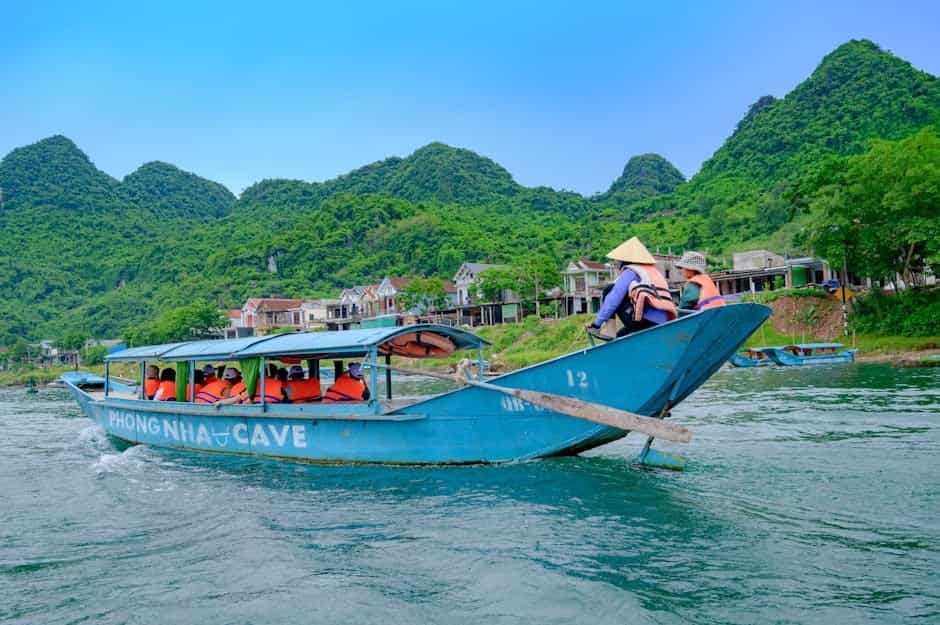
Hang En Cave
Hang En Cave is the third-largest cave opening in the world and a prominent feature of Phong Nha-Ke Bang National Park, a UNESCO World Heritage Site. Carved in limestone over millions of years, the cave sits on the western slope of the Annamite Range near the world's largest cave, Son Doong. Hang En serves as a natural gateway for many multi-day trekking and cave expedition routes and is important for karst geology studies, biodiversity conservation, and eco-tourism development in central Vietnam.
Paradise Cave (Thien Duong)
Paradise Cave (Hang Thiên Đường) is one of the most spectacular karst caves in Vietnam, located within Phong Nha–Kẻ Bàng National Park (a UNESCO World Heritage site). It is celebrated for its long dry passageways and extensive calcite decorations, making it important for geological and speleological study as well as tourism. The cave contributes to the area's biodiversity and supports the local economy through sustainable tourism.
Dark Cave (Hang Toi)
Dark Cave (Hang Toi) is a dramatic wet cave located near Phong Nha village in Quang Binh province, central Vietnam. It sits within the karst landscape associated with Phong Nha–Ke Bang and showcases significant limestone geology, subterranean rivers, and important cave-dwelling wildlife (including bat colonies and cave-adapted species). The site contributes to the region's value as a UNESCO-recognized karst ecosystem and is an important destination for adventure ecotourism.
Ly Son Island
Ly Son Island (Cù Lao Ré) is an island district of Quang Ngai province known for its volcanic origin, rich marine ecosystems and a long maritime history. Historically it served as an important base for Vietnamese fishermen and the traditional management of the Hoàng Sa (Paracel) fishing grounds — often referred to locally as the "capital of Hoàng Sa." The island's dramatic volcanic landscape and surrounding coral reefs make it a notable natural site in central Vietnam.
Quy Nhon Beaches
Quy Nhon’s beaches form part of the central Vietnamese coastline in Binh Dinh province. The area combines natural beauty (clear water, white sand, rocky headlands and small offshore islands) with a living coastal culture of fishing villages and whale-worship traditions. Nearby Cham-era towers and colonial-era architecture in Quy Nhon city add historical and cultural layers to a beach visit.
Ky Co Beach
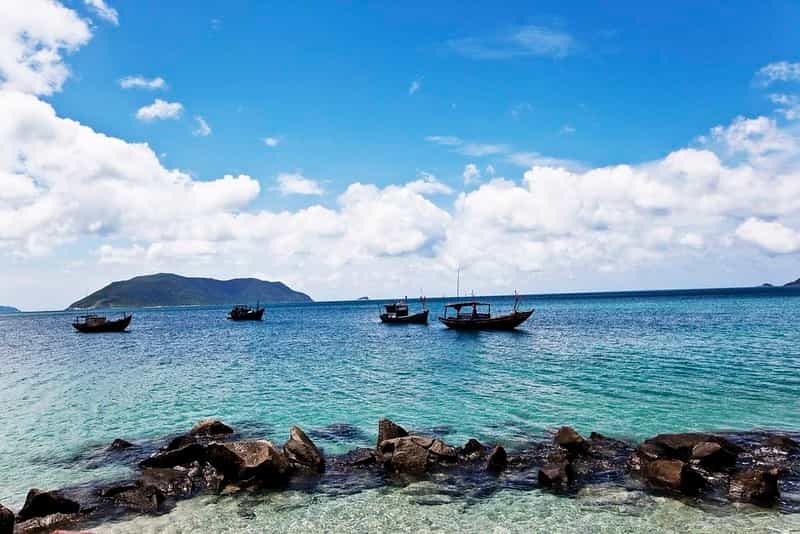
Ky Co Beach (Bãi Kỳ Co) is a scenic coastal spot in Nhon Ly commune, Quy Nhon, Binh Dinh province. It is valued primarily for its natural beauty — crystal-clear turquoise waters, a wide stretch of white sand, dramatic rock formations and nearby coral reefs — making it one of the standout beaches in central Vietnam. The area also supports local fishing communities and contributes to the region's growing marine tourism industry.
Eo Gio
Eo Gio (literally 'Wind Pass') is a dramatic coastal ridge and seascape near Quy Nhon in Bình Định province, central Vietnam. It is valued primarily for its striking natural scenery — sheer cliffs, wind-swept rock formations and panoramic views of turquoise sea and islands — rather than historical monuments. The area has become an iconic viewpoint for the region and is an important local attraction supporting eco-tourism and small-scale fishing communities.
Ganh Da Dia (Da Dia Reef)
Gành Đá Đĩa is a remarkable natural geological formation on Vietnam’s south-central coast (Phú Yên province). It consists of thousands of interlocking hexagonal basalt columns created by cooling volcanic lava — a rare and visually striking example of columnar jointing. The site is important as a natural heritage and attracts geologists, photographers, and nature tourists. It also supports local fishing communities and contributes to the region’s coastal landscape identity.
Po Nagar Cham Towers
Po Nagar Cham Towers (Tháp Po Nagar) are a complex of Hindu temples built by the Cham civilization between the 7th and 12th centuries CE. Located on a hill near the Cai River in present-day Nha Trang, Khanh Hoa Province, the site served as an important religious center dedicated primarily to the goddess Yan Po Nagar (a local earth and fertility deity later associated with the Hindu goddess Bhagavati and Shiva). The towers showcase the Cham kingdom's advanced brick masonry and iconography, representing a fusion of indigenous Champa culture with Indian Hindu influences. The site is significant for its archaeological value, religious continuity (still used for worship), and as an emblem of Cham heritage in Vietnam.
Hon Mun Marine Protected Area
Hon Mun Marine Protected Area is one of Vietnam's most important coral-protected sites located off the coast of Nha Trang (Khánh Hòa). It conserves rich coral reefs, seagrass beds and associated marine life, supports local fisheries, scientific research and eco-tourism, and plays a key role in regional marine biodiversity and habitat protection.
Hon Tam Island
Hon Tam is an island in Nha Trang Bay known primarily for its natural importance: clear waters, coral reefs, and coastal ecosystems that support local fisheries and marine biodiversity. While not a major historical landmark, it contributes to the cultural and economic life of local fishing communities and the broader tourism landscape of Nha Trang.
Doc Let Beach
Doc Let Beach (Bãi Dốc Lết) is a coastal stretch in Khánh Hòa Province, north of Nha Trang. It is valued for its natural beauty — a long curve of white sand, shallow turquoise water and sandbars that create calm, swim-friendly lagoons. The area supports local fishing communities and coastal ecosystems (seagrass beds and nearshore reefs) that sustain traditional livelihoods. Doc Let is less developed and quieter than Nha Trang, offering a more relaxed glimpse into Vietnam's coastal life.
Ninh Van Bay
Ninh Van Bay is valued primarily for its natural beauty—clear turquoise waters, coral reefs, granite cliffs, and secluded white-sand coves—forming part of the coastal landscape near Nha Trang in Khánh Hòa Province. It supports local fishing communities and marine biodiversity and has become a popular spot for eco-tourism and low-impact luxury resorts that emphasize conservation.
Binh Lap Peninsula
Bình Lập Peninsula (Vịnh/Bãi Bình Lập) is a largely unspoiled coastal peninsula in Khánh Hòa province known for its natural beauty, clear waters and functioning traditional fishing communities. The area is important as a local marine habitat with patchy coral reefs, seagrass beds and coastal ecosystems that support artisanal fisheries and low-density eco-tourism development. It offers a contrast to more developed beach destinations and is valued for conservation-minded travel and community-based tourism.
Phan Rang–Thap Cham
Phan Rang–Tháp Chàm (capital of Ninh Thuận province) is notable for its rich Cham heritage, visible in the area's ancient Cham towers and living Cham communities. The region combines historical architecture, distinctive Cham cultural traditions (including Cham crafts, music and the Kate festival), and unique natural landscapes — from arid, cactus-dotted plains and vineyards to sheltered bays and marine reserves. Ninh Thuận is one of Vietnam's driest provinces, creating a rare semi-arid coastal environment in Southeast Asia.
Po Klong Garai Cham Towers
Po Klong Garai Cham Towers are a late 13th-century Cham temple complex located in Phan Rang–Tháp Chàm, Ninh Thuận Province, Vietnam. Built during the reign of King Po Klong Garai (often identified with Jaya Simhavarman III), the complex is an outstanding example of Cham brick architecture and religious art, representing the culmination of the classical Cham temple-building tradition. It is important both historically — as a surviving relic of the Champa kingdom that once dominated central and southern Vietnam — and culturally, as an active focal point for the Cham community and its religious practices.
Nui Chua National Park
Núi Chúa National Park (Vườn quốc gia Núi Chúa) protects a large area of dry tropical forest, coastal ecosystems and mountainous terrain in Ninh Thuận province, south-central Vietnam. The park preserves important biodiversity in a relatively dry region of Vietnam—home to many endemic and threatened plant and animal species—and serves as a critical watershed and buffer for nearby coastal and marine habitats (including bays and reefs). It also supports local livelihoods and traditional Cham communities in the surrounding districts, linking natural values with cultural landscapes.
Vinh Hy Bay
Vinh Hy Bay (Vịnh Vĩnh Hy) in Ninh Thuận province is a protected coastal bay known primarily for its outstanding natural importance: clear turquoise waters, healthy coral reefs and a nearby stretch of semi-arid coastal landscape that includes parts of Núi Chúa (Nui Chua) National Park. The area supports marine biodiversity and traditional coastal fishing communities, and it sits within a broader cultural landscape shaped by Vietnamese and Cham influences.
Mui Ne White Sand Dunes (Bau Trang)
Bau Trang (Mui Ne White Sand Dunes) are a striking natural landscape near Mui Ne and Phan Thiet in Bình Thuận Province, Vietnam. The dunes and adjoining freshwater lake (Bau Trang Lagoon) form a unique coastal desert-like ecosystem created by wind activity, ancient marine deposits and shifting sands. The area is important for local tourism, supporting livelihoods in nearby villages, and highlights the contrast between Vietnam's coastal and arid landforms.
Mui Ne Red Sand Dunes
Natural importance: The Mui Ne Red Sand Dunes are a striking coastal dune system in Bình Thuận Province, notable for their dramatic red-orange sands, steep slopes and constantly shifting patterns shaped by wind and seasonal water flows. They are an important local landmark and a major draw for tourism in the Mui Ne area, illustrating coastal geomorphology where riverine and marine processes meet. The dunes also form a fragile ecosystem, with sparse vegetation adapted to sandy, salty conditions.