Places to visit in Vietnam
Planning a trip to Vietnam? Here is a complete guide to the best places to visit—from popular tourist attractions to offbeat spots you would not find in every guidebook. Get ready to explore, experience, and fall in love with Vietnam!
Top 152 curated places to visit in Vietnam
Tam Coc
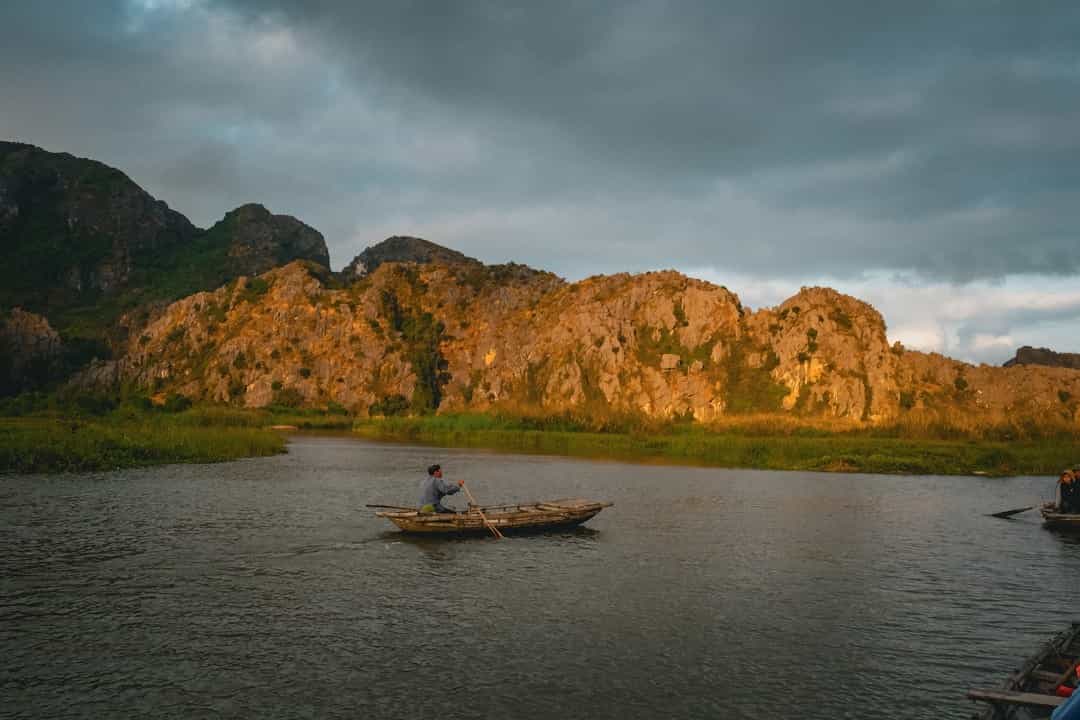
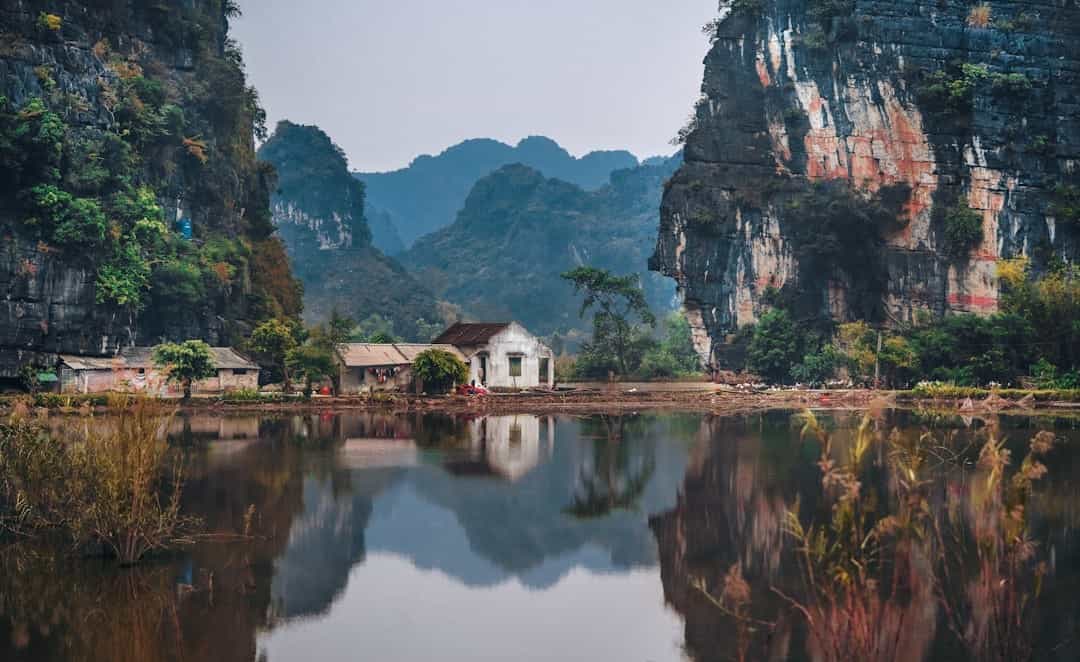
Tam Coc (Ninh Binh province) is celebrated for its dramatic karst limestone landscape and tranquil waterways that wind through caves and rice paddies. Often called “Ha Long Bay on land,” Tam Coc is part of the greater Trang An—Hoa Lu landscape that combines important natural, geological, and cultural values. The area provides habitat for diverse wetland and birdlife, preserves rural Vietnamese river-village traditions, and lies close to the ancient capital of Hoa Lu, tying it to Vietnam’s early history.
Mua Caves (Hang Mua)
Hang Mua (Mua Caves) sits at the base of a limestone peak in Ninh Binh province and is best known for its dramatic panoramic viewpoint overlooking the Tam Coc rice fields and Ngo Dong River. The site combines natural karst scenery with cultural elements — a small mountain cave and a hilltop pavilion and temple — making it a popular destination for both nature lovers and those seeking cultural photo opportunities.
Bai Dinh Pagoda
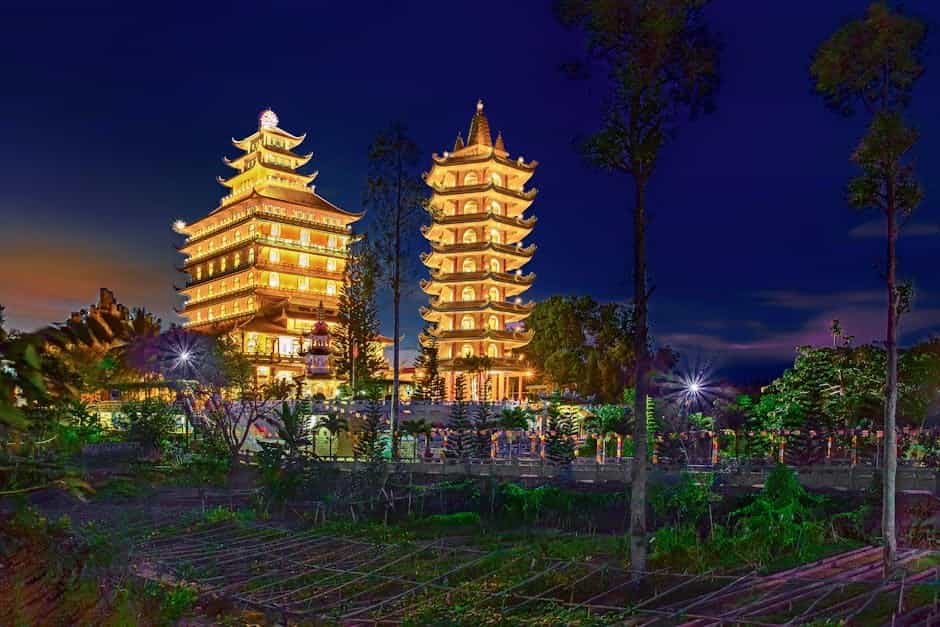
Bai Dinh Pagoda is the largest pagoda complex in Vietnam and a major Buddhist pilgrimage site in the north. It combines an ancient temple area (linked to the Đinh and Early Lê dynasties) with a modern, monumental complex developed in the 21st century. The site is significant for its religious importance, architectural scale, and proximity to the scenic karst landscape of Ninh Bình (near Trang An and Tam Cốc).
Cuc Phuong National Park
Cuc Phuong National Park is Vietnam's first national park (established 1962) and one of the country's most important conservation areas. It protects a large tract of lowland tropical rainforest, ancient trees, rich biodiversity (including rare primates and many endemic plant species), and important archaeological finds that show human presence dating back thousands of years. The park is also home to major conservation and rescue facilities, notably centers for endangered primates and tortoises, making it a key site for research and species recovery in Vietnam.
Pu Luong Nature Reserve
Pu Luong Nature Reserve is a biodiverse protected area in Thanh Hóa Province, northern Vietnam, established to conserve remaining lowland and montane evergreen forests, karst ridges and terraced agricultural landscapes. The reserve protects many plant and animal species, supports watershed protection for downstream communities, and conserves important habitat corridors between lowland and higher-elevation forests. It also preserves the traditional livelihoods and cultural heritage of local ethnic communities (mainly Thai and Muong), whose stilt houses, wet-rice terraces and communal practices contribute to the area's living cultural landscape.
Mai Chau Valley
Mai Chau Valley is an important cultural landscape in northwest Vietnam, home to the White Thai (Thai Do) and other ethnic minority groups. The valley's stilt-house villages, traditional weaving, and communal life offer a living example of ethnic Thai culture. Nestled between limestone karsts and patchwork rice terraces, Mai Chau is also valued for its scenic natural beauty and lowland farming systems, making it an accessible alternative to the higher-altitude hill-tribe areas.
Moc Chau Plateau
Moc Chau Plateau is a highland region in northwest Vietnam (altitude ~1,050–1,200 m) known for its cool climate, rolling grasslands, extensive tea plantations, and rich ethnic diversity (Thai, Hmong, Muong and other hill tribes). It is important both ecologically—for seasonal flower displays, grassland ecosystems and farmland biodiversity—and culturally, as a center of traditional hill‑tribe life and markets that preserve local crafts, music and cuisine.
Ta Xua Mountain
Tà Xùa Mountain (Núi Tà Xùa) is a prominent natural landmark in northern Vietnam, located primarily in Bắc Yên District, Sơn La Province. It is celebrated for its dramatic ridgelines, high-altitude forests, and one of the country's most famous "sea of clouds" phenomena — a major draw for photographers and nature lovers. The mountain and surrounding uplands are home to ethnic minority communities (notably Hmong), who contribute rich cultural traditions and local knowledge of the land.
Mu Cang Chai Terraced Fields
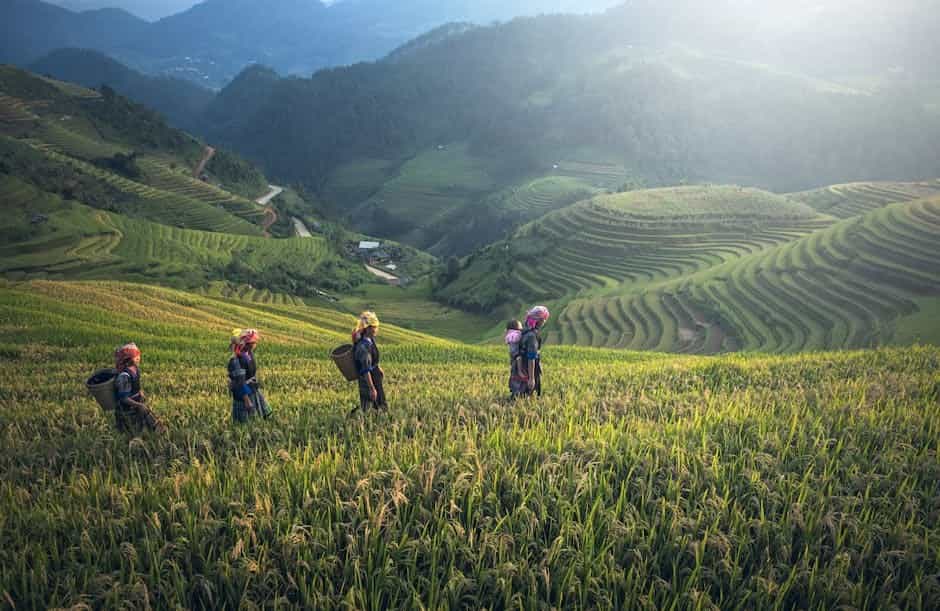
Mu Cang Chai Terraced Fields are a remarkable example of human adaptation to steep mountain landscapes, created and maintained for centuries by local ethnic groups (primarily the Hmong). The terraces demonstrate traditional agricultural engineering, communal land-use systems and rich intangible cultural practices tied to rice cultivation. The site is widely recognized within Vietnam as an iconic cultural landscape and a symbol of highland rice-farming heritage.
Sapa Terraced Rice Fields
Sapa Terraced Rice Fields (Muong Hoa Valley and surrounding slopes) are an outstanding example of centuries-old agro‑landscapes shaped by the ethnic minority groups of northwest Vietnam — primarily the Hmong, Tay, Dao and Giay. The terraces demonstrate traditional rice‑cultivation techniques adapted to steep mountain terrain and are important for local food security, cultural identity and biodiversity. The area also provides spectacular natural scenery and contributes to sustainable rural tourism in the Hoàng Liên Son range.
Fansipan
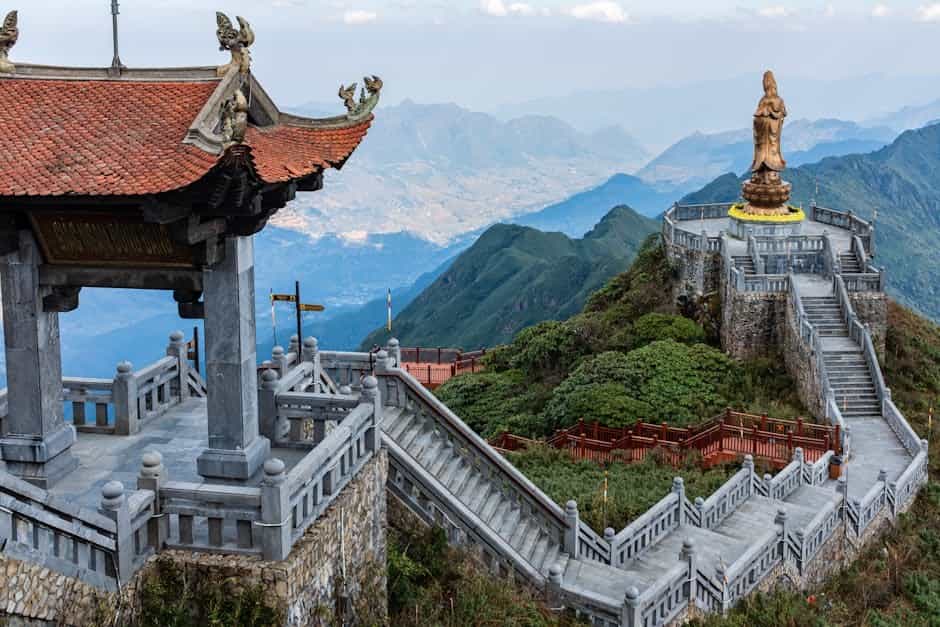
Fansipan (3,143 m) is the highest peak in Vietnam and the entire Indochina Peninsula, often called the "Roof of Indochina." It is a major natural landmark in the Hoang Lien Son range and a biodiversity hotspot with montane forests, rare flora (including rhododendrons and orchids) and diverse fauna. The area is also culturally significant as home to several ethnic minority groups (Hmong, Dao, Tay, Giay) whose traditional lifestyles and festivals enrich the region's cultural landscape.
Bac Ha Market
Bac Ha Market is one of the largest and most vibrant ethnic markets in northern Vietnam's Lao Cai province. It serves as a central trading hub for several hill-tribe groups (notably the Flower Hmong, Black Hmong, Tay, Phu La and Dao), preserving centuries-old traditions of barter, costume, handicraft production and livestock trading. The market is important culturally as a meeting place where people from scattered mountain villages gather weekly to socialize, arrange marriages, trade goods and maintain inter-communal ties. Situated in a scenic valley surrounded by terraced fields and karst hills, the market also gives visitors a window into the region's natural beauty and rural lifestyle.
Ha Giang Loop
Ha Giang Loop is one of Vietnam's most spectacular highland routes, known for dramatic karst and limestone plateaus, deep river gorges, winding mountain passes, and richly diverse ethnic minority cultures (Hmong, Dao, Tay, Nung and others). The region's geology (Dong Van Karst Plateau UNESCO Global Geopark) and traditional mountain lifestyles make it important for natural heritage and cultural tourism.
Dong Van Karst Plateau Geopark
UNESCO Global Geopark (2010) located in Hà Giang Province, northern Vietnam, the Dong Van Karst Plateau Geopark protects one of the most outstanding examples of tropical karst landscape in Southeast Asia. It preserves a long and accessible record of Earth's geological history (Paleozoic–Mesozoic sedimentary sequences), exceptional limestone formations, deep river canyons and high plateaus. The area is also rich in cultural diversity: home to many ethnic groups (Hmong, Dao, Tay, Nung, and others) with traditional lifestyles, architecture and markets that reflect centuries of human adaptation to the highlands.
Ma Pi Leng Pass
Ma Pi Leng Pass (Đèo Mã Pí Lèng) is one of Vietnam's most dramatic mountain passes, forming a key section of the road linking the towns of Đồng Văn and Mèo Vạc in Hà Giang Province. It sits on the Đông Văn Karst Plateau Global Geopark, making it geologically important for its karst formations and deep canyon cut by the Nho Quế (Nho Que) River. The pass also crosses land inhabited by ethnic minority groups (Hmong, Dao, Tay, and others), so it is culturally significant for traditional highland life and markets.
Lung Cu Flag Tower
Lũng Cú Flag Tower (Cột cờ Lũng Cú) marks one of the northernmost points of Vietnam and is a powerful national symbol of sovereignty and territorial integrity. It sits within the Đồng Văn Karst Plateau Geopark, a UNESCO-recognized landscape, and is important both as a patriotic monument and as part of the cultural landscape of the ethnic minority communities (Hmong, Dao and others) who inhabit the highlands.
Ban Gioc Waterfall
Ban Gioc Waterfall (Vietnamese: Thác Bản Giốc) is one of Vietnam's largest and most spectacular waterfalls and forms part of the Quây Sơn/Chữ River on the Vietnam–China border. It is set in a dramatic limestone karst landscape in Cao Bằng province and is important for its scenic natural value, biodiversity in riparian and karst habitats, and as a cultural landmark for local ethnic groups (primarily the Tày people). The falls are a major draw for ecotourism and contribute to local livelihoods through tourism and cross-border visits.
Ba Be Lake
Ba Be Lake is the largest natural freshwater lake in Vietnam, situated at the heart of Ba Be National Park in Bắc Kạn Province. It is a prime example of a karst plateau landscape with extensive limestone formations, evergreen forests, and rich biodiversity. The area is important both ecologically—as habitat for many endemic and rare species—and culturally, as it is home to ethnic minority communities (mainly the Tày, but also Dao and Hmong) who maintain traditional lifestyles, stilt houses, and agricultural practices along the lakeshore and rivers.
Ba Be National Park
Ba Bể National Park (Ba Bể Lake) is one of Vietnam's most important freshwater and karst ecosystems. It protects Ba Bể Lake—the largest natural freshwater lake in Vietnam—surrounded by limestone mountains and primary evergreen forest. The park conserves high biodiversity, supporting numerous bird, mammal, amphibian and aquatic species, and preserves the cultural landscape and traditional livelihoods of ethnic Tày, Dao and H'Mong communities.
Do Son Beach
Do Son Beach (Bãi biển Đồ Sơn) is a historic seaside resort on the Đồ Sơn peninsula in Hải Phòng province on the Gulf of Tonkin. During the French colonial period it developed as a coastal retreat and still retains some colonial villas and seaside architecture. Today it is an important local recreational and seafood destination for residents of Hải Phòng and Hanoi and a notable example of a Vietnamese coastal resort with a mix of natural bay scenery and seaside leisure culture.