Places to visit in Malaysia
Planning a trip to Malaysia? Here is a complete guide to the best places to visit—from popular tourist attractions to offbeat spots you would not find in every guidebook. Get ready to explore, experience, and fall in love with Malaysia!
Top 30 curated places to visit in Malaysia
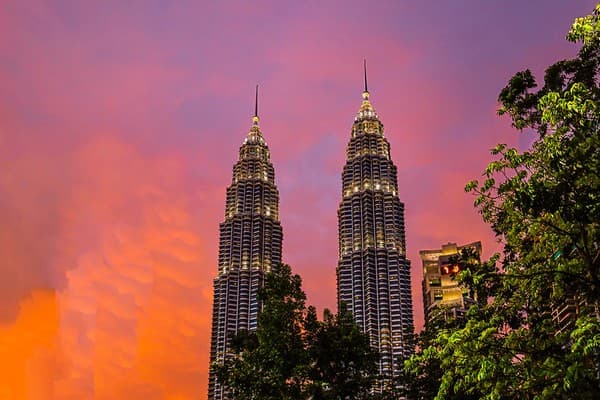
Petronas Twin Towers
The Petronas Twin Towers, completed in 1998, held the title of world's tallest buildings until 2004 and remain the tallest twin towers on earth at 451.9 metres. Designed by Argentine-American architect Cesar Pelli, the floor plan is based on an eight-pointed Islamic geometric star, tying modern engineering to Malaysia's Muslim identity. The towers house the headquarters of Petronas, the national oil company, and are joined by a double-decker skybridge on the 41st and 42nd floors. For most Indian visitors this is the single defining image of Kuala Lumpur and the anchor of nearly every KL itinerary.
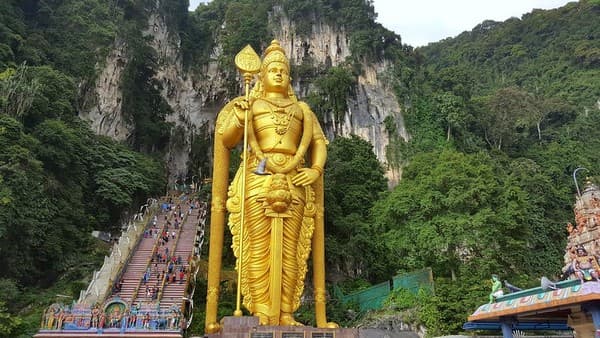
Batu Caves
Batu Caves is a 400-million-year-old limestone hill containing a series of caves and cave temples, and it is the most important Hindu shrine outside India dedicated to Lord Murugan. The temple inside Temple Cave was established in 1891 by Tamil trader K. Thamboosamy Pillai, who was inspired by the vel-shaped cave entrance. The 42.7-metre golden statue of Lord Murugan at the base, unveiled in 2006, is the tallest Murugan statue in the world. For Indian travellers, especially Tamil devotees, Batu Caves is both a pilgrimage and the most photographed site in Malaysia after the Twin Towers.
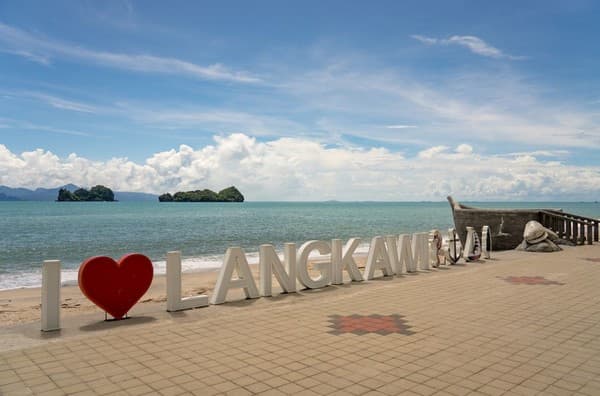
Langkawi
Langkawi is an archipelago of 99 islands in the Andaman Sea off Malaysia's northwest coast and was designated a UNESCO Global Geopark in 2007, the first in Southeast Asia. Its Machinchang formation contains some of the oldest exposed rock in the region, dating back over 500 million years. Duty-free status since 1987 turned the main island into Malaysia's leading beach destination, and it is a favourite with Indian honeymooners and families for its beaches, cable car and island hopping. Malay legend of Mahsuri, a wronged woman who cursed the island for seven generations, remains central to local identity.
Genting Highlands
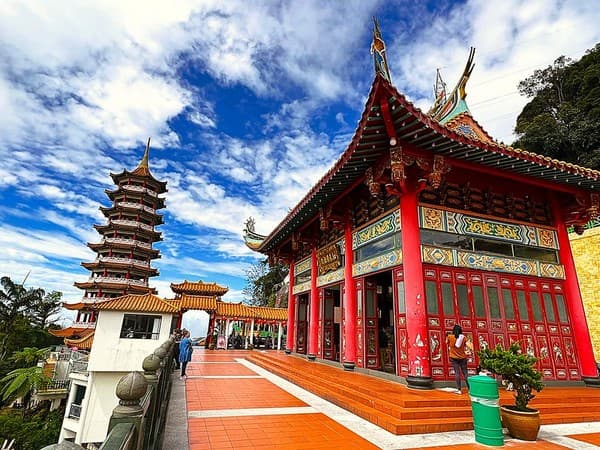
Genting Highlands is a hill resort city built at about 1,800 metres on Mount Ulu Kali, conceived by businessman Lim Goh Tong in the 1960s and opened in 1971. It is home to Malaysia's only licensed land-based casino and to Resorts World Genting, one of the largest hotel complexes in the world. The cool climate, averaging 15 to 25 degrees Celsius, makes it a popular escape from the Klang Valley heat. It is also the site of Chin Swee Caves Temple, a Taoist temple built into the hillside, and is a standard overnight or day-trip stop in Indian KL packages.
George Town, Penang
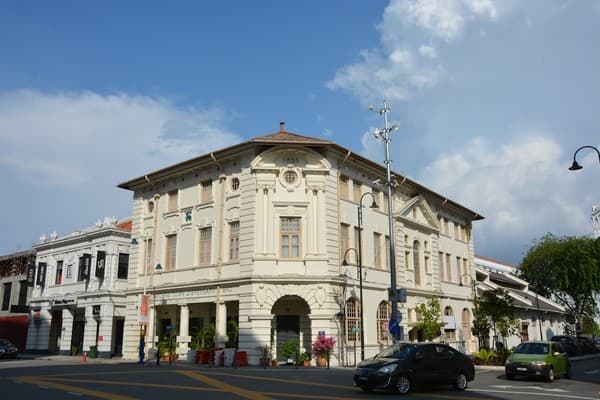
George Town was founded in 1786 by Captain Francis Light as the first British settlement in Southeast Asia and became a UNESCO World Heritage Site in 2008 for its outstanding multicultural urban heritage. Its streets hold Chinese shophouses, clan jetties, Anglican churches, Chinese temples, Malay mosques and Tamil Hindu temples within walking distance of each other. Little India on Lebuh Pasar and Lebuh Queen reflects long-standing South Indian trading and labour migration to Penang. The city is widely regarded as Malaysia's food capital and a highlight for Indian travellers wanting culture and cuisine alongside beaches.
Cameron Highlands
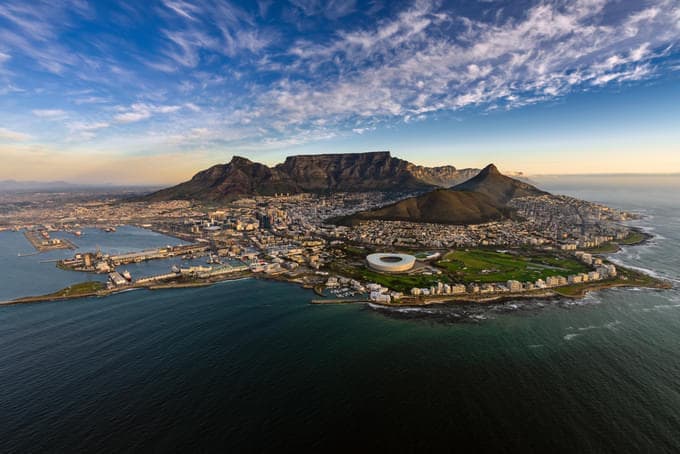
Cameron Highlands is Malaysia's best-known hill station, surveyed by British government geologist William Cameron in 1885 and developed from the 1920s as a colonial retreat and tea-growing district. Sitting between 1,100 and 1,600 metres, it holds some of the oldest commercial tea estates in Southeast Asia, including BOH Plantations, established in 1929. The cool climate supports strawberry farms, vegetable terraces, rose nurseries and butterfly gardens that supply much of Malaysia. Mossy Forest on Gunung Brinchang is a rare montane cloud forest with pitcher plants and gnarled, moss-covered trees. For Indian travellers the tea slopes and cool weather feel familiar, close to Munnar or Ooty, but with Malaysian food and Tamil-speaking estate communities.
Malacca City (Melaka)
Malacca was founded around 1400 by Parameswara and grew into the greatest trading port of the Malay world, drawing Gujarati, Tamil, Chinese, Arab and Javanese merchants. It fell to the Portuguese in 1511, the Dutch in 1641 and the British in 1824, and each ruler left buildings still standing today. UNESCO inscribed Melaka along with George Town as the Historic Cities of the Straits of Malacca in 2008. The city is the heartland of Peranakan (Baba-Nyonya) and Chitty communities, the latter descended from Tamil traders who settled here centuries ago. Its compact old town makes it the easiest heritage day trip from Kuala Lumpur.
Kuala Lumpur City Centre
Kuala Lumpur began in 1857 as a tin mining settlement at the muddy meeting of the Klang and Gombak rivers and became the federal capital of Malaysia in 1957. Its colonial core around Merdeka Square, where independence was declared on 31 August 1957, sits beside Moorish-styled buildings such as the Sultan Abdul Samad Building. The city is the country's main entry point for Indian travellers and holds a large Indian-origin population centred on Brickfields and Jalan Masjid India. Beyond the skyline, KL Tower, Merdeka 118 and the Bukit Bintang shopping belt anchor most first-time itineraries.
Kota Kinabalu and Mount Kinabalu
Mount Kinabalu, at 4,095 metres, is the highest peak between the Himalayas and New Guinea and the centrepiece of Kinabalu Park, Malaysia's first UNESCO World Heritage Site, listed in 2000. The park holds an extraordinary range of plant life, including Rafflesia and many endemic pitcher plants and orchids. Kota Kinabalu, the Sabah capital, is the gateway for island hopping in Tunku Abdul Rahman Marine Park and for wildlife trips to Sepilok and the Kinabatangan River. The mountain is sacred to the Kadazan-Dusun people, who regard it as the resting place of ancestral spirits.
Putrajaya
Putrajaya was built from the mid-1990s on former plantation land as Malaysia's federal administrative capital, taking over most government functions from Kuala Lumpur in 1999. It is a planned garden city of wide boulevards, man-made lakes and landmark bridges, designed as a showcase of contemporary Islamic architecture. The Putra Mosque, Putrajaya Convention Centre, Perdana Putra and the Iron Mosque are its best-known buildings. Because it sits between KLIA and Kuala Lumpur, most Indian tour packages include a half-day photo stop here.
Sunway Lagoon
Sunway Lagoon was built on the site of an abandoned tin mining pit, which was reclaimed and turned into one of Southeast Asia's largest multi-park destinations in 1993. It combines six parks in one location: Water Park, Amusement Park, Wildlife Park, Extreme Park, Scream Park and Nickelodeon Lost Lagoon. The park is credited with transforming a disused mining wasteland into the township of Sunway City, a widely cited example of land rehabilitation in Malaysia. It is one of the most frequently included stops in Indian family tour packages to Kuala Lumpur.
Menara Kuala Lumpur (KL Tower)
Completed in 1995 and standing 421 metres tall, Menara Kuala Lumpur is a telecommunications tower and among the tallest of its kind in the world. It rises out of the Bukit Nanas Forest Eco Park, the oldest permanent forest reserve in Malaysia, gazetted in 1906. Its observation deck at 276 metres gives the highest publicly accessible viewpoint over Kuala Lumpur, including a direct view of the Petronas Twin Towers. The tower's design incorporates Islamic motifs, with the entrance lobby tiled in Iranian-inspired glass mosaic work.
Legoland Malaysia Resort
Opened in 2012, Legoland Malaysia was the first Legoland theme park in Asia and remains one of only a handful worldwide. The resort combines a theme park, water park, SEA LIFE aquarium and themed hotel on a single campus in Iskandar Puteri. Miniland, its centrepiece, recreates Asian landmarks including the Petronas Twin Towers, Angkor Wat and the Taj Mahal from more than 30 million Lego bricks. It is the anchor family attraction of southern Malaysia and a common add-on for Indian travellers combining Singapore and Malaysia.
Taman Negara National Park
Taman Negara was gazetted in 1938-39 as the King George V National Park and covers around 4,343 sq km across Pahang, Kelantan and Terengganu. Its lowland dipterocarp rainforest is estimated to be over 130 million years old, making it one of the oldest continuously standing rainforests on earth. The park shelters Malayan tigers, Asian elephants, tapirs, gaur and hundreds of bird species, and remains home to the semi-nomadic Batek people of the Orang Asli community. It is Malaysia's flagship eco-tourism destination and the country's most accessible deep jungle experience.
Sepilok Orangutan Rehabilitation Centre
Established in 1964, Sepilok was the first orangutan rehabilitation centre in the world and remains the best known. It occupies about 43 sq km of protected lowland rainforest at the edge of the Kabili-Sepilok Forest Reserve and rehabilitates orphaned and injured Bornean orangutans for release into the wild. Visitors watch semi-wild orangutans at open feeding platforms and see infants learning climbing skills in the outdoor nursery. The centre is the anchor of Sabah's wildlife circuit along with the nearby Sun Bear Conservation Centre and Sandakan's Kinabatangan River.
Perhentian Islands
The Perhentian Islands are two main islands, Perhentian Besar and Perhentian Kecil, lying about 20 km off the Terengganu coast in the South China Sea. The name means "stopping point" in Malay, as the islands were historically a waypoint for traders sailing between Bangkok and Malaya. They sit within the Pulau Redang Marine Park zone, and the surrounding reefs shelter green and hawksbill turtles, blacktip reef sharks and clownfish colonies. Because there are no roads or cars, the islands remain one of Malaysia's least developed beach destinations, reached only by boat.
Kuala Lumpur Bird Park
Opened in 1991 inside the Perdana Botanical Gardens, KL Bird Park is billed as the world's largest free-flight walk-in aviary, covering about 20.9 acres under a giant mesh canopy. It houses roughly 3,000 birds across more than 200 species, a large share of them native to Malaysia and Southeast Asia. The park runs breeding programmes for hornbills, storks and the endangered milky stork. It is part of the Lake Gardens cluster that also includes the Butterfly Park, Deer Park and Orchid Garden, making it a standard half-day stop on Kuala Lumpur city tours.
Kuala Gandah National Elephant Conservation Centre
Set up in 1989 by the Malaysian Department of Wildlife and National Parks, Kuala Gandah is the base for the country's Elephant Relocation Team, which moves wild Asian elephants out of conflict areas in Peninsular Malaysia into protected forests such as Taman Negara. The centre cares for orphaned and injured elephants that cannot be released. It sits on the edge of the Krau Wildlife Reserve, one of the peninsula's largest protected lowland forests. The centre is a common day trip from Kuala Lumpur and is often paired with the Deerland Park nearby.
Mount Kinabalu National Park Headquarters and Poring Hot Springs
Kinabalu Park was declared Malaysia's first UNESCO World Heritage Site in 2000 for its exceptional plant diversity, with over 5,000 vascular plant species recorded, including more than 800 orchids and several Nepenthes pitcher plants. The park headquarters area at about 1,563 metres offers montane forest trails and botanical gardens without any need to climb the summit. Poring Hot Springs, on the park's eastern side near Ranau, was developed around sulphur springs first channelled by Japanese forces during the Second World War. The Kadazan-Dusun people regard Mount Kinabalu as the resting place of ancestral spirits.
Kek Lok Si Temple
Kek Lok Si, the Temple of Supreme Bliss, is the largest Buddhist temple complex in Malaysia, begun in 1891 by the Chinese monk Beow Lean with support from Penang's Hokkien business community. Built on the hillside of Air Itam, it blends Chinese, Thai and Burmese Buddhist architecture across several tiers. The seven-storey Pagoda of Ten Thousand Buddhas, completed in 1930, holds thousands of Buddha statues and combines a Chinese octagonal base with a Thai middle section and Burmese crown. A 30.2-metre bronze statue of Kuan Yin, the Goddess of Mercy, stands on the upper terrace under a large pavilion.