Places to visit in Thailand
Planning a trip to Thailand? Here is a complete guide to the best places to visit—from popular tourist attractions to offbeat spots you would not find in every guidebook. Get ready to explore, experience, and fall in love with Thailand!
Top 127 curated places to visit in Thailand
Phanom Rung Historical Park
Prasat Hin Phanom Rung is a major Khmer temple complex in Buriram Province, northeastern Thailand, built between the 10th and 13th centuries and dedicated primarily to Shiva. Perched on the rim of an extinct volcano, it served as both a religious center and a symbolic representation of Mount Meru, the mythical home of Hindu gods. The site is valued for its exceptionally well-preserved Khmer architecture, intricate sandstone lintels and bas‑reliefs, and the rare survival of a full sequence of entrance gates and causeways.
Prasat Muang Tam
Prasat Muang Tam is a well-preserved Khmer temple complex in Buriram Province, northeastern Thailand. Built in the late 10th–11th century during the Khmer Empire, it served as a Hindu sanctuary (primarily dedicated to Shiva) and forms part of a network of Khmer monuments in the Khorat Plateau, alongside the nearby Prasat Phanom Rung. The site is important for understanding Khmer provincial architecture, hydraulic design (moat and causeways), and religious life outside the Angkor heartland.
Phimai Historical Park
Prasat Hin Phimai is one of the most important Khmer monuments in Thailand. Built during the late 11th to 12th centuries (Angkorian period), the complex was originally part of a major Khmer city and served as a regional religious and administrative center. Its architecture and sculpture are closely related to the Angkor monuments, making Phimai a key site for understanding Khmer influence in the Thai northeast. The park preserves a well-defined temple complex, surrounding moat, and traces of the ancient urban plan.
Pha Taem National Park
Pha Taem National Park (อุทยานแห่งชาติผาแต้ม) in Ubon Ratchathani province protects a dramatic stretch of sandstone cliffs and dry evergreen forest along the Mekong River. It is renowned for its prehistoric cliff paintings (some dated 3,000–4,000 years old), important ecosystems that support seasonal wildflowers and wildlife, and panoramic views over the Mekong and Laos — making it significant both archaeologically and scenically.
Sam Phan Bok (Grand Canyon of Thailand)
Sam Phan Bok is a remarkable natural geological site on the Mekong River in Khong Chiam District, Ubon Ratchathani Province. Carved by millennia of erosion, the sandstone bed has been worn into thousands of potholes and basins that are exposed in the dry season, creating one of Thailand's most unusual river-rock landscapes. The site is often called the "Grand Canyon of Thailand" for its dramatic, otherworldly appearance. It is significant for geology (illustrating fluvial erosion and sandstone formations), local livelihoods (fishing and seasonal river access), and regional eco-tourism.
Red Lotus Sea (Talay Bua Daeng)
Red Lotus Sea (Talay Bua Daeng) is a striking natural wetland and seasonal bloom area in Udon Thani province, northeastern Thailand (Isan). The extensive mats of pink-red lotus (Nymphaea) create a unique ecological and scenic landscape each cool season, supporting local biodiversity (waterfowl and fish) and attracting photographers, nature-lovers, and domestic tourists. The site also plays a role in local livelihoods through boat tours, small-scale tourism trade, and lotus-based handicrafts and foods.
Wat Phra That Phanom
Wat Phra That Phanom is one of the most important Theravada Buddhist pilgrimage sites in northeast Thailand (Isan) and an important spiritual center for Lao-speaking Buddhists across the Mekong. The towering gilded stupa is traditionally believed to enshrine a relic (a breastbone) of the Buddha, making it a focal point for merit-making, ordination rites and regional religious identity. The site reflects centuries of Lan Xang and regional cross-border cultural exchange and has been rebuilt and renovated multiple times, preserving traditional religious architecture and local craft traditions.
Wat Pa Phu Kon
Wat Pa Phu Kon is a modern Thai Buddhist forest monastery located in the Isaan (Northeast Thailand) region, in Udon Thani province. Set in a quiet, forested hillside environment, it represents the Thai Forest Tradition's emphasis on meditation, simplicity, and harmony with nature. The temple complex is notable for its striking white main ordination hall and serene grounds, which attract both devotional visitors and tourists seeking tranquility and scenic beauty.
Phu Kradueng National Park
Phu Kradueng National Park is one of Thailand's most iconic natural reserves, celebrated for its high sandstone plateau, dramatic cliffs, extensive pine and evergreen forests, and seasonal mist that creates stunning landscapes. The park is important for conservation of montane ecosystems in northeastern Thailand and is a popular destination for Thai hikers and nature enthusiasts.
Phu Ruea National Park
Natural significance: Phu Ruea National Park protects montane forest and high-elevation ecosystems in Loei Province, Thailand, including cool-climate pine and evergreen forests, scenic cliffs and viewpoints. The park is a valued destination for experiencing Thailand's cool-season landscapes, misty sunrises and biodiversity at higher altitudes.
Cultural importance: The park and surrounding Phu Ruea district are part of local hill-tribe and Isan communities with agricultural traditions; local markets and village crafts complement the visitor experience.
Scientific and conservation value: The high-altitude environment supports plant communities and wildlife distinct from lowland Isan, and the area is used for environmental education and community-based tourism.
Phang Nga Bay
Phang Nga Bay is internationally significant for its dramatic limestone karst islands, rich mangrove ecosystems, and marine biodiversity. It is protected largely within Ao Phang Nga National Park and is important for coastal conservation, geodiversity, and traditional fishing communities (including the Muslim fishing village of Koh Panyee). The bay's landscape and ecology make it a major draw for nature-based tourism and scientific study.
James Bond Island (Khao Phing Kan & Ko Tapu)
Khao Phing Kan and Ko Tapu (commonly called "James Bond Island") are iconic features of Phang Nga Bay, famous for their dramatic karst limestone formations that rise steeply from emerald seas. The area is part of Ao Phang Nga National Park and is important geologically for illustrating millions of years of coastal erosion and karst formation. Culturally the island gained global recognition after the 1974 James Bond film "The Man with the Golden Gun," which transformed the site into an international tourist attraction and a symbol of Thailand's natural beauty.
Similan Islands
The Similan Islands are one of Thailand's premier marine national parks, officially protected as Mu Ko Similan National Park. They are internationally renowned for outstanding marine biodiversity, crystal-clear waters, and spectacular granite rock formations. The islands play a key role in marine conservation, supporting coral reefs, sea turtles, reef fish, and seasonal visits from larger pelagics. Their natural beauty and underwater ecosystems make them a top destination for snorkeling and scuba diving.
Surin Islands
Mu Ko Surin (Surin Islands) is a protected marine area in the Andaman Sea, notable for its exceptionally rich coral reefs, diverse marine life, and coastal rainforest. The islands are part of Thailand's national park system and are important for marine conservation, supporting species such as reef fish, turtles, manta rays, and seasonal visits from larger pelagics. The archipelago is also culturally significant as the traditional home of the Moken (sea gypsy) community, whose sea-based lifestyle and knowledge of the reefs are integral to the islands' human heritage.
Khao Lak
Khao Lak is a coastal area on the Andaman Sea in Phang Nga Province, southern Thailand. It is known for its long sandy beaches, calm seas, and proximity to world-class marine protected areas (notably the Similan and Surin Islands). Khao Lak lies near tropical rainforests and limestone karsts that connect it ecologically to Khao Sok National Park, giving the area strong natural importance for biodiversity, marine conservation, and ecotourism. Culturally, Khao Lak retains a quieter, less-commercialized Thai coastal lifestyle compared with nearby Phuket, with local fishing communities and markets reflecting Southern Thai culture. The town is also historically significant due to the devastating 2004 Indian Ocean tsunami which caused major loss of life and led to the creation of memorials, improved early-warning systems, and community rebuilding projects.
Railay Beach
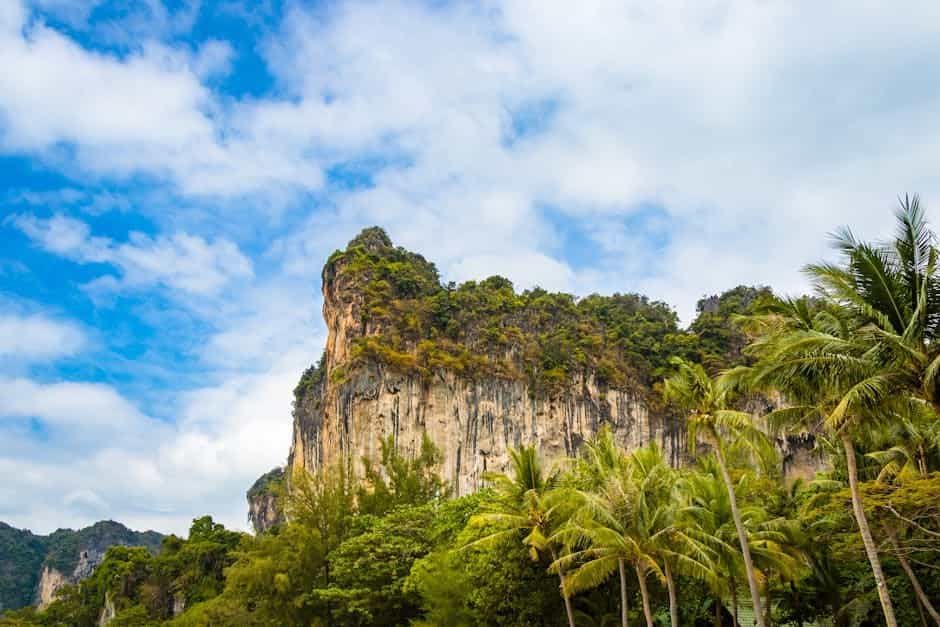
Railay Beach is renowned for its spectacular karst limestone cliffs, crystal-clear waters, and island-like peninsula setting that feels remote despite being near Krabi town. It is significant for rock climbing communities worldwide and supports diverse marine life in nearby reefs. The area combines natural beauty with local Southern Thai culture—small fishing villages and relaxed beachfront resorts—making it an important eco-tourism and adventure tourism destination.
Ao Nang Beach
Ao Nang Beach is the main tourist hub of Krabi province on Thailand's Andaman coast. It serves as a gateway to stunning limestone karst islands and marine parks (natural importance), and historically developed from a quiet fishing village into a lively seaside town (cultural importance). The area's dramatic karst cliffs, mangroves and coral reefs make it important for biodiversity and coastal ecotourism.
Emerald Pool (Sa Morakot)
Sa Morakot (Emerald Pool) is a natural thermal freshwater pool located in Thung Teao Forest Natural Park in Khlong Thom district, Krabi Province. Its striking turquoise color is produced by a clear spring, mineral-rich water and a sandy bottom; the site sits within protected tropical rainforest and represents Krabi’s karst-and-rainforest landscape. The area is important ecologically for local flora, fauna and freshwater habitats, and it’s a popular nature landmark for both domestic and international visitors.
Tiger Cave Temple (Wat Tham Sua)
Wat Tham Sua (Tiger Cave Temple) is a significant Buddhist monastery and meditation complex in Krabi Province, southern Thailand. It is important both as an active center for Theravada Buddhist practice and meditation, and as a cultural landmark visited by pilgrims and tourists. The temple is set in a dramatic limestone hill with caves, natural rock formations and a hilltop shrine, linking religious importance with striking natural scenery and the distinctive karst landscape of the region.
Maya Bay (Ko Phi Phi Leh)
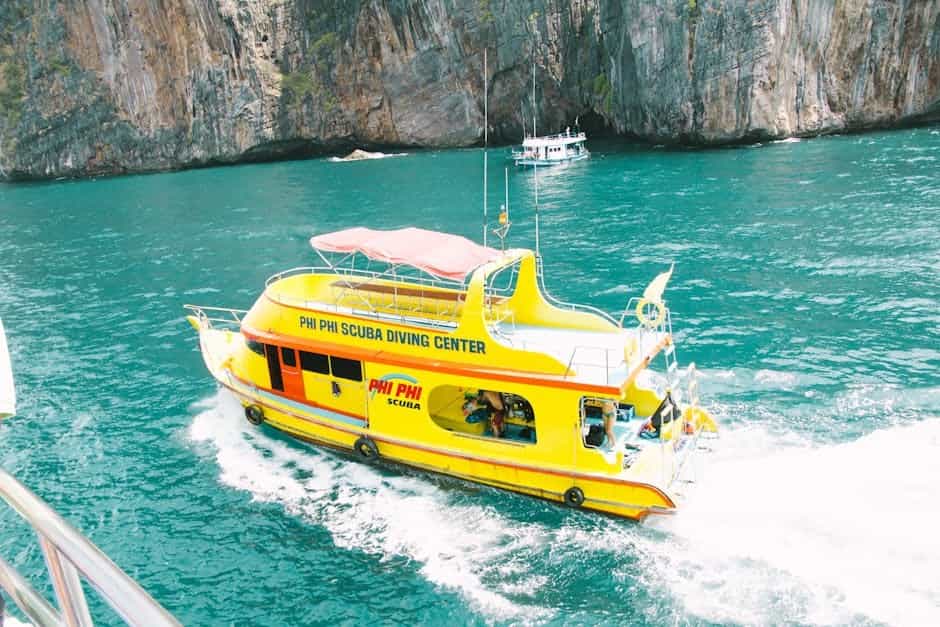
Maya Bay on Ko Phi Phi Leh is one of Thailand's most famous natural attractions. The bay is celebrated for its dramatic limestone cliffs, sheltered white-sand beach and clear turquoise waters. It is part of Hat Noppharat Thara–Mu Ko Phi Phi National Park and is important as both an iconic scenic site and a recovering marine ecosystem after prolonged tourist pressure.