Places to visit in Thailand
Planning a trip to Thailand? Here is a complete guide to the best places to visit—from popular tourist attractions to offbeat spots you would not find in every guidebook. Get ready to explore, experience, and fall in love with Thailand!
Top 127 curated places to visit in Thailand
Erawan National Park
Erawan National Park (อุทยานแห่งชาติเอราวัณ) in Kanchanaburi Province is one of Thailand's most famous national parks, celebrated for its dramatic karst landscape and the multi-tiered Erawan Falls. Established in the 1970s, the park protects evergreen and deciduous forests, limestone caves, streams and wildlife typical of the Tenasserim Range. The park is a key natural area for conservation, ecotourism and recreation in western Thailand.
Erawan Waterfall
Erawan Waterfall is the most famous attraction within Erawan National Park in Kanchanaburi Province, western Thailand. It is celebrated for its spectacular seven-tiered limestone cascade and vivid emerald pools formed by mineral-rich water. The site is important for conservation as part of Thailand's protected national park system and supports diverse tropical forest ecosystems and freshwater habitats.
Huay Mae Khamin Waterfall
Huay Mae Khamin Waterfall is a multi-tiered natural cascade located inside Khuean Srinagarindra National Park in Kanchanaburi Province. It plays an important role in the Srinagarindra reservoir watershed and is valued for its clear emerald pools, limestone formations and relatively intact tropical forest—making it a key site for biodiversity conservation and nature-based tourism in western Thailand.
Wat Phra That Doi Suthep
Wat Phra That Doi Suthep is a major Theravada Buddhist temple and one of northern Thailand's most sacred sites. Founded in the 14th century (traditional accounts date its establishment to the late 1300s), it houses an important Buddha relic and has been a focal point of Lanna (northern Thai) religious life and royal patronage. The temple also sits within Doi Suthep–Pui National Park, offering important natural and scenic value as a mountain-top religious complex overlooking Chiang Mai.
Doi Suthep-Pui National Park
Doi Suthep-Pui National Park (Chiang Mai province) is one of northern Thailand's most important protected areas for both cultural and natural heritage. It combines a sacred mountain (Doi Suthep) with rich montane forests (Doi Pui), offering panoramic views over Chiang Mai city, extensive biodiversity (cloud forest, evergreen and pine stands), and important habitats for birds and mammals. The park also contains major cultural sites — most notably Wat Phra That Doi Suthep, an important Buddhist pilgrimage temple — and the royal Bhubing Palace.
Chiang Mai Old City
Chiang Mai Old City is the historic heart of Chiang Mai, founded in 1296 as the capital of the Lanna Kingdom by King Mengrai. The walled square and surrounding moat preserve centuries-old urban layout, Lanna architecture and many important temples that chronicle northern Thailand's religious and political history. Today the Old City is a living cultural hub blending traditional crafts, Buddhist practice, and a vibrant street-life that makes it one of Thailand's most important heritage and tourism centers.
Doi Inthanon National Park
Doi Inthanon is the highest mountain in Thailand (2,565 m) and forms the centerpiece of Doi Inthanon National Park in Chiang Mai Province. The park is of major natural importance for its montane cloud forests, rich biodiversity (including many endemic plants, orchids and a high diversity of bird species), important watersheds that feed the Ping River system, and its cool highland climate which contrasts with lowland Thailand. It also holds cultural significance for nearby Karen and Hmong hill-tribe communities and contains royal memorial chedis honoring King Bhumibol Adulyadej and Queen Sirikit.
Doi Inthanon (Highest Point of Thailand)
Doi Inthanon — the highest point in Thailand (2,565 m) — is a nationally and ecologically significant mountain within Doi Inthanon National Park (part of the Thanon Thong Chai Range). It is a biodiversity hotspot featuring montane cloud forest, rare highland flora (rhododendrons, orchids, mossy forest) and a rich assemblage of birds (including many montane specialists and migrants). The park supports conservation, research (Royal Project and agricultural research stations) and eco-tourism, and plays an important role in watershed protection for northern Thailand.
Elephant Nature Park
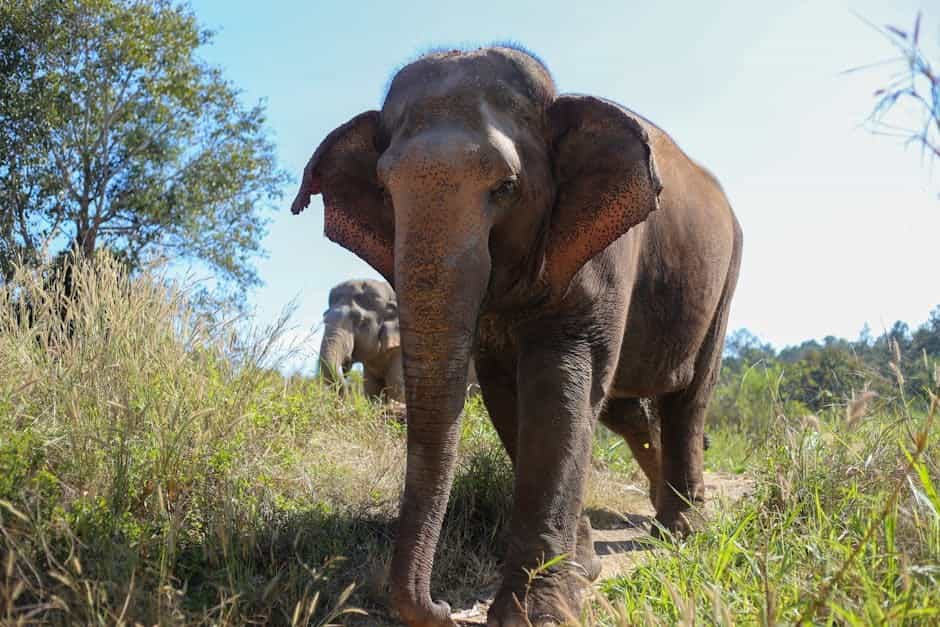
Elephant Nature Park is a widely respected elephant rescue and rehabilitation center near Chiang Mai, Thailand. Founded and led by Sangduen “Lek” Chailert, the park focuses on rescuing abused, injured, and retired working elephants and providing them with a natural, protected environment. It is important both as an animal welfare pioneer in Thailand and as an educational hub promoting ethical wildlife tourism and conservation.
Doi Luang Chiang Dao
Doi Luang Chiang Dao is a limestone massif and one of the highest peaks in northern Thailand. It sits in Chiang Dao district, Chiang Mai province, and is the centerpiece of the Doi Chiang Dao Wildlife Sanctuary. The area is important for its rich biodiversity (montane cloud forest, endemic plants, and migratory and resident bird species), karst geology and cave systems, and cultural connections with local hill-tribe communities (Karen, Lisu, Lahu). The mountain is both a natural landmark and a site of local spiritual significance.
Pai Canyon
Pai Canyon (Kong Lan) is a notable natural landmark near Pai in Mae Hong Son province, northern Thailand. Its significance is primarily geological and scenic: narrow, red-tinged sandstone and clay ridges formed by years of erosion create dramatic cliffs and panoramic views over the Pai valley. The canyon is a popular attraction for visitors to Pai and contributes to the town's reputation as a nature-and-backpacker destination.
Tha Pai Hot Springs
Natural geothermal site: Tha Pai Hot Springs (Pai Hot Springs) are a notable geothermal feature in Mae Hong Son province, set in a scenic teak and bamboo forest near the Pai River. The springs are valued locally for their warm mineral waters and as a relaxing nature attraction that showcases the region's volcanic/geothermal activity and mountain-river landscape.
Mae Hong Son Loop (Scenic Drive)
Mae Hong Son Loop is one of northern Thailand's most celebrated scenic road trips. The loop showcases dramatic mountain scenery, dense evergreen forests, limestone karsts and deep river valleys. Culturally it links a mosaic of hill-tribe communities (Shan, Karen, Lisu, Lahu, Hmong) and small towns where traditional crafts, local markets and distinct northern-Thai (Lanna) customs remain strong. The route offers access to important natural and geological sites (caves, hot springs, waterfalls) and several historic temples that reflect regional history and Shan/Burmese influences.
Wat Rong Khun (White Temple)
Wat Rong Khun (White Temple) is a contemporary, privately owned temple in Chiang Rai, Thailand, created and funded by artist Chalermchai Kositpipat. It is significant as a modern fusion of Buddhist religious symbolism and contemporary art—an evolving work of art and pilgrimage site rather than an historic temple complex. Its white color and embedded glass symbolize purity and the Buddha's wisdom.
Wat Rong Suea Ten (Blue Temple)
Wat Rong Suea Ten (Blue Temple) is a contemporary Buddhist temple in Chiang Rai province, northern Thailand. Although the original temple site is older, the current striking design was created in the 21st century by artist Phuttha Kabkaew (Putha Kabkaew), a student of Chalermchai Kositpipat. The temple is important as a modern expression of Thai Buddhist art that blends traditional motifs (naga, lotus, ornate gables) with bold contemporary color and glass-mosaic techniques, attracting both worshippers and international visitors.
Baan Dam Museum (Black House)
Baan Dam Museum (the "Black House") is a private gallery-complex created and curated by the late Thai artist Thawan Duchanee. It is an important cultural site in Chiang Rai and for modern Thai art—showcasing Thawan’s distinctive interpretations of Lanna and Buddhist motifs combined with a personal, often provocative, aesthetic. The site functions as both an art museum and architectural ensemble, demonstrating traditional northern Thai timber construction reworked into a contemporary, often dark, artistic language.
Golden Triangle (Sop Ruak)
Golden Triangle (Sop Ruak) sits at the strategic confluence of the Mekong and Ruak Rivers where the borders of Thailand, Laos and Myanmar meet. Historically it was a major center of the opium trade and cross‑border commerce, and today it is an important cultural crossroads showcasing northern Thai (Lanna) heritage, hill‑tribe communities, and vibrant riverine ecosystems. The landscape offers dramatic river vistas, migratory bird habitats, and a living example of borderland cultural exchange.
Phu Chi Fa
Phu Chi Fa is a prominent mountain peak and forest park in Chiang Rai province, northern Thailand, notable for its dramatic cliff ridge and panoramic views over a vast "sea of mist". It is an important natural landmark in the Doi Pha Tang mountain range and a popular site for nature tourism, photography and birdwatching. The area also provides cultural insight into northern Thai and hill-tribe communities living in the surrounding highlands.
Doi Ang Khang
Doi Ang Khang is a cool-climate mountain area in northern Thailand noted for its Royal Agricultural Station (part of the late King Bhumibol Adulyadej's Royal Projects). The station transformed local hilltribe farming by introducing temperate crops and sustainable agriculture, improving livelihoods and conserving the environment. The site is also valued for its unique highland ecosystems, pine and rhododendron forests, and panoramic mountain scenery.
Santikhiri (Doi Mae Salong)
Santikhiri (Doi Mae Salong) is a culturally and historically unique hill station in northern Thailand. It was settled by remnants of the Chinese Nationalist (KMT) army after World War II and the Chinese Civil War; descendants of these settlers have preserved Chinese language, cuisine, architecture, and festivals alongside local hill-tribe communities (Akha, Yao, Lahu). The area is also agriculturally significant for tea cultivation and was developed under royal and government projects to replace opium with sustainable crops, most notably highland tea and fruit orchards. The natural importance includes cool highland climate, panoramic mountain scenery, terraced tea plantations, and diverse flora and fauna typical of northern Thai highlands.