Places to visit in Thailand
Planning a trip to Thailand? Here is a complete guide to the best places to visit—from popular tourist attractions to offbeat spots you would not find in every guidebook. Get ready to explore, experience, and fall in love with Thailand!
Top 127 curated places to visit in Thailand
Patong Beach
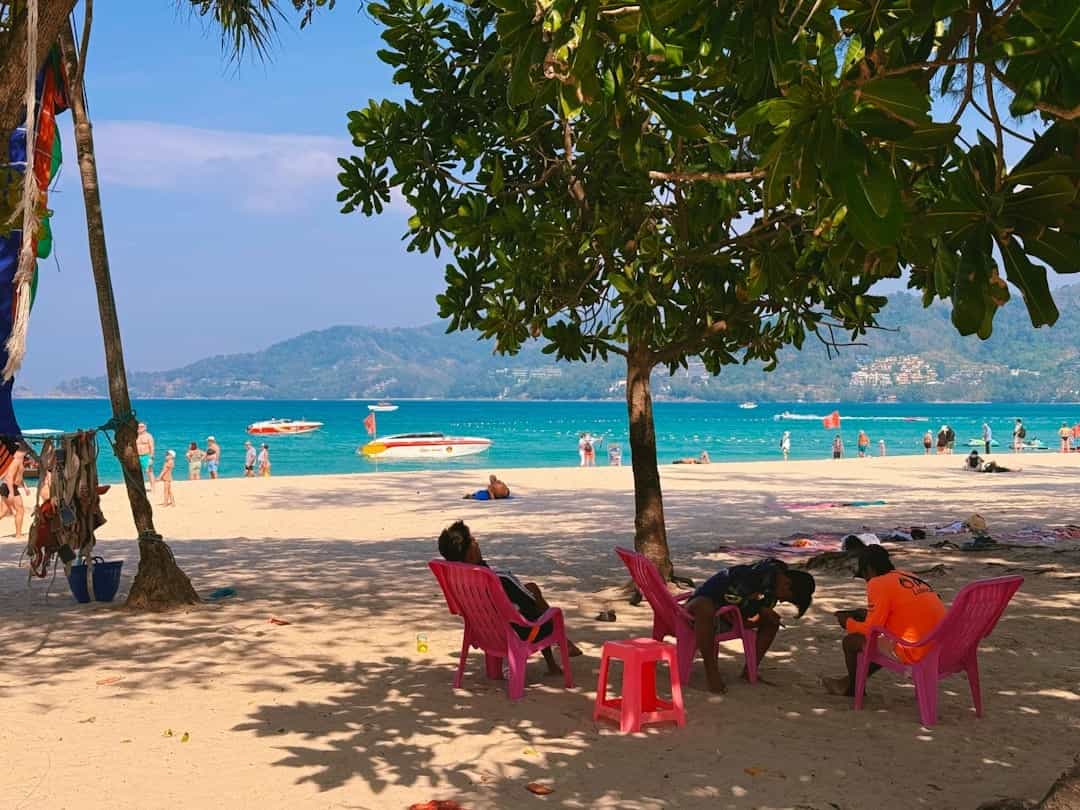
Patong Beach is the most famous and developed beach resort on Phuket Island, Thailand. Originally a small fishing village, Patong transformed during the late 20th century into a major international tourist hub. Its importance is primarily cultural and economic as a center for tourism, hospitality, and nightlife on Phuket. The beach itself is a natural crescent of white sand on the Andaman Sea and serves as a gateway for many island-hopping and marine excursions.
Kata Beach
Kata Beach is one of Phuket's most popular beaches, known for its natural crescent-shaped bay, fine white sand, and clear blue waters. It has evolved from a small fishing village into a major tourism hub while retaining a relaxed, family-friendly atmosphere. The beach and surrounding coastal areas contribute significantly to Phuket's economy and coastal ecosystem, including coral reefs and marine life that support snorkeling and diving.
Karon Beach
Karon Beach is one of Phuket’s longest and most popular beaches — a crescent of soft white sand on Phuket’s west coast. It’s important as a major tourism hub for Phuket, offering a more relaxed alternative to nearby Patong while still providing easy access to island excursions and water-based activities. The shoreline and adjacent coastal vegetation form a typical Andaman Sea beach ecosystem that supports local marine life and coastal birds.
Nai Harn Beach
Nai Harn Beach is a naturally sheltered bay on the southern tip of Phuket island, prized for its clear emerald water, fine sand, and relatively undeveloped surroundings compared with busier Phuket beaches. The beach sits beside a small freshwater lake and a low hill backdrop, creating a unique coastal-lagoon environment. Historically the area was a quiet fishing community and still retains local, maritime character; it has become popular with families, couples, and visitors seeking a quieter beach experience.
Sanctuary of Truth
The Sanctuary of Truth (Prasat Satchatham) in Pattaya, Thailand, is a unique all-wood structure built to preserve and celebrate traditional Thai craftsmanship, philosophy and religious art. Conceived by Thai businessman and patron Lek Viriyaphant in 1981, the Sanctuary blends Hindu and Buddhist cosmology, showcasing mythological motifs and moral teachings through intricate woodcarving. It is significant as a living cultural project: craftsmen continue to carve and maintain the building using ancient techniques, making it both an artistic monument and an educational centre for traditional skills.
Nong Nooch Tropical Garden
Location & Overview: Nong Nooch Tropical Garden is a large, privately owned botanical garden near Pattaya in Chonburi Province, Thailand. Founded in the mid-20th century (established by the Tansacha family), it evolved from a fruit plantation into an internationally renowned garden and horticultural training center showcasing tropical plants, extensive palm and cycad collections, and themed landscape gardens. It is important for plant conservation, horticultural display, and as a major cultural tourism destination in eastern Thailand.
Koh Larn (Coral Island)
Koh Larn (Coral Island) is a small island located about 7 kilometers off the coast of Pattaya in the Gulf of Thailand. It is valued primarily for its natural marine environment—clear waters, white-sand beaches and coral reefs—which make it an important local snorkeling and day-trip destination. The island supports a small local fishing community and has become an accessible example of Thailand's coastal tourism, blending traditional Thai island life with modern leisure activities.
Ko Samet
Ko Samet is part of Khao Laem Ya–Mu Ko Samet National Park and is valued primarily for its natural beauty—white sand beaches, clear waters and coral reefs—making it one of the nearest island escapes to Bangkok. The island has long been a favorite weekend and holiday destination for Thai and international visitors, contributing to local tourism and coastal culture in Rayong province.
Mae Ramphueng Beach
Mae Ramphueng Beach is a long, gently curving public beach on the Gulf of Thailand in Rayong Province known for its relaxed, low-rise coastal character. It is important as a living shoreline used by local fishing communities and small-scale tourism, offering natural coastal habitats (sandy shore, nearshore sea grasses and mangrove pockets) that support seabirds and occasional marine life. The beach’s unspoiled stretch provides a quieter alternative to more commercialized Thai beaches, reflecting the region’s coastal culture and everyday life.
Ko Chang
Ko Chang (Koh Chang) is Thailand's second-largest island and part of the Mu Ko Chang National Park. It is valued for its dense tropical rainforest, dramatic coastline, waterfalls, coral reefs and mangrove ecosystems. The island's ecology supports diverse wildlife (birds, monitor lizards, monkeys) and marine life, making it important for conservation and low-key eco-tourism. Local fishing villages and longtail-boat culture reflect traditional coastal Thai life.
Mu Ko Chang National Park
Mu Ko Chang National Park (อุทยานแห่งชาติหมู่เกาะช้าง) is one of Thailand’s largest marine national parks, protecting a chain of islands and surrounding coral-fringed waters in the eastern Gulf of Thailand. The park conserves important coastal and marine ecosystems — coral reefs, seagrass beds, mangroves and tropical rainforest — and supports diverse marine and terrestrial wildlife. It is both an ecological stronghold for regional biodiversity and a major ecotourism destination that supports local fishing communities and sustainable tourism efforts.
Ko Kood (Koh Kut)
Ko Kood (Koh Kut) is one of Thailand's easternmost islands, part of Trat Province near the Cambodian border. It is valued for its largely undeveloped, pristine natural environment — long white-sand beaches, dense rainforest, freshwater waterfalls and healthy coastal ecosystems (mangroves and coral gardens). Historically the island sustained small fishing and coconut-farming communities; its quiet, low-density development has preserved traditional island ways of life and made it a sanctuary for wildlife and marine biodiversity.
Ko Mak
Ko Mak is a small, low-key island in Trat Province in the Gulf of Thailand known for its quiet, community-driven tourism and traditional coconut and rubber plantations. The island's natural importance lies in its fringing coral reefs, clear shallow waters, mangrove pockets, and palm-fringed beaches that support local fisheries and small-scale ecotourism. Culturally, the island retains a slow-paced local Thai community life with family-run guesthouses and resorts that emphasize sustainability and island conservation.
Khao Sam Roi Yot National Park
Khao Sam Roi Yot is Thailand's first coastal national park, renowned for its dramatic limestone karst hills, extensive freshwater marshes and coastal ecosystems. The park protects diverse habitats including mangroves, sand dunes and tidal flats, supporting rich birdlife and marine life. It showcases the intersection of limestone geology and coastal wetlands that are rare in the region.
Phraya Nakhon Cave
Phraya Nakhon Cave (Tham Phraya Nakhon) is one of Thailand’s most iconic cave sites, celebrated for its dramatic natural skylight and the royal Kuha Karuhas Pavilion inside. Located in Khao Sam Roi Yot National Park, Prachuap Khiri Khan Province, the cave combines geological significance (coastal limestone karst formations), cultural importance (royal connections from the reign of King Chulalongkorn, Rama V) and strong visual symbolism in Thai tourism photography.
Pranburi Forest Park
Pranburi Forest Park protects a coastal mangrove and estuarine ecosystem at the mouth of the Pranburi River in Prachuap Khiri Khan province. The park plays an important role in coastal protection, nursery habitat for fish and crustaceans, and as a stopover for migratory and resident bird species. It also supports local fisheries and small coastal communities through ecosystem services and sustainable tourism opportunities.
Kaeng Krachan National Park
Kaeng Krachan National Park is Thailand’s largest national park (area approx. 2,915 km²) and one of the country’s most important conservation areas. Established in 1981, the park protects extensive evergreen and mixed deciduous rainforest in the Tenasserim Hills along the Thai–Myanmar border. It is a biodiversity hotspot, home to hundreds of bird species, many mammals (including Asian elephant, gibbon, leopard cat and sun bear), and rich plant diversity. The park’s intact forest and large protected area make it crucial for regional ecological connectivity and watershed protection.
Thi Lo Su Waterfall
Thi Lo Su Waterfall (also spelled Thi Lor Su) is the largest and most impressive waterfall in Thailand and is a flagship feature of the Umphang Wildlife Sanctuary in Tak Province. It is an outstanding natural landmark within a protected tropical evergreen forest, important for biodiversity conservation and as a major ecotourism draw to this remote region.
Sukhothai Historical Park
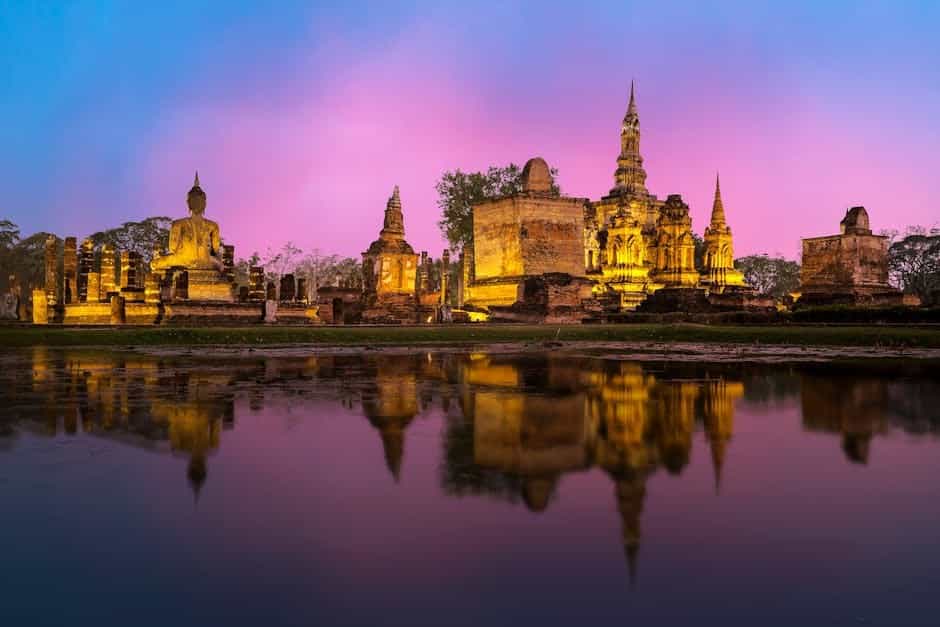
Sukhothai Historical Park preserves the ruins of Sukhothai, the capital of the first Kingdom of Siam (13th–15th centuries). It is widely regarded as the birthplace of Thai art, architecture, language (early Thai script) and Theravada Buddhism in the region. The site demonstrates early Thai urban planning with large temple complexes, royal palaces, moats, reservoirs (barays) and Buddha images, reflecting the political and spiritual foundations of the Thai nation. Designated a UNESCO World Heritage Site in 1991, the park is crucial for understanding the development of Thai culture and statecraft.
Wat Mahathat, Sukhothai
Wat Mahathat (Sukhothai) is the principal temple and spiritual heart of the Sukhothai Historical Park, the capital of the first Kingdom of Siam (13th–14th centuries). It served as the royal monastery and center for state religious ceremonies, reflecting the early Thai adaptation of Theravada Buddhism and Sukhothai architectural ideals. The temple complex and its lotus-bud chedi are prime examples of Sukhothai's elegant proportions and artistic innovations, which influenced later Thai temple design.