Places to visit in Gujarat
Planning a trip to Gujarat? Here is a complete guide to the best places to visit—from popular tourist attractions to offbeat spots you would not find in every guidebook. Get ready to explore, experience, and fall in love with Gujarat!
Top 100 curated places to visit in Gujarat
Somnath Beach
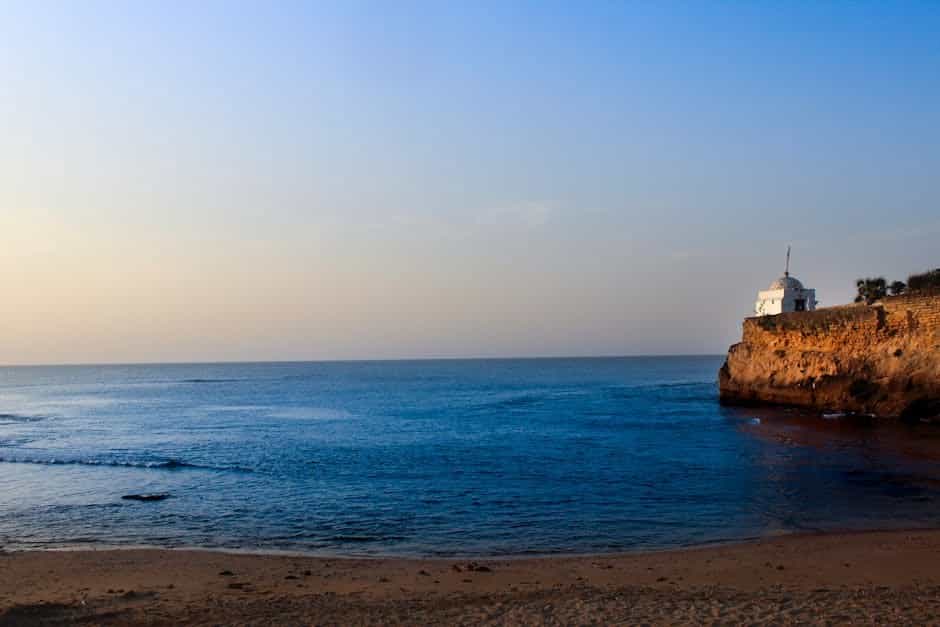
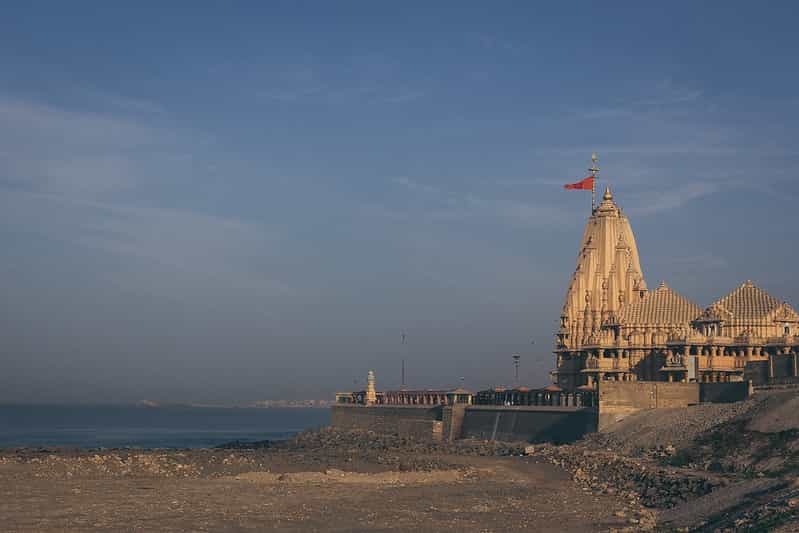
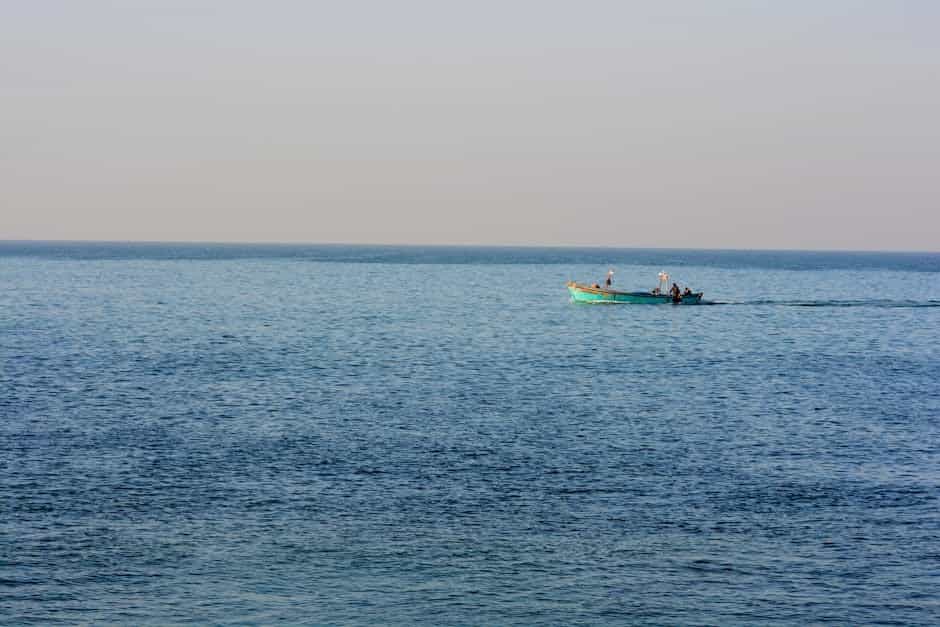
Somnath Beach is adjacent to the Somnath Temple, one of the twelve Jyotirlinga shrines of Lord Shiva and a major pilgrim destination in Gujarat. The beach and temple together hold deep religious and cultural significance, attracting devotees and tourists. Historically the area has seen several reconstructions of the temple over centuries and the coastline plays a role in regional maritime history. Naturalscape includes wide sandy stretches, coastal wetlands nearby, and seasonal migratory birds.
Girnar Hill & Ropeway
Girnar Hill is one of Gujarat's most important pilgrimage and natural landmarks. It holds significance for both Hindus and Jains: the summit and slopes contain ancient Hindu temples (including the Amba Mata and Dattatreya shrines) and a celebrated cluster of Jain temples such as the Neminath temples. Historically, the area around Girnar and the nearby city of Junagadh has been an important cultural and political center for centuries, with archaeological remnants and inscriptions dating back to ancient and medieval periods. Natural importance arises from the hill's unique granite formations, biodiversity pockets, and panoramic views of the surrounding plains and nearby Arabian Sea on clear days.
Uparkot Fort
Uparkot Fort (also spelled Uperkot) in Junagadh is an ancient rock-cut fort with continuous historical significance from at least the early centuries BCE through medieval times. It showcases layers of occupation and fortification by several dynasties and serves as an important example of Gujarati military and civic architecture. The fort complex combines archaeological, architectural and cultural values and sits near other historic sites in Junagadh, making it central to the region's heritage.
Mahabat Maqbara
Mahabat Maqbara in Junagadh (Gujarat) is a late 19th–early 20th century mausoleum built under the patronage of Nawab Mahabat Khan II. It is celebrated for its architectural fusion—mixing Indo-Islamic, Gothic and European elements—and stands as a symbol of the cultural and political prominence of the erstwhile Junagadh princely state.
Palitana Temples, Shatrunjaya Hill
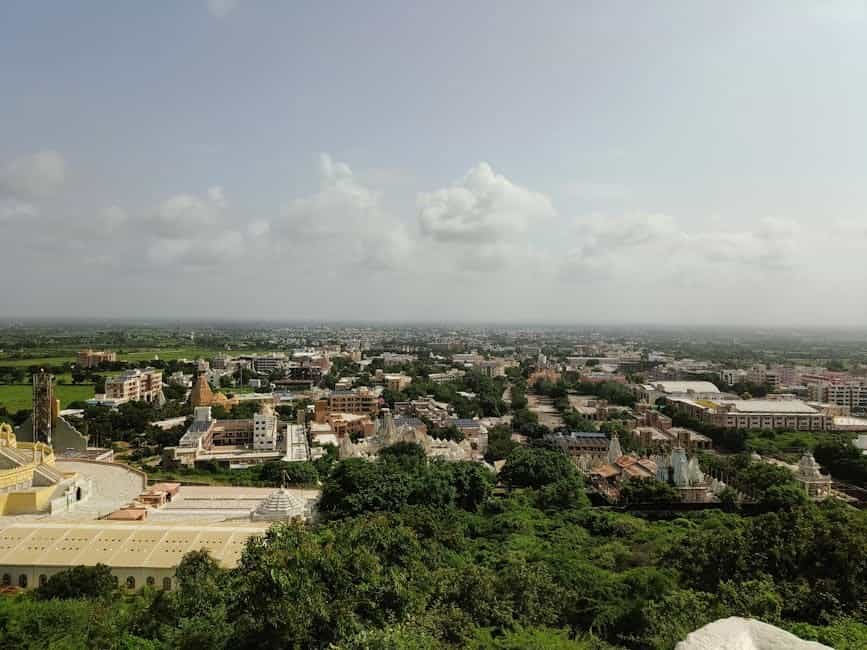
Palitana Temples on Shatrunjaya Hill form one of the most important pilgrimage complexes for Digambara Jains. The hilltop cluster—commonly cited as containing about 863 temples—was developed over many centuries (with major activity between the 11th and 16th centuries) and is renowned for its fine white marble architecture, ornate carvings and dense concentration of shrines. The site is both a cultural-religious centre and an outstanding example of a ‘temple city’ built into a natural rocky hill, offering panoramic views and patches of native scrub forest and wildlife around the lower slopes.
Velavadar Blackbuck National Park
Velavadar Blackbuck National Park is one of India’s most important protected grassland ecosystems. It conserves large populations of the blackbuck (Antilope cervicapra) — a species emblematic of India’s open plains — and supports diverse grassland flora and fauna including wolves, jackals, striped hyenas and many grassland birds. The park’s seasonal wetlands also attract numerous migratory waterbirds, making it important for both mammal and bird conservation. Its open, treeless landscape represents a diminishing habitat type in the subcontinent and is important for ecological research and species protection.
Khijadiya Bird Sanctuary
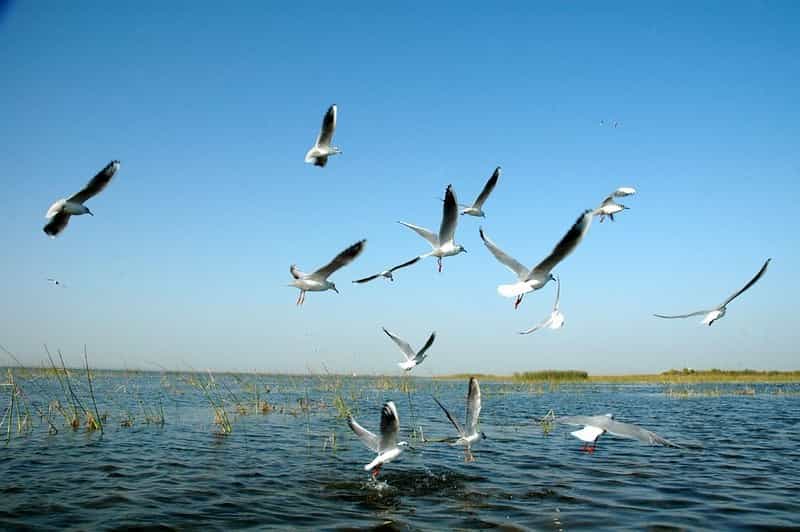
Khijadiya Bird Sanctuary (Gujarat) is a unique wetland complex where freshwater from inland sources mixes with saline water from the Gulf of Kutch, creating a mosaic of habitats (marshes, reedbeds, mudflats and saline lagoons) that supports high biodiversity. It is an important wintering and staging ground for migratory waterbirds and holds conservation value for resident species, local fisheries and wetland-dependent communities.
Marine National Park, Gulf of Kutch
Marine National Park, Gulf of Kutch is one of India's earliest and most important marine protected areas. It conserves a mosaic of intertidal and subtidal habitats — coral reefs, rocky outcrops, mangroves and seagrass beds — that support high marine biodiversity including corals, molluscs, crustaceans, dolphins, sea turtles and numerous migratory and resident seabirds. The park plays a critical role in sustaining local fisheries and protects habitats that are sensitive to coastal development and climate change.
Narara Island (Coral Walk)
Natural importance: Narara Island (Coral Walk) is valued for its intertidal coral and rocky reef formations — among the few accessible coral habitats along Gujarat's coast. The area supports diverse tide-pool life, small reef fishes, algae and sea grasses, and provides feeding/roosting habitat for coastal and migratory birds. It is also culturally important to nearby coastal communities whose livelihoods and traditions are tied to the sea.
Pirotan Island
Pirotan Island is a small but ecologically important island located in the Gulf of Kutch off the coast of Gujarat (Jamnagar district). It is part of the Gulf of Kutch Marine National Park and Sanctuary and is valued for its rich marine biodiversity, including coral reefs, tidal flats, and intertidal ecosystems. The island serves as an important habitat for a variety of fish, invertebrates, and migratory birds, making it a key site for conservation and marine research.
Lakhota Lake
Lakhota Lake (also called Lakhota Talav) is a central man-made lake in Jamnagar, Gujarat. It is historically and culturally important because of the 18th-century Lakhota Fort that sits on a small island within the lake; the fort now houses a museum with local artifacts and archaeological finds that reflect Jamnagar’s maritime and regional history. The lake is also an important urban green space and supports local biodiversity, attracting resident and migratory birds, making it significant from a natural and recreational perspective.
Lakhota Museum (in Lakhota Palace)
Lakhota Museum (in Lakhota Palace), Jamnagar, Gujarat is housed in the island fort-palace (Lakhota Palace) situated in the center of Lakhota Lake. The structure is an important example of regional palace/fort architecture and reflects the history of the Jamnagar princely state and the Saurashtra region. The museum preserves and displays artifacts that document local history, royal life, traditional crafts and martial traditions of the region.
Dwarkadhish Temple
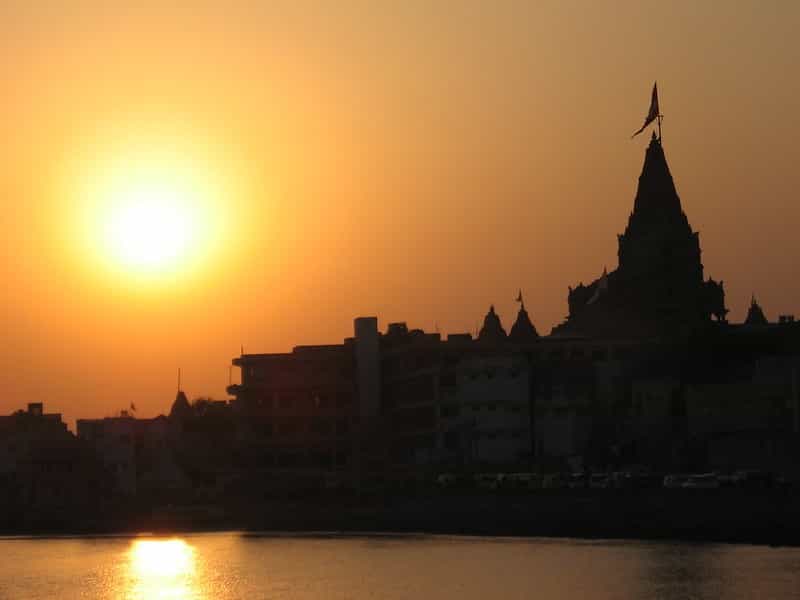
Dwarkadhish Temple (also known as Jagat Mandir) in Dwarka, Gujarat, is one of the most important Hindu temples dedicated to Lord Krishna (worshipped as Dwarkadhish, the 'King of Dwarka'). It is traditionally regarded as one of the four Dhams (Char Dham) and a major pilgrimage site in the Krishna tradition. The town of Dwarka is associated with the ancient kingdom of Krishna from the Mahabharata and with traditions of a submerged city at the site. The temple's continuous religious importance across centuries makes it central to regional culture, pilgrimage circuits, and Hindu devotional architecture.
Nageshwar Jyotirlinga Temple
Nageshwar Jyotirlinga Temple (also spelled Nagnath or Nageshwar) near Dwarka in the Devbhoomi Dwarka district of Gujarat is one of the twelve traditional Jyotirlinga shrines of Lord Shiva, making it an important pilgrimage site for Hindus. The temple's sanctity comes from its identification as the location where Shiva is worshipped as the 'Lord of Serpents' (Naga). It forms a key part of the Dwarka pilgrimage circuit along with the Dwarkadhish Temple and Bet Dwarka. Historically, the temple has been renovated and rebuilt over centuries; it combines ancient religious significance with later architectural additions. The temple's coastal location also ties it to maritime traditions of the region.
Bet Dwarka (Beyt Dwarka)
Bet Dwarka (Beyt Dwarka) is an island off the coast of Gujarat associated with Lord Krishna in Hindu tradition. It is believed to have been the residence and stronghold of Krishna and the Yadava clan; marine archaeology and local folklore also point to the existence of an ancient port and submerged structures in the region. The site is important both as a living pilgrimage center (religious and cultural) and for its natural coastal environment and small fishing communities.
Shivrajpur Beach (Blue Flag)
Shivrajpur Beach is located on the Gulf of Khambhat near Dwarka in Gujarat and is part of the culturally and historically important Dwarka region, associated with the ancient kingdom of Lord Krishna. The beach is valued for its clean sands, clear waters and coastal ecosystem. As a Blue Flag-certified beach, it represents high environmental, safety and accessibility standards and is a showcase for sustainable coastal tourism in India.
Kirti Mandir (Gandhi’s Birthplace)
Kirti Mandir in Porbandar, Gujarat, is the birthplace memorial of Mohandas Karamchand Gandhi (Mahatma Gandhi), one of the central leaders of India’s independence movement. The site functions as a museum and shrine commemorating Gandhi’s life and principles (non-violence, truth, self-reliance) and attracts pilgrims, students, historians, and international visitors. It preserves original rooms, photographs, documents and relics that chronicle Gandhi’s early life and his contribution to India and the world.
Madhavpur Beach
Madhavpur Beach (also spelled Madhavpur Ghed) is a scenic coastal stretch in Saurashtra, Gujarat, known for its clean sandy shorelines, peaceful fishing-village atmosphere, and cultural significance in local folklore. The beach is culturally important to the region as it houses the small but revered Madhavrai (Madhav) temple and is associated with traditional Saurashtrian coastal lifestyles and folk arts.
Barda Wildlife Sanctuary
Barda Wildlife Sanctuary is a key remnant of the dry deciduous and thorn-scrub ecosystems of the Saurashtra region in Gujarat. Declared a protected area in the late 20th century, it conserves an isolated hill range that supports a range of mammals, reptiles and birds adapted to semi-arid conditions, and sustains local tribal communities whose traditional lifestyles are closely tied to the landscape.
Saputara Hill Station
Saputara is Gujarat's only hill station, located in the Dang district on the Maharashtra–Gujarat border. It occupies a place of natural importance for its Western Ghats foothill landscapes, evergreen forests, waterfalls and biodiversity. Culturally it is home to indigenous tribal communities (mainly Bhil and Warli) whose art, music, festivals and ways of life give the area distinct cultural value. The region also attracts visitors for its cool climate and scenic viewpoints, making it an important local tourism and conservation area.