Places to visit in Rajasthan
Planning a trip to Rajasthan? Here is a complete guide to the best places to visit—from popular tourist attractions to offbeat spots you would not find in every guidebook. Get ready to explore, experience, and fall in love with Rajasthan!
Top 112 curated places to visit in Rajasthan
Lalgarh Palace & Museum
Lalgarh Palace in Bikaner, Rajasthan is an early-20th-century royal complex built by Maharaja Ganga Singh. Constructed in red sandstone in an Indo-Saracenic style, the palace blends Rajput, Mughal and European architectural elements and stands as a major symbol of Bikaner's royal heritage. Today parts of the complex house a museum containing the royal family's artifacts, costumes, photographs and weaponry, offering insight into the region's history, craftsmanship and courtly life.
Ajmer Sharif Dargah
Ajmer Sharif Dargah is the revered Sufi shrine of Hazrat Khwaja Moinuddin Chishti (1141–1236 CE) and one of the most important Sufi pilgrim sites on the Indian subcontinent. The mazar (tomb) became a major centre of the Chishti order and received patronage from many rulers, including several Mughal emperors. The Dargah is renowned for its message of religious tolerance and syncretic culture, attracting devotees from Muslim, Hindu and other faiths.
Adhai-din ka Jhonpra
Adhai-din ka Jhonpra (Ajmer) is an important early example of Indo-Islamic architecture in Rajasthan. Historically, the site is associated with the late 12th and early 13th centuries when Muhammad Ghori's general Qutb-ud-din Aibak is said to have converted an existing building (often described as a Sanskrit college or temple complex) into a congregational mosque. The structure displays the reuse of carved pillars and decorative elements from earlier Hindu and Jain buildings, illustrating cultural and artistic continuity and transition. Culturally, it stands close to the Ajmer Sharif Dargah and forms part of the city's Sufi and pilgrimage landscape. Architecturally, the mosque is notable for its large open courtyard, intricately carved pillars and brackets, ornamental inscriptions, and the striking blend of temple motifs with Islamic calligraphy.
Ana Sagar Lake
Ana Sagar Lake is an artificial lake in Ajmer, Rajasthan, believed to have been constructed in the 12th century by the Chauhan ruler Arnoraja (commonly known as 'Ana') to provide water to the city. Over centuries the lake has served as an important water reservoir and social focal point for Ajmer. Its banks include Mughal-era gardens and pavilions, reflecting the site's layered historical and cultural significance. The lake also supports local biodiversity and attracts migratory birds in winter, giving it natural importance in the region.
Pushkar Lake
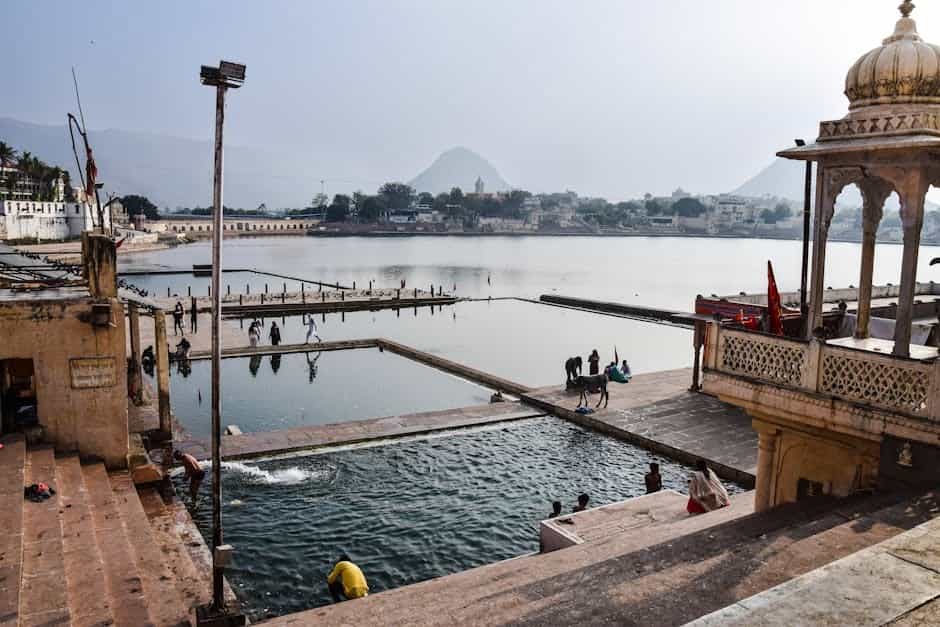
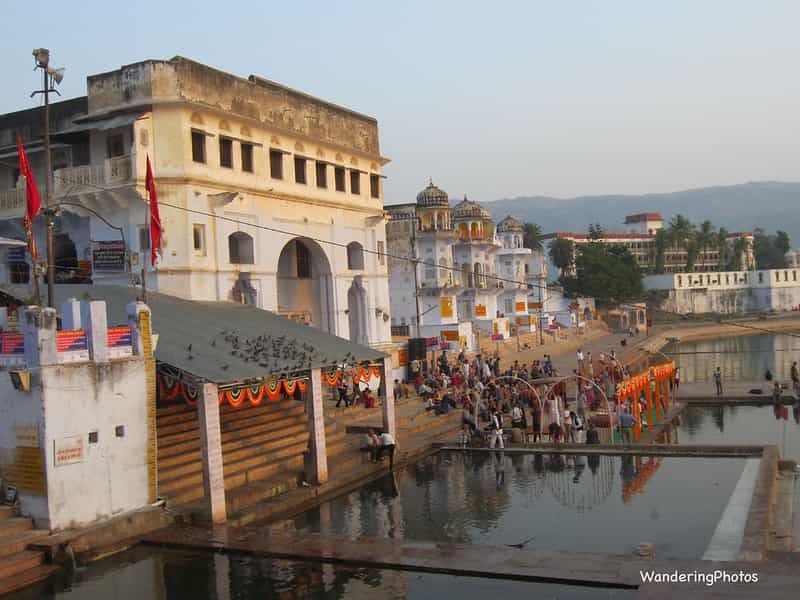
Pushkar Lake is one of the holiest lakes in Hinduism and a major pilgrimage site in Rajasthan. It is closely associated with Lord Brahma—Pushkar is one of the few places with a prominent Brahma Temple—and thousands of pilgrims come to perform ritual dips, especially during the sacred Kartik month. The lake and its 52 ghats form the spiritual heart of Pushkar town and contribute to the town's unique blend of religious, cultural and desert-town character.
Brahma Temple, Pushkar
The Brahma Temple at Pushkar is one of the very few major temples in India dedicated to Lord Brahma, the Hindu creator god. It is a central landmark of Pushkar and an important pilgrimage site for Hindus. The temple complex sits close to Pushkar Lake, itself a sacred body of water believed to have been created when a lotus dropped by Brahma fell to earth. The existing temple structure dates largely from the medieval period (commonly cited as the 14th century) though the site’s worship tradition is older. The temple’s cultural importance is tied to rites performed here, especially on Kartik Purnima and during the annual Pushkar Fair when thousands of pilgrims and visitors converge on the town.
Savitri Mata Temple
Savitri Mata Temple is a hilltop Hindu shrine near Pushkar (Ajmer district), Rajasthan. It is dedicated to Goddess Savitri (a form of the Divine Mother) and is an important pilgrimage site for local devotees and visitors to Pushkar. The temple's location on a rocky hill gives it natural significance — offering panoramic views of Pushkar Lake, the town and the surrounding Aravalli hills, making it both a spiritual and scenic landmark.
Sariska Tiger Reserve
Sariska Tiger Reserve, located in the Alwar district of Rajasthan, is an important protected area in the Aravalli hill range known for its dry deciduous forests, rocky terrain and role in tiger conservation. The reserve preserves a fragile ecosystem that supports tigers, leopards, deer species and a variety of resident and migratory birds. It also contains historical and cultural landmarks, including the ruins of Kankwadi Fort and several ancient temples, blending natural and cultural heritage.
Siliserh Lake
Historical and Natural Importance: Siliserh Lake is an artificial lake created in the mid-19th century to supply water to Alwar city. Set against the backdrop of the Aravalli hills, it is an important local water body and a tranquil natural attraction in Rajasthan known for scenic views and biodiversity along its banks.
Bala Quila (Alwar Fort)
Bala Quila (Alwar Fort) is a hilltop fortification overlooking Alwar city in Rajasthan. Believed to have been built or significantly expanded in the 15th century, it has served as a strategic military post and royal stronghold across successive local rulers and empires. The fort exemplifies Rajput and regional hill-fort defensive architecture and forms an important cultural landmark for Alwar's heritage.
Bhangarh Fort
Bhangarh Fort is a 17th-century fortified town in Rajasthan, India, representing the region's historic hill-fort architecture and Rajput urban planning. The ruins showcase traditional sandstone structures, temples, palaces and defensive walls that reflect the political and social life of the era. The site is protected for its archaeological value and offers insight into the decline of small fortified towns in the Aravalli landscape.
Keoladeo National Park (Bharatpur Bird Sanctuary)
Keoladeo National Park, also known as Bharatpur Bird Sanctuary, is one of India's most important bird wetlands and a UNESCO World Heritage Site (designated 1985). The park protects a seasonal freshwater marsh that supports large numbers of migratory waterfowl and resident bird species. It is internationally significant for biodiversity conservation, wetland ecology and migratory bird protection, and is an important example of a managed wetland that has supported traditional water-control and hunting practices of regional rulers.
Lohagarh Fort
Lohagarh Fort (Fort of Steel) in Bharatpur, Rajasthan, is one of the few forts in India that resisted British attacks successfully. Built and strengthened by the Jat rulers of Bharatpur (especially Maharaja Suraj Mal in the 18th century), it is renowned for its strong defensive design including massive walls, deep moats, and heavy gates. The fort represents the military ingenuity of the Jat kingdom and is an important symbol of regional pride and resistance against colonial forces.
Deeg Palace
Deeg Palace is an 18th-century fortified palace and garden complex built by the Jat rulers of Bharatpur as a summer retreat and military post. It showcases a unique fusion of late Mughal garden planning with Rajasthani palace architecture and is famous for its elaborate hydraulic systems and landscaped water gardens that were designed to keep the complex cool during hot summers.
Ranthambore National Park
Ranthambore National Park is one of India's premier wildlife reserves, located near Sawai Madhopur in Rajasthan. It was once the hunting grounds of the Maharajas of Jaipur and later became a national park and a key site in Project Tiger. The park combines rich biodiversity with significant historical monuments—most notably the Ranthambore Fort, a UNESCO World Heritage site (part of the "Hill Forts of Rajasthan"). The park's landscape of dry deciduous forests, rocky outcrops, and seasonal lakes supports a healthy population of Bengal tigers along with many other mammals and bird species.
Ranthambore Fort
Ranthambore Fort is a medieval hill fortress set within Ranthambore National Park in Rajasthan. It has strategic historical importance as a frontier stronghold for Rajput rulers (notably the Chauhan dynasty) and later contested by various Sultanate and Mughal forces. The fort's ruins, massive sandstone ramparts and ancient temples reflect a blend of military architecture and religious culture. Natural importance stems from the fort's setting inside one of India’s premier tiger reserves—offering a rare combination of heritage and wildlife in a single protected landscape.
Chittorgarh Fort
Chittorgarh Fort (Chittor Fort) is one of the largest forts in India and a UNESCO World Heritage Site as part of the group 'Hill Forts of Rajasthan.' It is the historic capital of Mewar and symbolizes Rajput valor, resistance, and sacrifice. The fort has witnessed several major sieges and is associated with the Sisodia dynasty, Rana Kumbha, and Maharana Pratap. Its architecture spans several centuries and showcases Rajput military engineering, palaces, temples, and memorials (chhatris).
Vijay Stambh (Tower of Victory)
Vijay Stambh (Tower of Victory) is a 15th-century victory tower built by Rana Kumbha of Mewar in 1448 to commemorate his victory over the Sultan of Malwa, Mahmud Khilji. Located within the Chittorgarh Fort complex in Rajasthan, it is an important symbol of Rajput valor and architectural achievement. The tower showcases detailed stone carvings, inscriptions in Sanskrit and local scripts, and is a notable example of medieval Rajput architecture.
Kirti Stambh (Tower of Fame)
Kirti Stambh (Tower of Fame) is a medieval Jain tower located within the Chittorgarh Fort complex in Rajasthan. Built in the 12th century (traditional accounts), it is an important example of early Jain patronage and stone-carving art on the subcontinent. The tower predates the more famous Vijay Stambh and reflects the religious and cultural pluralism of the region: Jain merchants and patrons contributed significantly to Chittorgarh's religious architecture. The Chittorgarh Fort is part of the "Hill Forts of Rajasthan" UNESCO World Heritage site, and Kirti Stambh is a notable monument within that fortified landscape.
Kumbhalgarh Fort
Kumbhalgarh Fort (built in the 15th century by Rana Kumbha) is one of the most important hill forts of Rajasthan and a protected component of the UNESCO-listed Hill Forts of Rajasthan. Strategically perched in the Aravalli range, it served as a formidable stronghold for the Mewar kingdom and was the birthplace and refuge of several notable Rajput rulers, including Maharana Pratap. The fort's massive fortification, hilltop location and surrounding sanctuary contribute both historical and natural significance.