Places to visit in Sri Lanka
Planning a trip to Sri Lanka? Here is a complete guide to the best places to visit—from popular tourist attractions to offbeat spots you would not find in every guidebook. Get ready to explore, experience, and fall in love with Sri Lanka!
Top 114 curated places to visit in Sri Lanka
Gal Oya National Park
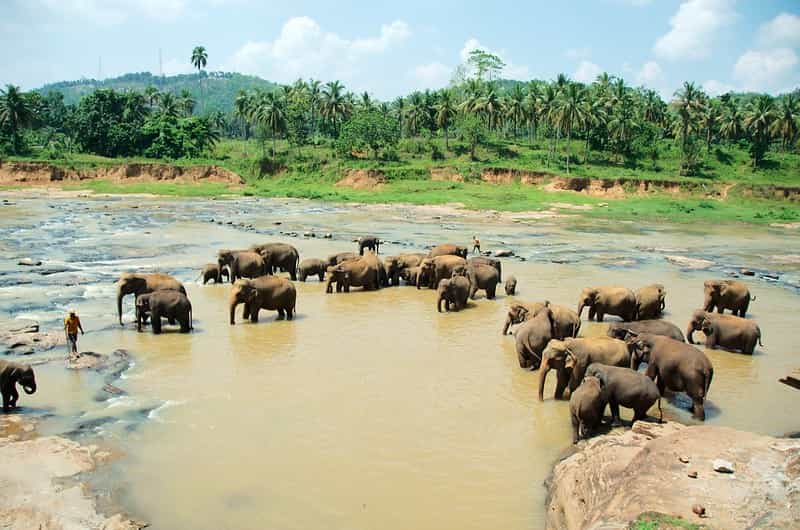
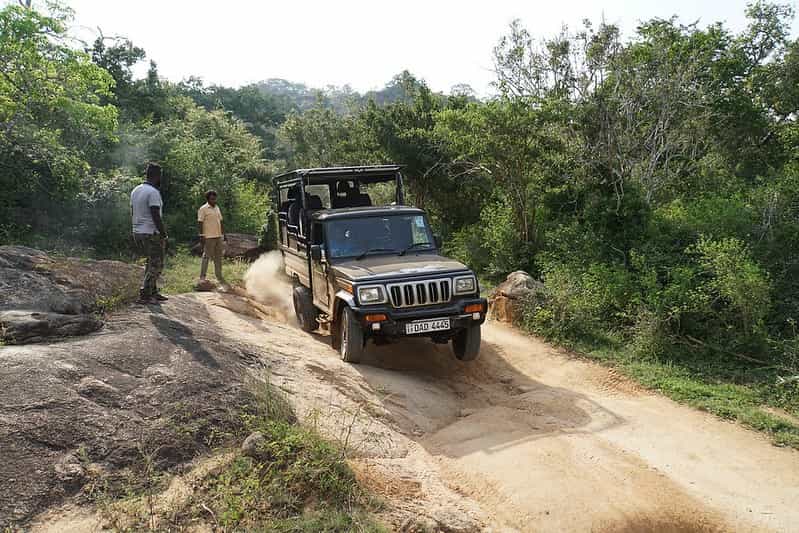
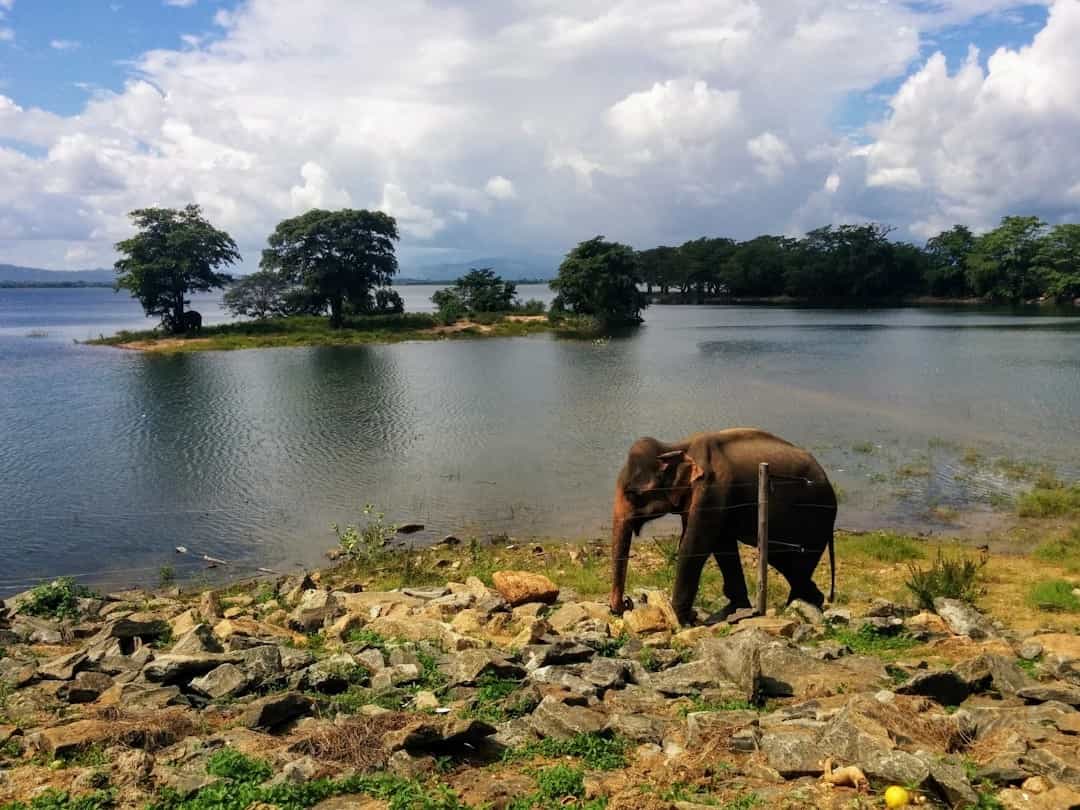
Gal Oya National Park (established in the 1950s) protects a large area of dry-zone forest, wetlands and the Senanayake Samudraya reservoir — one of Sri Lanka's largest man-made lakes. The park is important for conservation of Asian elephants, several other large mammals, freshwater ecosystems, and a rich assemblage of resident and migratory birds. It also conserves cultural landscapes used by local communities, including indigenous Vedda settlements near the park boundary.
Kumana National Park
Kumana National Park (formerly Yala East) is one of Sri Lanka's premier wildlife reserves, renowned for its vital role as a coastal wetland and bird habitat. It forms part of the larger Yala-Kumana protected area complex and is recognized for significant biodiversity, especially migratory and resident waterbirds. The park's lagoons, marshes, and dry evergreen forests support rare and threatened species and contribute to coastal ecosystem health.
Wasgamuwa National Park
Wasgamuwa National Park protects a large tract of dry-zone rainforest and riverine ecosystems in central Sri Lanka, preserving biodiversity including Sri Lankan elephants, sloth bears, leopards, and several endemic bird species. Established in 1984 and expanded over time, the park forms part of the Greater Wasgamuwa ecosystem which connects several protected areas, aiding wildlife corridors and conservation of large mammals and aquatic habitats along the Amban River (a tributary of the Mahaweli). The park also helps protect historical irrigation tanks and ancient village sites that reflect Sri Lanka's traditional dry-zone land-use.
Pigeon Island National Park
Pigeon Island National Park is one of Sri Lanka's small but ecologically important marine protected areas, located off the northeast coast near Nilaveli and Trincomalee. The park protects coral reef habitat, provides breeding and feeding grounds for seabirds and marine life, and plays a role in local coastal biodiversity and fisheries conservation.
Sinharaja Forest Reserve
Sinharaja Forest Reserve is Sri Lanka’s last viable area of primary tropical rainforest and a global biodiversity hotspot. Designated a UNESCO World Heritage Site, it contains exceptionally high levels of endemism — many plants, amphibians, reptiles, birds and invertebrates are found only here. The reserve plays a vital role in watershed protection for the surrounding lowland tea and agricultural landscapes and is a living laboratory for rainforest ecology and conservation.
Knuckles Mountain Range
The Knuckles Mountain Range (Dumbara Kanduvetiya) is a UNESCO-recognized biodiversity hotspot and a vital watershed in central Sri Lanka. It hosts many endemic plant and animal species, unique cloud forests and montane grasslands, and plays a crucial ecological role in water regulation for surrounding lowlands and tea plantations. The area also has cultural importance to local indigenous and rural communities, with trails historically used for cattle grazing and small-scale agriculture.
Adam’s Peak (Sri Pada)
Adam's Peak (Sri Pada) is one of Sri Lanka's most sacred mountains. Standing at 2,243 meters, it has deep religious significance for multiple faiths: Buddhists revere the indentation at the summit as the footprint of the Buddha (Sri Pada), Hindus identify it with Lord Shiva, and some Christians and Muslims call it Adam's or St. Thomas' footprint. The mountain is also part of the Peak Wilderness Sanctuary, important for its montane cloud forest, endemic wildlife and as a watershed for several rivers.
Ella Rock
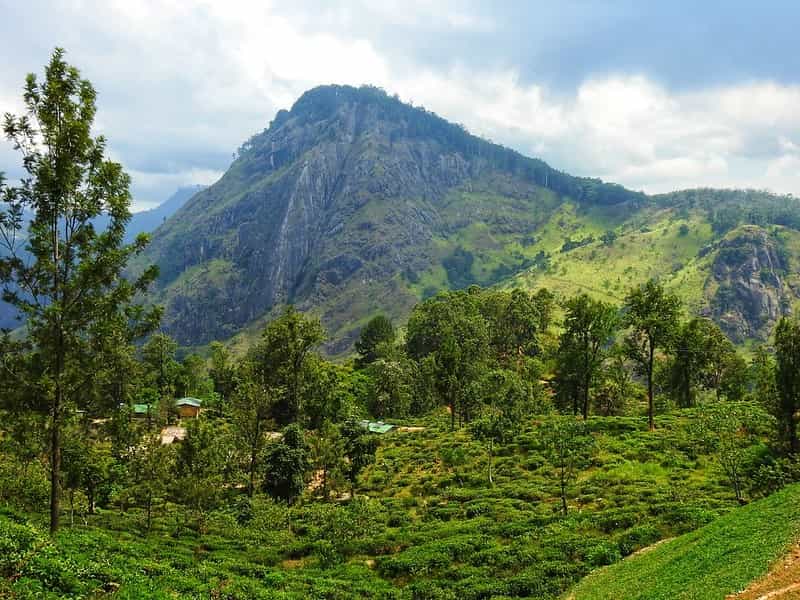
Ella Rock is a prominent natural landmark in Sri Lanka's central highlands, offering panoramic views over tea plantations, valleys and cloud forests. It exemplifies the island's unique hill-country landscape and biodiversity. The hill country around Ella has cultural importance as part of Sri Lanka's tea-growing region, shaped by colonial-era plantations and local Tamil and Sinhalese communities.
Little Adam’s Peak
Little Adam's Peak is a small but iconic hill near Ella in Sri Lanka's Central Highlands. It offers outstanding views of the surrounding tea-country, valleys, and rock formations and is part of the biodiverse hill-country landscape. While not as sacred as the larger Adam's Peak (Sri Pada), it draws visitors for its natural beauty and accessibility, contributing to Ella's reputation as a trekking and eco-tourism hub.
Pidurangala Rock
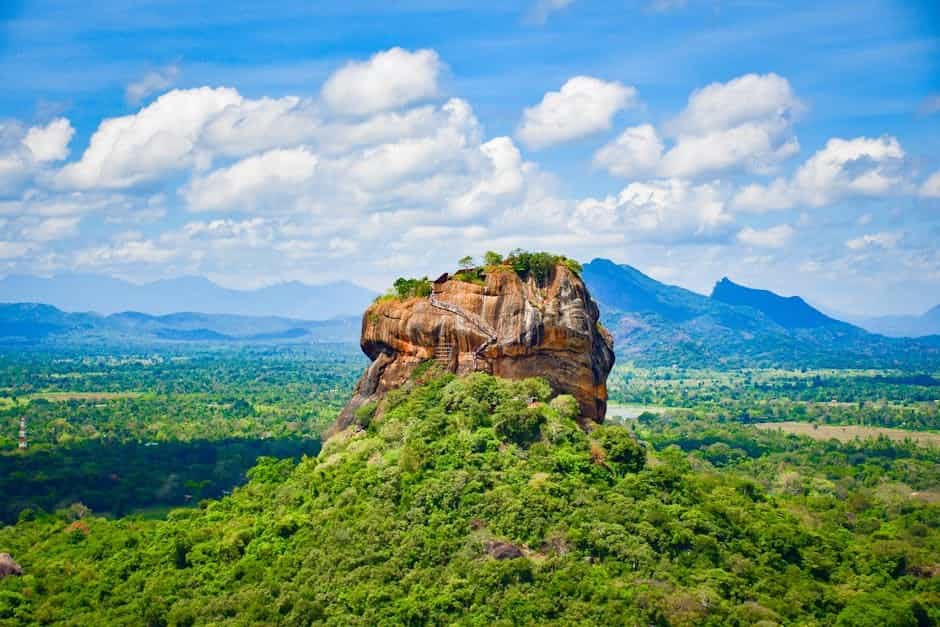
Pidurangala Rock is an ancient Buddhist site and natural landmark near Sigiriya in central Sri Lanka. It contains ruins of a rock monastery (including a reclining Buddha statue and monastic platforms) and served historically as a place of residence and worship for Buddhist monks. The rock offers important cultural context to the Sigiriya landscape — both sites formed part of the broader monastic and royal environment during Sri Lanka’s early medieval period. Naturally, Pidurangala is valued for its striking sandstone outcrop, panoramic views over the Cultural Triangle, and its relatively undisturbed surrounding forest.
Nine Arches Bridge
Nine Arches Bridge (also called the Demodara Bridge) is an iconic example of British colonial railway engineering in Sri Lanka's central highlands. Built in the early 20th century to carry the railway through steep, tea-covered terrain, it is celebrated both for its elegant masonry and for the scenic landscape that surrounds it — a symbol of the hill country’s tea-industry heritage and a popular natural-photography landmark.
Demodara Loop
Demodara Loop is an engineering highlight of Sri Lanka's hill-country railway (the Main Line) built during the British colonial period. The loop and tunnel together solve steep gradient challenges by allowing the track to gain height gradually—an elegant example of early railway engineering adapted to rugged terrain. The site sits within the Uva and Badulla hill region, surrounded by tea plantations and montane forest, contributing to its scenic and natural importance.
Lipton’s Seat
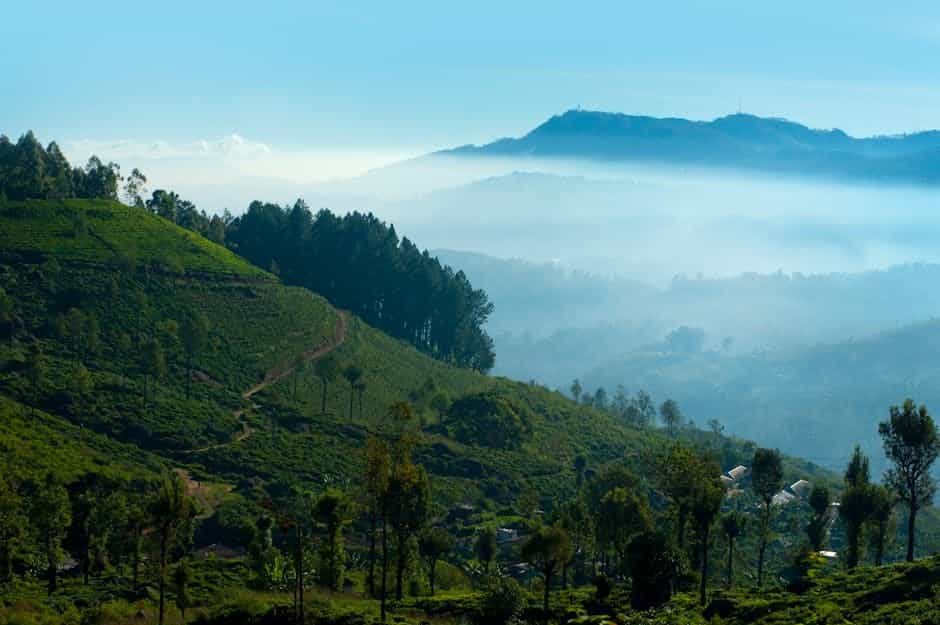
Lipton's Seat is a historic hilltop viewpoint near Haputale in the Uva Province of Sri Lanka, closely linked to the early development of the island's tea industry. It was a favourite lookout of Sir Thomas Lipton, the Scottish tea entrepreneur, who used the site to survey his surrounding tea estates. The spot offers sweeping panoramic views over rolling tea plantations, deep valleys and distant mountain ranges, making it both a cultural landmark of colonial-era tea heritage and a notable natural scenic viewpoint.
Gregory Lake
Gregory Lake (also called Nuwara Eliya Lake) was created in the late 19th century during British colonial rule and is named after Sir William Gregory, a British governor of Ceylon. The lake and surrounding park became the heart of Nuwara Eliya's colonial-era recreational zone and reflect the hill-country town's status as the British "summer capital" because of its cool climate. Today the lake is a major natural and recreational landmark in Sri Lanka's Central Highlands, set amid rolling tea estates, misty mountains and temperate flora.
Kandy Lake
Kandy Lake (also called Kiri Muhuda or the "Sea of Milk") is an artificial lake created in 1807 by King Sri Wickrama Rajasinghe at the heart of Kandy, Sri Lanka. It forms an integral part of the historic cityscape and sits adjacent to the Temple of the Tooth (Sri Dalada Maligawa), one of the island's most important religious sites. The lake helped define the royal palace precinct and remains central to the cultural and ceremonial life of Kandy, while also providing an urban green-water habitat supporting local birdlife and aquatic species.
Moon Plains (Sandathenna)
Moon Plains (Sandathenna) is a scenic upland grassland plateau near Ella in Sri Lanka's Uva Province. It is valued primarily for its natural and scenic importance — a broad, open plain offering panoramic views across the Ella Gap, surrounding tea-country valleys and mountain ridges. The area is part of the island's montane landscape and contributes to local biodiversity (grassland species, birds and small mammals) and rural tourism that supports nearby communities.
Sembuwatta Lake
Sembuwatta Lake is a scenic highland lake in the central hill country of Sri Lanka, valued for its tranquil freshwater reservoir, cool climate and surrounding tea-country landscapes. While not a major historical site, it is an important local natural attraction that contributes to eco-tourism in the region and supports nearby rural communities through tourism and small-scale recreation.
Madu Ganga (River)
Madu Ganga (Madu River) is a biologically rich estuarine wetland system on the southwest coast of Sri Lanka, known for its extensive mangrove forests, estuary channels and numerous small islands. The river and its wetlands support high biodiversity—birds, fish, crustaceans and reptiles—and are important for local fisheries and livelihoods. The area has been recognized for its ecological value and management efforts to balance tourism, traditional livelihoods (fishing, cinnamon peeling) and conservation.
Belilena Cave
Belilena Cave (Beli Lena) is one of Sri Lanka's most important prehistoric archaeological sites. Excavations have revealed human skeletal remains, stone tools and faunal assemblages that provide evidence of Palaeolithic and Mesolithic occupation in the island's central highlands. The site is closely associated with studies of the so‑called "Balangoda Man" and contributes to our understanding of early Homo sapiens settlement, behavior and adaptation in South Asia (occupation layers are often dated to tens of thousands of years ago).
Kitulgala Rainforest
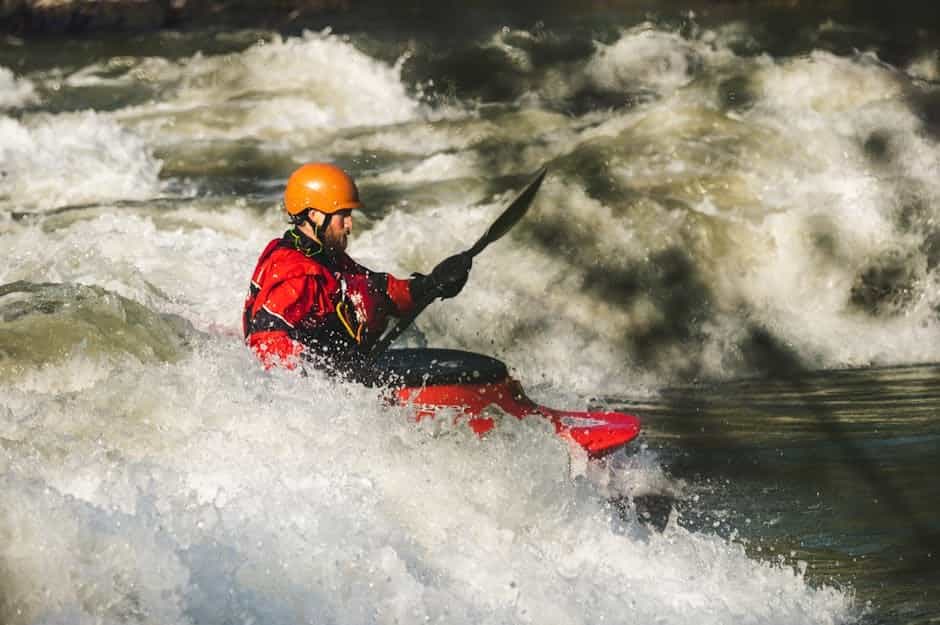
Natural importance: Kitulgala is one of Sri Lanka's notable lowland rainforest patches along the Kelani River, important for biodiversity, endemic flora and fauna, and as a watershed protecting downstream communities. The area is also internationally known as a premier white-water rafting location, drawing adventure tourists and supporting local livelihoods.
Cultural/historical importance: The name Kitulgala comes from the Kitul (Caryota urens) palm that grows locally; the town and surrounding communities have a history of producing kitul treacle (palm jaggery). The area gained international attention after scenes for the film "The Bridge on the River Kwai" were shot nearby, increasing its profile as a tourist destination.