Places to visit in Kashmir
Planning a trip to Kashmir? Here is a complete guide to the best places to visit—from popular tourist attractions to offbeat spots you would not find in every guidebook. Get ready to explore, experience, and fall in love with Kashmir!
Top 70 curated places to visit in Kashmir
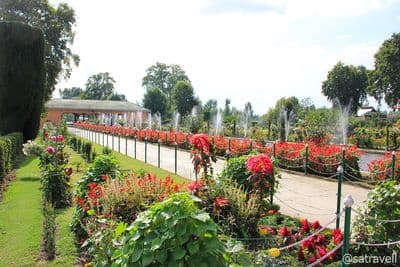
Shalimar Bagh Mughal Garden
Shalimar Bagh is a classic Mughal garden in Srinagar, Kashmir, built in the early 17th century by Emperor Jahangir for Empress Nur Jahan. It is an outstanding example of Mughal horticultural design in the Himalayan foothills, combining Persian-style terracing, axial water channels, fountains and ornamental pavilions. The garden reflects the Mughals' aesthetic and engineering adaptation to Kashmir's mountainous, lakeside environment and is an important part of the region's cultural and historical landscape.
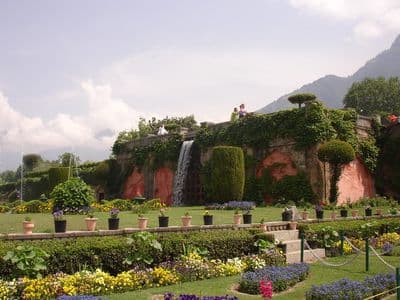
Nishat Bagh Mughal Garden
Nishat Bagh (literally Garden of Pleasure) is the second-largest Mughal garden in Kashmir, laid out in 1633 AD during the Mughal period. Commissioned by Asif Khan (brother of Empress Nur Jahan), it exemplifies the Persian-influenced terraced garden design adapted to the Himalayan foothills. The garden's axis opens onto Dal Lake and the Zabarwan Range, making it important both culturally (Mughal landscape architecture) and naturally (views, hydrology and plantings).
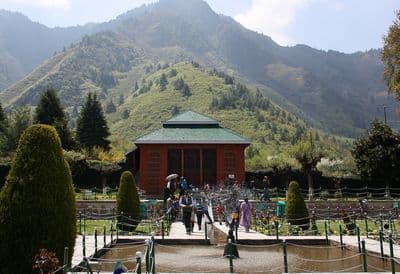
Chashme Shahi Garden
Chashme Shahi (the 'Royal Spring') is a small but quintessential Mughal garden in Srinagar, Kashmir. Laid out in the 17th century during the reign of Emperor Shah Jahan for Prince Dara Shikoh, it exemplifies Mughal horticultural design adapted to the Zabarwan foothills. The garden is built around a natural spring whose water feeds terraced cascades and fountains — a fine example of historical water-management and landscape architecture in the region.
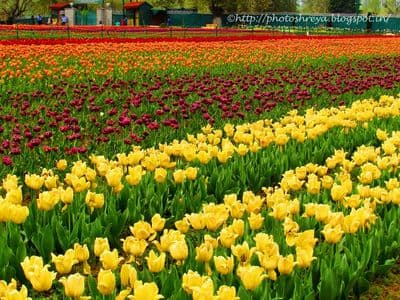
Indira Gandhi Memorial Tulip Garden
The Indira Gandhi Memorial Tulip Garden in Srinagar is the largest tulip garden in Asia, established to boost horticulture and tourism in the Kashmir Valley. Nestled on the foothills of the Zabarwan Range and overlooking Dal Lake, it showcases the region's floricultural potential and provides a major spring attraction that complements Kashmir's natural and cultural heritage.
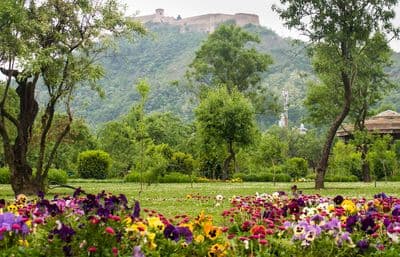
Badamwari Garden
Badamwari Garden is a historic public garden in Srinagar, Kashmir, celebrated for its almond (badam) trees that burst into pink and white blossoms each late winter/early spring. The garden is culturally important as a local symbol of the arrival of spring and renewal, drawing residents and visitors for seasonal gatherings and communal celebrations. Naturally, the dense flowering provides early-season forage for pollinators and creates a striking seasonal landscape within the urban fabric of Srinagar.
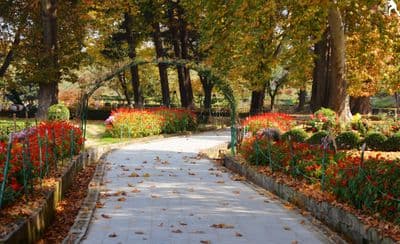
Harwan Garden
Harwan Garden is a scenic terraced garden located near Srinagar in the Kashmir Valley. It represents the region's rich tradition of landscaped gardens and combines cultural and natural value: a peaceful recreational space for locals and visitors, habitat for birds and seasonal flora, and an important example of Kashmir's horticultural heritage.
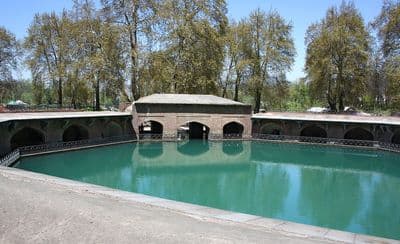
Verinag Spring
Verinag Spring is one of Kashmir's most important natural and historical sites. It is the major source of the Jhelum River and features a finely crafted Mughal-era octagonal tank and a colonnaded arcade set within a traditional Mughal garden layout. The spring and its built elements reflect Mughal gardening aesthetics and hydraulic engineering, linking the site's natural importance (origin of a major river) with rich cultural history.
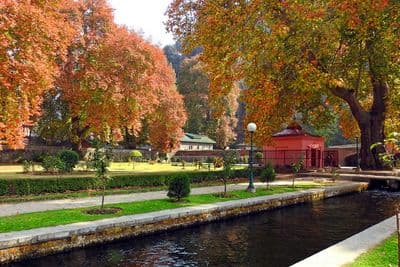
Verinag Mughal Garden
Verinag Mughal Garden (Verinag) is a historically significant Mughal-era garden in South Kashmir, noted as the natural spring and traditional source of the Jhelum River (Vitasta). The site combines Mughal landscape architecture with an important natural water source that has shaped local settlement and irrigation for centuries.
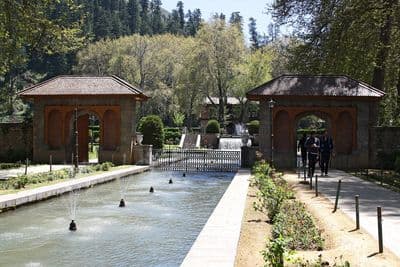
Achabal Mughal Garden
Achabal Mughal Garden is a classical Mughal-era terraced garden located in the village of Achabal in Anantnag district, Kashmir. Built during the Mughal period (17th century), it exemplifies Mughal horticultural design with formal terraces, axial water channels, stone fountains and pavilions. The garden is valued for its historical architecture, its role in the region's garden culture, and its scenic setting amid chinar and apple orchards.
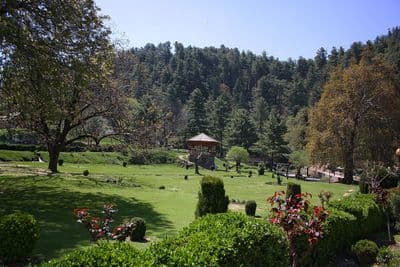
Kokernag Botanical Garden
Kokernag Botanical Garden is a notable horticultural and conservation site in south Kashmir. It complements the famous Kokernag spring and trout reserve and serves as an important recreational and educational green space for locals and visitors. The garden preserves and showcases temperate plant species and ornamental horticulture typical of the region, contributing to local biodiversity awareness and floriculture.
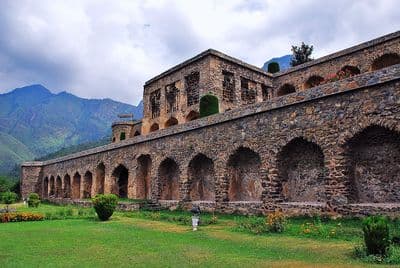
Pari Mahal
Pari Mahal ("Palace of the Fairies") is a 17th-century terraced garden and historical monument on the Zabarwan Range overlooking Dal Lake in Srinagar, Kashmir. Built during the Mughal period — traditionally attributed to Prince Dara Shikoh — it served as a pleasure garden, library/observatory and a place for scholarly and Sufi learning. The site is important for its Mughal garden design, panoramic setting, and its place in Kashmir's layered cultural and religious history.
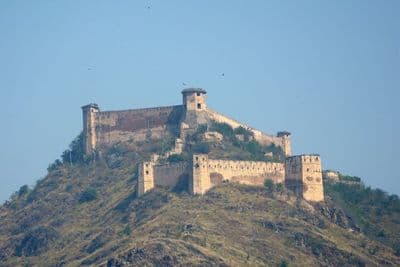
Hari Parbat Fort
Hari Parbat Fort sits atop Hari Parbat hill overlooking Srinagar and Dal Lake and has served as a strategic and symbolic landmark for centuries. The site is important historically as a fortified stronghold and a marker of successive regional powers (Mughal, Afghan and later Dogra influences) and culturally as a rare example of religious coexistence: Hindu, Muslim and Sikh shrines are clustered on the hill. The natural prominence of the hill provides commanding panoramic views of the city and surrounding Zabarwan and Pir Panjal ranges, making it also significant from a scenic and natural-history perspective.
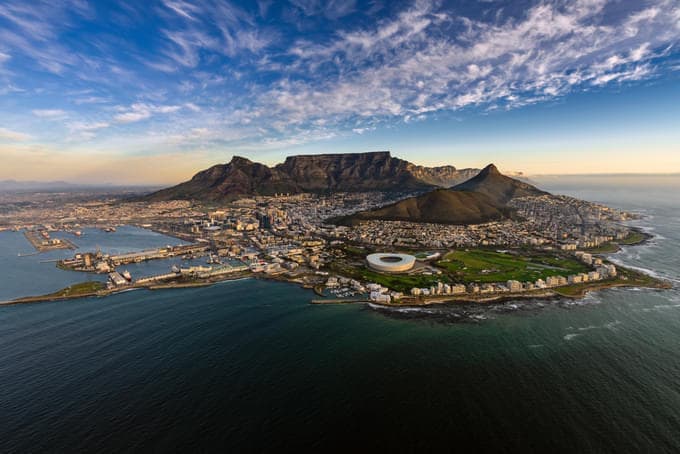
Burzahom Archaeological Site
Burzahom is a major Neolithic and Chalcolithic archaeological site in the Kashmir Valley, near Srinagar. Excavations (first systematically by the Archaeological Survey of India in the 1970s) revealed long sequences of human occupation from the Mesolithic through the Neolithic and into the early historic period. The site provides key evidence for early settled life in northern India: pit-dwellings, post‑hole structures, polished stone tools, bone tools, evidence of early agriculture and animal domestication, and distinctive burial practices. Burzahom is important for understanding prehistoric lifeways, technology, and the transition to farming in the Himalayan foothills.
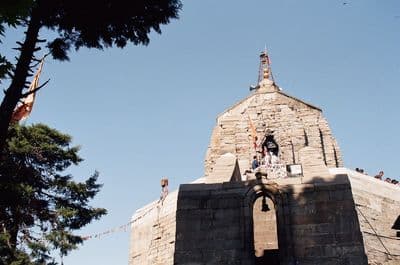
Shankaracharya Temple (Jyeshteshwara)
The Shankaracharya Temple (also known historically as Jyeshteshwara) is an ancient Hindu shrine perched on Shankaracharya Hill (Takht-e-Sulaiman) overlooking Srinagar and the Dal Lake. It is an important religious site dedicated to Lord Shiva and is revered by Kashmiri Hindus and pilgrims from across India. The hilltop location has long been a prominent landmark and offers strategic panoramic views of the city, contributing to its cultural and natural significance. The site is associated with early Hindu worship in the Kashmir Valley and with the revival of Advaita Vedanta traditions attributed to Adi Shankaracharya in the 8th century CE.
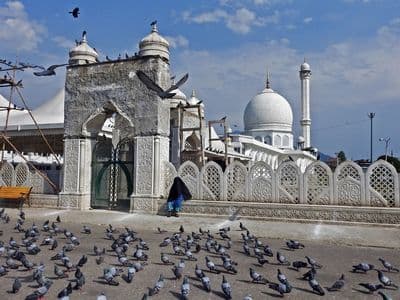
Hazratbal Shrine
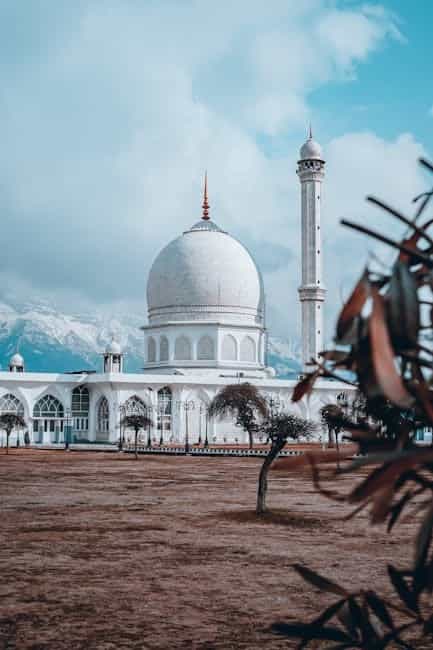
Religious and cultural significance: Hazratbal Shrine (Assar-e-Sharif) is the holiest Muslim shrine in Kashmir, famed for housing the Moi-e-Muqqadas (a relic believed to be a hair of the Prophet Muhammad). Perched on the northern shore of Dal Lake, it is both a spiritual center for Kashmiri Muslims and a prominent landmark reflecting the region's religious heritage and lakeside setting.
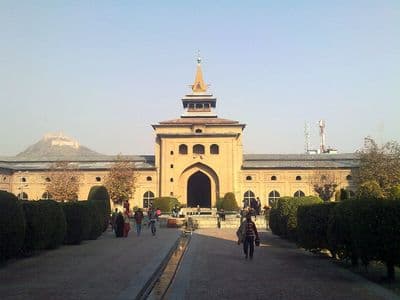
Jamia Masjid
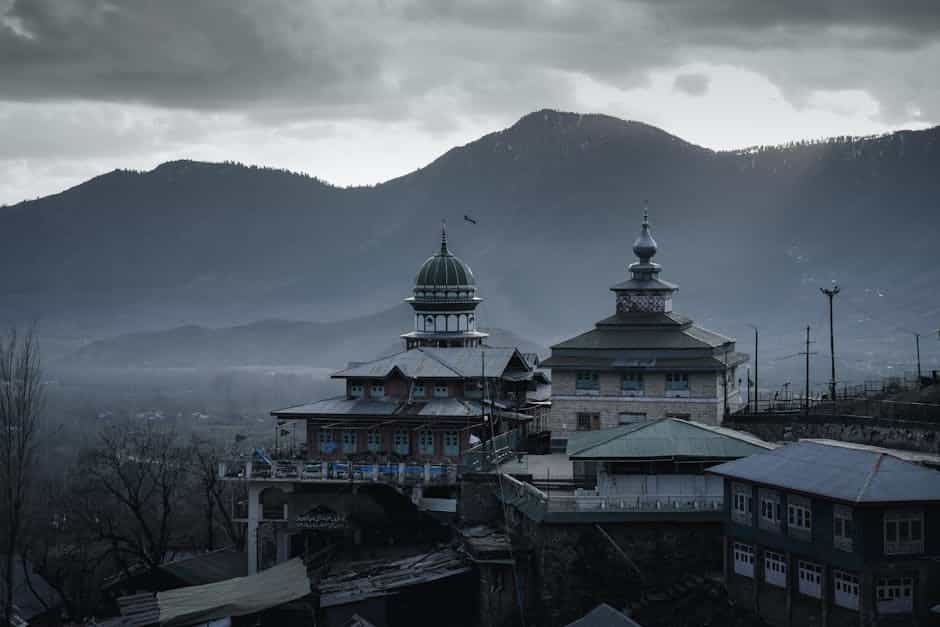
Jamia Masjid (Jama Masjid) in Srinagar, Kashmir is one of the most important and historic Muslim religious sites in the Kashmir Valley. Originally founded in the late 14th century, it has served as a central place of worship, community gathering and political assembly for centuries. The mosque is notable for its traditional Kashmiri wooden architecture and its central role in public religious life — especially the large Friday congregational prayers that bring people from across Srinagar and surrounding areas.
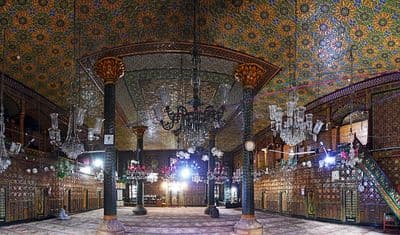
Khanqah-e-Moula (Shah-e-Hamadan)
Khanqah-e-Moula (Shah‑e‑Hamadan) is one of Kashmir’s oldest and most important Islamic shrines and a center of Sufi devotion. It commemorates Mir Syed Ali Hamadani (Shah‑e‑Hamadan), the 14th‑century Persian Sufi saint credited with playing a major role in the spread of Islam and traditional Kashmiri crafts. The site is a living religious complex—architecturally notable for its traditional Kashmiri timber work and ornate interiors—and it is deeply woven into the social, spiritual and cultural life of Srinagar’s old city.
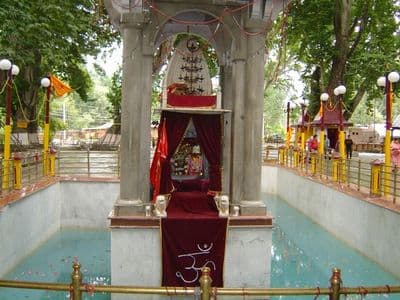
Kheer Bhawani Temple
Kheer Bhawani Temple (also known as Kheer Bhawani Astan) is a major Hindu shrine in Kashmir dedicated to the mother goddess Ragnya Devi (locally called Kheer Bhawani). Located in the village of Tulmulla/Tullamulla in Ganderbal district near Srinagar, the temple is centered on a sacred spring whose water is considered holy by Kashmiri Pandits and many local Muslims. The site is an important symbol of Kashmiri Pandit identity and faith and has long been associated with worship, pilgrimage and communal harmony in the Valley.
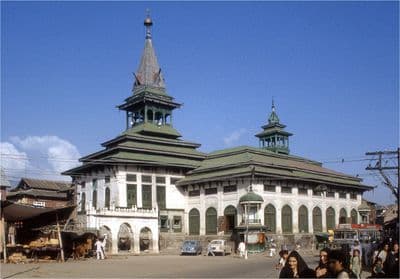
Dastgeer Sahib Shrine
Dastgeer Sahib Shrine (also called Dastgeer Sahib Ziarat) is one of the important Sufi shrines in Srinagar, Kashmir. It is a key spiritual and cultural landmark for Kashmiri Muslims, associated with Sufism and local devotional practices. The shrine attracts devotees from across the Valley and beyond, serving as a center for prayer, Sufi rituals, and community gatherings. Architecturally, it reflects local Kashmiri mosque and shrine styles and contributes to the historical religious landscape of the old city of Srinagar.
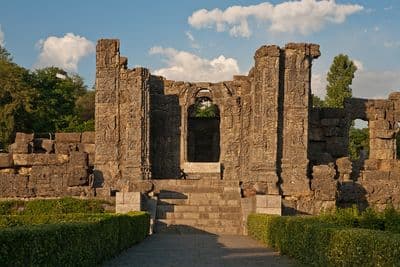
Martand Sun Temple
Historical importance: Martand Sun Temple is one of the most important surviving monuments of early medieval Kashmir. Credited to King Lalitaditya Muktapida of the Karkota dynasty (8th century CE) in the chronicles (Rajatarangini), the temple exemplified the height of Kashmiri temple architecture and was a major center for sun-worship (Surya) in the region. The site demonstrates syncretic architectural influences — local Kashmiri stone technique combined with north Indian temple forms — and is an important archaeological and cultural symbol for Kashmiri heritage.
Cultural/Natural importance: The temple sits on a commanding terrace above the Lidder Valley plains near Mattan/Anantnag, giving panoramic views of the surrounding farmland and nearby hills. It is protected and studied as an Archaeological Survey of India (ASI) monument and remains an evocative reminder of pre-Islamic religious architecture in Kashmir.